






Definition and Purpose of the Private Party Vehicle Bill of Sale
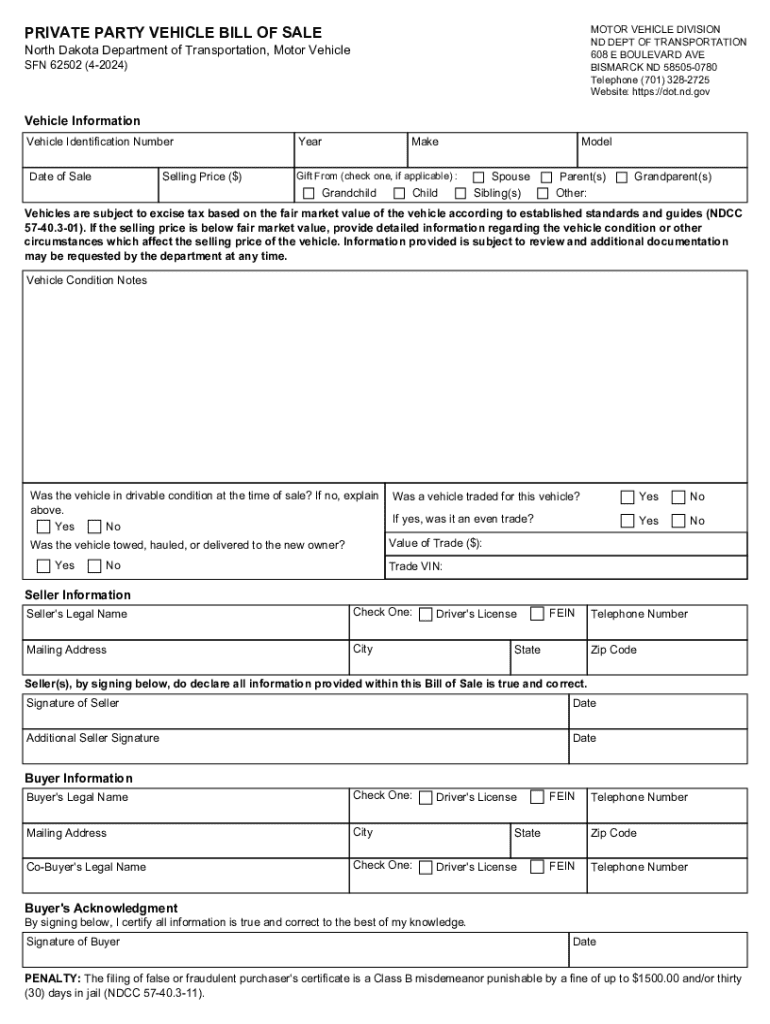
A Private Party Vehicle Bill of Sale is a legal document used to detail and formalize the transaction between a private seller and buyer during the sale of a motor vehicle. This document serves as proof of the transfer of ownership from the seller to the buyer and includes various elements essential for the documentation of the sale. It is vital to have this document at hand not only for legal compliance but also for preventing future disputes between the involved parties.
- Ownership Transfer: This legal form is instrumental in clearly defining the change in ownership, which helps protect both parties from any legal disputes that might arise in the future.
- Seller and Buyer Information: It typically includes detailed information about both parties involved in the sale, such as names, addresses, and contact numbers.
- Vehicle Details: The form records critical information about the vehicle, including make, model, year, vehicle identification number (VIN), and mileage.
- Purchase Price: Stipulating the agreed-upon sale price of the vehicle protects all parties by documenting that compensation details were understood and accepted.
- Signatures: Both the seller and the buyer need to sign the document, which legally binds them to the details mentioned in it.
How to Use the Private Party Vehicle Bill of Sale
Using a Private Party Vehicle Bill of Sale involves a few structured steps that allow both parties to consolidate the transaction comprehensively. This procedure ensures all necessary information and legal terms are captured accurately.
- Complete Buyer and Seller Information: Both parties should fill in their personal and contact details. Ensuring accuracy is crucial as this information may be required for future reference or legal purposes.
- Detail the Vehicle Information: Include extensive details about the vehicle being sold. This should encompass the make, model, year, VIN, and current mileage.
- Specify the Sale Price: Clearly state the agreed-upon sales price to eliminate ambiguities or potential disputes later on. Both parties should agree on and understand this value before proceeding.
- Sign the Document: After filling out the necessary fields, both parties should sign the form. The signatures act as an agreement to the terms and conditions noted within the document.
- Provide Duplicate Copies: It’s advisable for both buyer and seller to retain a copy of the completed and signed bill of sale for their records.
Steps to Complete the Private Party Vehicle Bill of Sale
Completing a Private Party Vehicle Bill of Sale involves a precise series of actions to ensure all indispensable aspects of the sale are covered.
- Gather Required Information: Both parties need to collect and have access to their contact information, as well as detailed specifics about the vehicle being sold.
- Fill in Personal Details: Both parties should accurately fill in their details including name, address, and phone numbers.
- Record Vehicle Information: Insert all necessary vehicle information like VIN, make, model, year, color, and existing mileage.
- State the Terms of Sale: Establish clear terms and conditions governing the transaction, including the agreed sale price.
- Sign and Date: Both the buyer and the seller must sign and date the form, making it legally binding.
Key Elements of the Private Party Vehicle Bill of Sale
Several vital elements make up the Private Party Vehicle Bill of Sale, each contributing to the efficacy and reliability of the document as a legal instrument.
- Vehicle Description: Detailed identification including the VIN, which is crucial for distinguishing the vehicle in the DMV records.
- Transaction Date: Clearly specifying the transaction date assists in any temporal claims or legal verifications.
- Condition Statements: Notes related to the condition of the vehicle during the sale can prevent misunderstandings or complaints about the vehicle’s state post-purchase.
- Legal Acknowledgements: Both the seller and buyer acknowledge understanding and willingness concerning the transaction details.
- Signature Section: The presence of both parties’ signatures confirms agreement to the transaction terms and conditions outlined in the document.
Legal Use and Importance of the Private Party Vehicle Bill of Sale
The Private Party Vehicle Bill of Sale serves as a legally binding record validating the sale of a vehicle between private parties. The document aids in protecting both the buyer and the seller from potential fraud or disputes by establishing clear terms for the transaction.
- Proof of Ownership: Acts as legitimate proof of ownership transfer, crucial in legal scenarios.
- Compliance with State Laws: Ensures compliance with state-specific regulations regarding vehicle sales and ownership transfers.
- Taxes and Fees: Assists in accurately calculating taxes and fees associated with the vehicle transaction.
- Registration Purposes: Necessary for the buyer when registering the vehicle in their name at the DMV.
State-Specific Rules for the Private Party Vehicle Bill of Sale
Different states may have varying requirements concerning the completion and use of a Private Party Vehicle Bill of Sale. Understanding these can ensure proper compliance and avoid legal issues.
- State-Mandated Forms: Some states may have specific versions of the bill of sale that need to be used for vehicle transactions within their jurisdiction.
- Notarization Requirements: Certain states require the bill of sale to be notarized, adding an official acknowledgment of the transaction.
- Submission Deadlines: There can be specific submission deadlines for filing the form with local DMVs post-sale.
Important Terms Related to Private Party Vehicle Bill of Sale
Understanding certain key terms related to the Private Party Vehicle Bill of Sale can enhance comprehension and effective usage of the document.
- VIN: The Vehicle Identification Number is a unique code used to identify individual motor vehicles.
- Odometer Reading: The odometer reading denotes the total distance traveled by the vehicle, an essential factor in its valuation.
- Title Transfer: Title transfer defines the legal change of vehicle ownership, typically handled after the bill of sale completion.
- Consideration: The agreed value or payment given in exchange for the vehicle, which is documented in the bill of sale.
Examples of Using the Private Party Vehicle Bill of Sale
Real-world scenarios illustrate the utility and application of the Private Party Vehicle Bill of Sale in various transaction situations.
- Private Sale Between Individuals: John sells his used car to Emily using a bill of sale to prevent misunderstandings and legally document the transaction.
- Estate Sales: Executors of an estate use a bill of sale when transferring ownership of a vehicle to a buyer, ensuring proper legal documentation.
- Buying from a Neighbor: Jesse buys an old pickup truck from his neighbor and uses a bill of sale to formally record the sale conditions and payment structure.