






Definition and Meaning
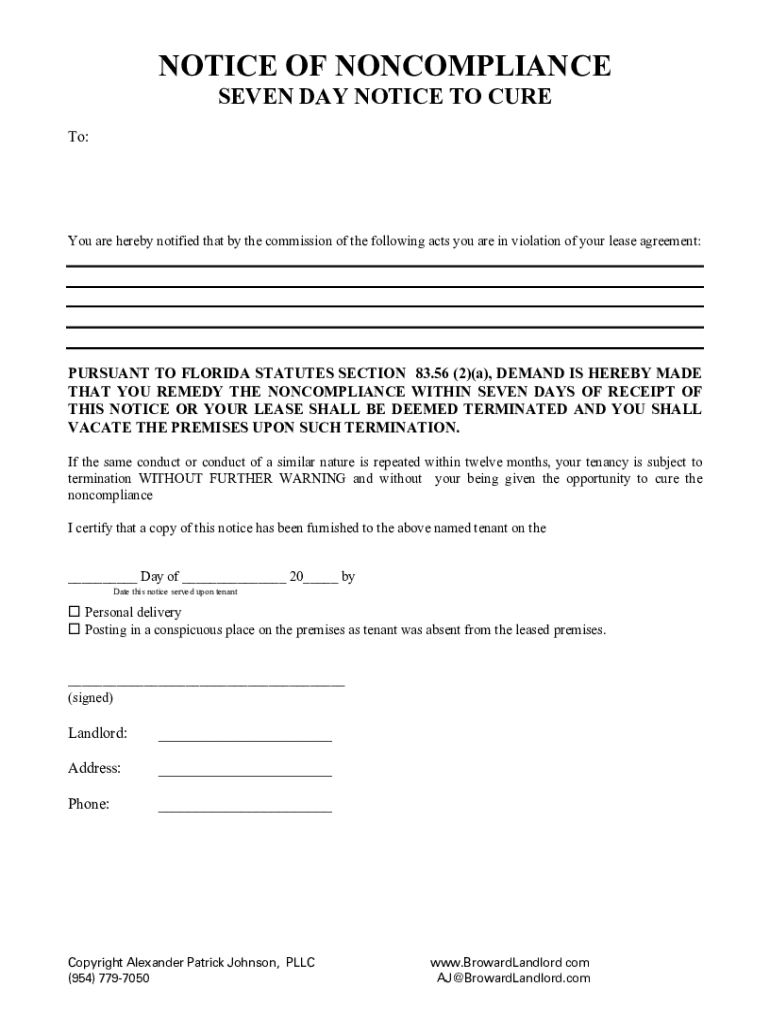
The "Seven Day Notice of Noncompliance With" is a legal notification used primarily in landlord-tenant relationships. It serves as a formal warning to a tenant that they have violated specific terms of their lease agreement. This notice typically provides the tenant seven days to rectify or cure the mentioned violations. If the tenant fails to comply within this period, it may lead to further legal action, including eviction. This form is a critical part of the eviction process, particularly in certain states like Florida, where legal statutes outline specific notice requirements.
How to Use the SEVEN DAY NOTICE OF NONCOMPLIANCE WITH
To effectively use the "Seven Day Notice of Noncompliance With," landlords must first clearly identify the lease violations committed by the tenant. Once identified, the landlord should fill out the form with detailed descriptions of the infractions. It is essential to be precise and list exact instances and dates of noncompliance to avoid ambiguity. After completing the form, it should be delivered to the tenant in person or through certified mail to ensure proper delivery. The seven-day compliance window begins from the day the tenant receives this notice.
Steps to Complete the SEVEN DAY NOTICE OF NONCOMPLIANCE WITH
-
Identify the Lease Violation: Carefully review the lease agreement to pinpoint the specific terms that have been violated.
-
Fill Out the Notice Form: Include all necessary details, such as the tenant's name, property address, and a detailed description of the violations.
-
State the Consequences: Clearly mention what actions the landlord will take if the tenant fails to comply within the seven-day period, such as starting eviction proceedings.
-
Provide Time-Sensitive Instructions: Specify the exact date by which the tenant must correct the issues to avoid further action.
-
Deliver the Notice: Serve the notice to the tenant through an appropriate legal method, ensuring to document the delivery.
-
Maintain Documentation: Keep a copy of the notice and the proof of delivery for legal records and future reference if court involvement becomes necessary.
Key Elements of the SEVEN DAY NOTICE OF NONCOMPLIANCE WITH
- Tenant and Landlord Details: The full names and contact information of both parties involved.
- Property Address: The specific location of the property in question.
- Description of Violations: A detailed account of the noncompliance, including exact clauses from the lease.
- Rectification Deadline: The specific date by which the tenant must resolve the issues.
- Signature Line: Space for the landlord or property manager to sign, substantiating the notice's legitimacy.
Legal Use of the SEVEN DAY NOTICE OF NONCOMPLIANCE WITH
The notice's primary legal function is to formally notify a tenant of their breach of lease agreement terms, providing them an opportunity to rectify issues before eviction proceedings commence. It is a crucial step in the eviction timeline, ensuring due process and giving tenants a chance to comply. The notice must adhere to state-specific legal guidelines, such as Florida Statutes for legal validity. Landlords are advised to consult with legal professionals to ensure the notice's accuracy and compliance with local laws.
Examples of Using the SEVEN DAY NOTICE OF NONCOMPLIANCE WITH
- Noise Complaints: A tenant consistently disrupts neighbors with loud parties, violating noise regulations set in the lease.
- Property Damage: Tenants who damage property fixtures or engage in unauthorized alterations need to rectify these actions to restore them to original conditions.
- Late Rent Payments: Chronic late payments may lead to a notice highlighting lease agreement breaks, urging tenants to pay within the stipulated time to avoid further action.
State-Specific Rules for the SEVEN DAY NOTICE OF NONCOMPLIANCE WITH
Different states have varying requirements regarding the notice's use and validity. For instance, Florida provides specific statutes governing the notice's issuance and the type of violations that warrant such action. Landlords must familiarize themselves with relevant state rules to ensure compliance and effectiveness of the notice. Failure to adhere to these regulations could render the notice invalid and disrupt potential eviction proceedings.
Penalties for Non-Compliance
If the tenant fails to comply with the notice within the specified seven days, they may face legal repercussions, including eviction. Non-compliance allows landlords to initiate court proceedings, which could result in the tenant being removed from the property forcibly. Additionally, the tenant may be held liable for legal fees and any damages caused due to their non-compliance, compounding their financial responsibilities.
Who Typically Uses the SEVEN DAY NOTICE OF NONCOMPLIANCE WITH
The notice is predominantly used by landlords and property managers overseeing rental properties. These individuals use the notice to maintain the integrity of lease agreements, ensuring tenants adhere to stipulated terms. By issuing the notice, they reserve the right to uphold their property rights and take necessary legal action when terms are breached.