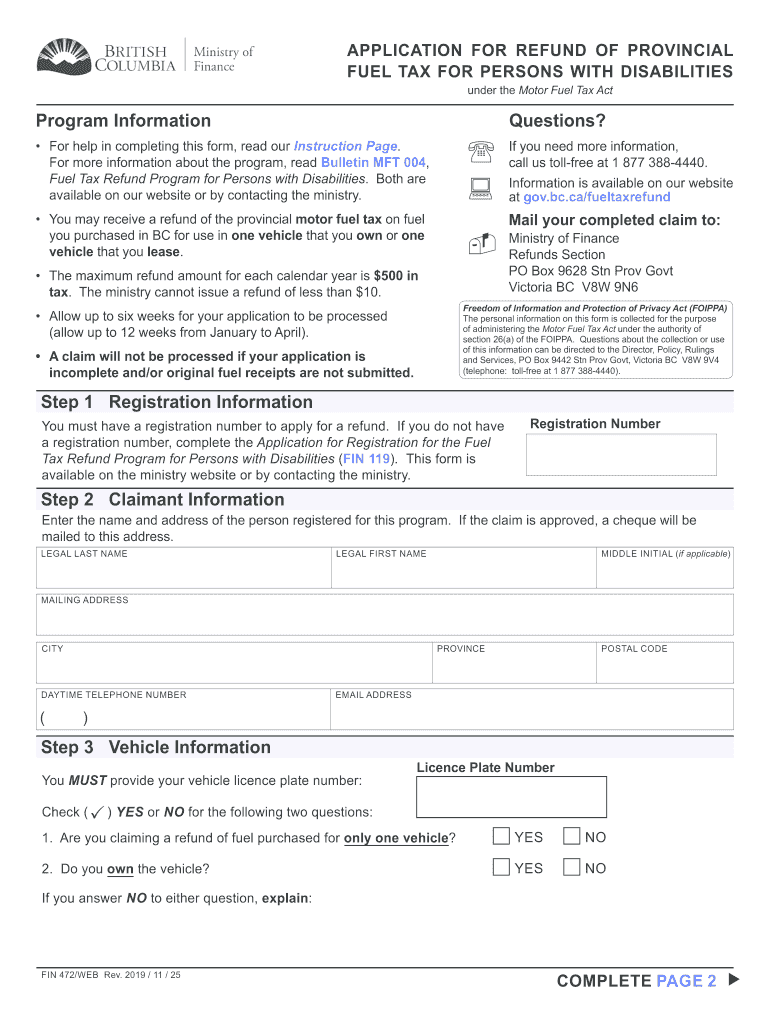







Definition & Purpose of the FIN 472 Form
The FIN 472 form is utilized for the refund application concerning the provincial fuel tax for persons with disabilities under the Motor Fuel Tax Act in British Columbia. This form is critical for eligible individuals to reclaim a portion of the fuel tax incurred during vehicle use, easing their transportation expenses. Designed exclusively for disabled persons, this form requires precise documentation and adherence to stipulated guidelines to ensure correct processing.
Eligibility Criteria for the FIN 472 Form
To apply for a fuel tax refund using the FIN 472 form, applicants must meet certain eligibility requirements. Applicants need to be individuals with disabilities, which must be substantiated by relevant documentation, such as a registered disability savings plan or certification from a healthcare provider. The form is exclusively for those residing in British Columbia, and applicants must have incurred provincial fuel tax expenses during their eligible fuel purchases.


Required Documents for the FIN 472 Form
When completing the FIN 472 form, certain documents are mandatory to validate the refund claim. These include:
- Original fuel receipts with visible tax amounts
- Proof of disability, such as a medical certificate or benefit statement
- Vehicle registration documents showing ownership or leasing arrangements
- A Declaration statement confirming that the fuel was used for personal mobility needs
These documents must be current and align with the period for which the refund is claimed.
Instructions to Complete the FIN 472 Form
The completion of the FIN 472 form involves several key steps, ensuring all sections are properly filled out:
- Claimant Information: Fill in personal details, including name, address, and contact information.
- Vehicle Details: Provide vehicle registration number, make, model, and year.
- Fuel Purchase Details: Enter each transaction's receipt number, date of purchase, and fuel volume.
- Declaration: Sign the declaration affirming all information is accurate and supporting documents are provided.
It’s imperative that every section is correctly filled to avoid delays or denial of the refund application.
Submission Methods for the FIN 472 Form
Once completed, the FIN 472 form and its accompanying documents can be submitted through various channels:
- Online: Scan the documents and upload them through the official government portal for electronic submission.
- Mail: Send the completed form and original documents to the designated provincial tax office.
- In-Person: Deliver the application directly to a local government office for immediate processing.
Each submission method offers unique benefits, with the online option ensuring the fastest processing time.
Penalties for Non-Compliance with the FIN 472 Form
Failure to comply with the regulations associated with the FIN 472 form can lead to disqualification from the refund program. Non-compliance includes submitting false information, failing to provide required documentation, or missing submission deadlines. Such actions could result in financial penalties, prohibition from future applications, or necessary repayment of funds already disbursed.
Examples of Using the FIN 472 Form
Several scenarios exemplify the practical use of the FIN 472 form:
- John, a disabled retiree, uses the form to reclaim fuel taxes spent on his specially equipped vehicle required for medical appointments.
- Susan, a caretaker, applies on behalf of her disabled son, detailing his transportation needs and aligning her submission with prescribed guidelines.
- Robert, a tech worker with mobility issues, uses his electric wheelchair-equipped van year-round and files regularly to mitigate fuel tax costs.
These examples highlight the diverse usage across individual circumstances, underscoring its value for eligible claimants.
State-Specific Regulations for the FIN 472 Form
While the FIN 472 form is specific to British Columbia, understanding its provincial context is crucial. It exclusively applies to residents incurring fuel taxes within the province, and claimants must adhere to British Columbia’s Motor Fuel Tax Act guidelines. No other provinces offer identical forms, making the FIN 472 unique in its provisions and requirements.
Each section has been designed to offer comprehensive details crucial for understanding, completing, and complying with the FIN 472 form requirements, ensuring a streamlined process for eligible applicants.