






Definition and Purpose of a Construction Lien Checklist
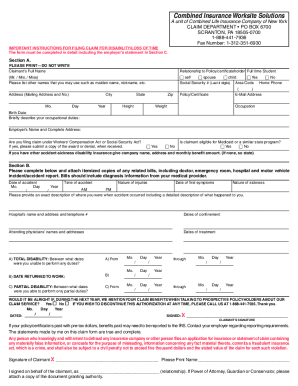
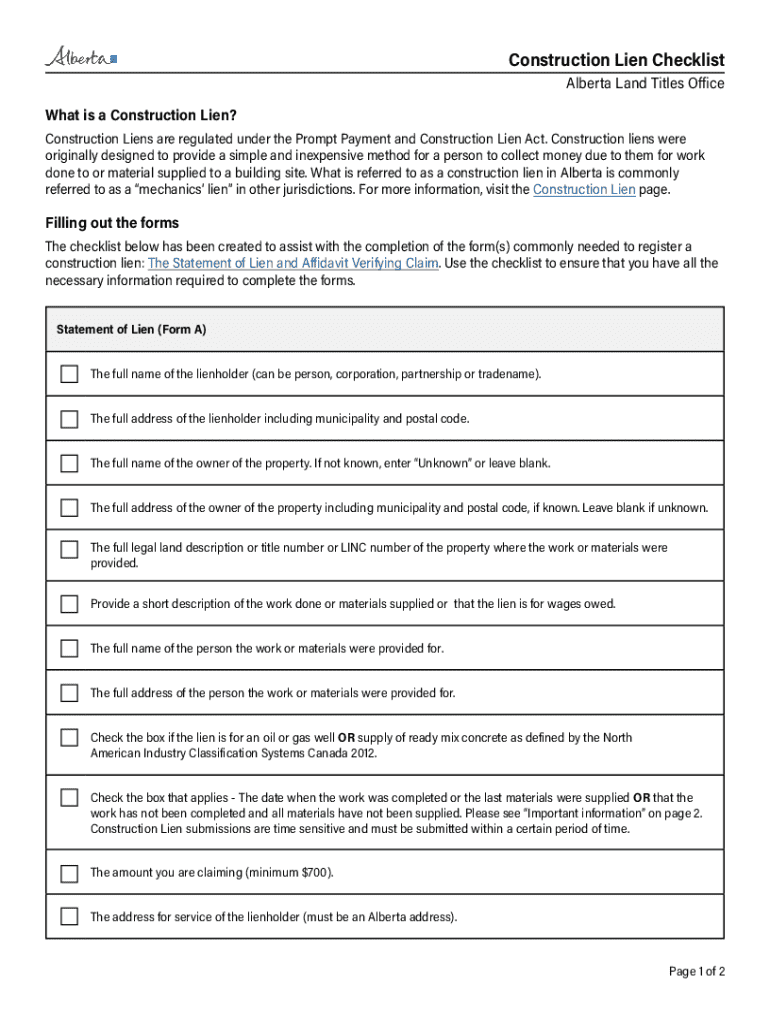
A Construction Lien Checklist serves as a crucial guide for construction professionals to ensure they meet all necessary legal requirements for filing a construction lien. It is a practical tool that outlines steps for document preparation and submission in compliance with the Prompt Payment and Construction Lien Act. This checklist provides a structured approach for claimants to organize the necessary elements, such as the Statement of Lien and Affidavit Verifying Claim, ensuring that all documentation is accurate and complete. By following this checklist, stakeholders uphold their legal rights and safeguard their interests in financial claims against a property.
Practical Application
- It acts as a procedural guide for filing liens.
- Ensures all necessary documents are included.
- Helps validate claims with proper evidence.
Steps to Complete the Construction Lien Checklist
To efficiently complete a Construction Lien Checklist, one must follow a systematic approach to gather and prepare all required documentation. Here's a breakdown of the essential steps:
- Review Eligibility: Confirm the project's eligibility for a lien based on state-specific laws.
- Prepare Documentation: Gather all contracts, invoices, and records of delivered services or materials.
- Draft the Statement of Lien: Accurately complete the lien statement, detailing the amount claimed and the property address.
- Notarize the Affidavit: Ensure the accompanying affidavit is notarized to authenticate the claim.
- Submit within Deadlines: File the lien with the county recorder’s office adhering to prescribed timeframes.
Examples of Commonly Required Documents
- Original contract and change orders
- Invoices and payment receipts
- Notices of intent to lien (if applicable)
Legal Use of the Construction Lien Checklist
Using a Construction Lien Checklist is legally binding when submitting lien claims, ensuring that all procedural aspects are fulfilled according to jurisdictional requirements. It is important to adhere strictly to guidelines laid out in the checklist to maintain the validity of the lien.
Common Legal Requirements
- Timely filing upon project completion or abandonment
- Providing accurate financial claims
- Notifying the property owner within statutory deadlines
Key Elements of the Construction Lien Checklist
A comprehensive construction lien checklist includes several critical components that ensure the lien is both effective and enforceable. Key elements include:
- Correct Property Description: Legal description and physical address.
- Lien Amount and Basis: Detailed calculation of the claim value with associate reasons.
- Claimant Information: Full details of the individual or business entity filing the lien.
- Notarized Affidavit: A sworn statement verifying the correctness of the claim.
Detailed Element Breakdown
- Claimant's identification number or license, if necessary
- Step-by-step documentation guide
- Ensured compliance with state lien laws
State-Specific Rules for Construction Liens
Each state in the U.S. has unique regulations and deadlines governing construction liens, necessitating a thorough understanding of the distinction between jurisdictions.
Important Variations to Note
- Different states have varying lien filing deadlines ranging from days to months post project completion.
- Some states require pre-lien notices while others do not.
Examples of Using the Construction Lien Checklist
Real-world examples of utilizing a Construction Lien Checklist highlight its functionalities and legal enforcement:
Typical Scenarios
- A contractor in New York files a lien post nonpayment on a residential building, facilitated by the checklist ensuring compliance with the 90-day timeline.
- A subcontractor in California uses the checklist to perfect a claim by preparing proper preliminary notices and verifying claim amounts prior to submission.
Filing Deadlines and Important Dates
Construction lien filing is highly time-sensitive, with deadlines varying significantly depending on jurisdiction and project type. Understanding and adhering to these timelines is crucial to enforce the lien successfully.
Key Deadlines
- Regular liens typically have a 90-day filing requirement after project completion.
- Oil and gas liens often have a shorter filing window due to industry-specific regulations.
Required Documents for a Construction Lien Claim
The documents needed to substantiate a construction lien filing are comprehensive and must be prepared meticulously to prevent invalidation.
Essential Documentation
- A detailed statement of account with outstanding balances.
- Proof of service delivery, such as delivery slips and timesheets.
- Contracts, change orders, and relevant communications.
Who Typically Uses the Construction Lien Checklist
This checklist is predominantly used by parties involved in the construction industry, whether they be contractors, subcontractors, suppliers, or architects, each requiring different checklist adaptations based on their specific role.


Specific User Categories
- General contractors ensuring payment for services rendered.
- Subcontractors using it to claim due payments from prime contractors.
- Suppliers protecting their interest in unpaid materials delivered.
These various sections ensure comprehensive coverage of all pertinent aspects of a Construction Lien Checklist, providing stakeholders with detailed insights and guidelines for effective execution.