
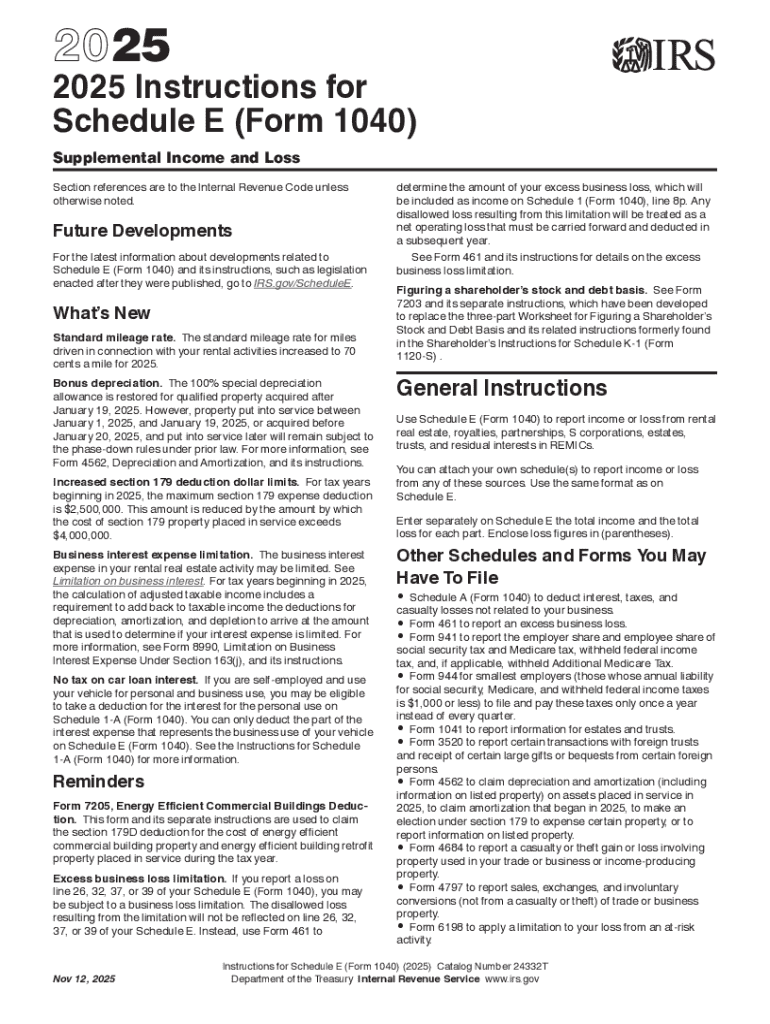







Understanding Form 1040 Schedule E
Form 1040 Schedule E is a crucial component of the federal tax return process, utilized primarily for reporting supplemental income and loss. This includes earnings derived from rental real estate, royalties, partnerships, S corporations, estates, trusts, and residual interests in Real Estate Mortgage Investment Conduits (REMICs). Understanding its purpose and when to use it is essential for accurate tax filing and compliance.
Key Elements of Schedule E
Schedule E requires detailed entries to accurately report income and expenses. Key elements include:
- Rental Income and Expenses: This involves recording total rental payments received and itemized deductible expenses, such as repairs, utilities, and insurance.
- Royalties: If you receive income from mineral rights, intellectual property, or similar sources, these must be reported here.
- Partnerships and S Corporations: Income or loss from these entities must be documented, using Schedule K-1 to inform your entries.
- Estates and Trusts: Any distributions received should be reported, again using Schedule K-1 as guidance.
How to Use Schedule E
To correctly utilize Schedule E, one must accurately report any supplemental income or losses not accounted for in other sections of the Form 1040. Proper documentation and adherence to IRS guidelines ensure compliance and prevent potential audits.
Step-by-Step Completion of Schedule E
-
Gather Information and Documents: Collect all necessary documents such as Form 1099-MISC, lease agreements, and Schedule K-1 statements.
-
Report Rental Income and Expenses: Use Part I to detail rental property earnings and associated expenses.
-
Enter Royalty Income: If applicable, document royalty income and any related expenses.
-
Detail Partnerships, S Corporations, Estates, and Trusts Income: Using Parts II, III, and IV, record income or losses from these entities.
-
Final Review and Calculations: Carefully review all entries for accuracy to ensure correct totals and compliance before transferring amounts to Form 1040.
Important Terms Related to Schedule E
Understanding specific terminology associated with Schedule E is crucial:
- Passive Activity Loss: A loss arising from activities in which the taxpayer does not materially participate.
- Basis: Refers to the taxpayer's investment in the property or asset, determining the gain or loss on sale or exchange.
- Depreciation: An annual allowance for the wear and tear, deterioration, or obsolescence of the property.
IRS Guidelines for Schedule E
The IRS provides comprehensive guidance on completing Schedule E, helping taxpayers avoid common errors:
- Documentation: Maintain thorough records of income and expenses to support claims.
- Passive Activity Rules: Understand limitations on losses from passive activities such as rental properties.
- Accuracy: Double-check entries to ensure they align with forms like Schedule K-1, and seek professional advice if needed.
Filing Deadlines and Methods
Filing Deadlines
Schedule E is typically due with your annual tax return on April 15, unless you file for an extension. Timely filing ensures compliance and avoids penalties for late submissions.
Submission Methods
- Online: Most filers can use electronic means through IRS e-file service or tax preparation software, ensuring quicker processing and confirmation.
- Mail: Paper submissions are accepted but require careful attention to mailing periods to meet deadlines.
- In-Person: While less common, some may choose to file in person for a more hands-on approach.
Required Documents for Schedule E
Compiling the appropriate documents is critical for accurate completion:
- Form 1099-MISC: For miscellaneous income such as rental payments.
- Lease Agreements: Evidence of rental transactions.
- Schedule K-1: For partnerships or S corporations income and deductions.
Penalties for Non-Compliance
Failure to properly complete and submit Schedule E can result in IRS penalties:
- Late Filing Penalties: Financial penalties accrue for each month a return is late.
- Accuracy Penalties: Misreporting income or expenses can result in fines and possible audits.
Digital vs. Paper Versions of Schedule E
Choosing between digital and paper submission can affect both filing ease and cycle times:
- Digital Submission: Offers faster processing and immediate confirmation upon acceptance, minimizing errors with built-in checks.
- Paper Submission: Requires more rigorous manual checking but may suit those unfamiliar with digital processes.
By understanding the intricacies and requirements of Schedule E, taxpayers can better manage supplemental income reporting, ensuring compliance and optimizing their financial outcomes.




