






Definition & Meaning
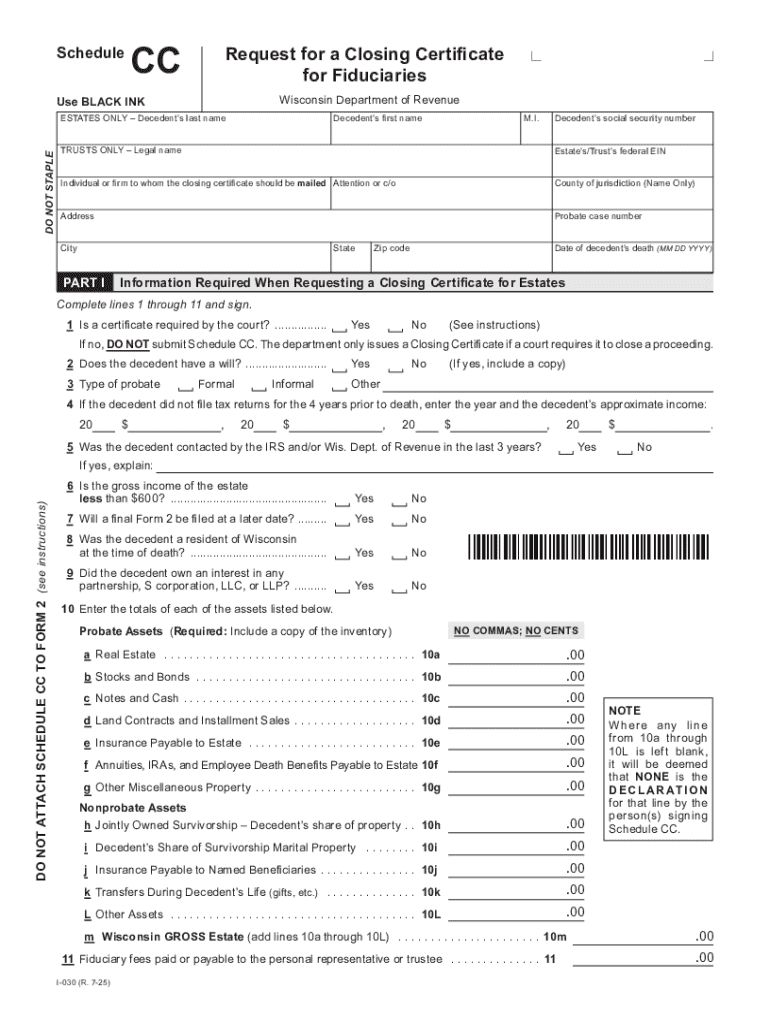
The "2025 I-030 Wisconsin Schedule CC, Request for a Closing Certificate for Fiduciaries" is a specialized document used primarily in the state of Wisconsin. Its main purpose is to facilitate the legal closure of fiduciary responsibilities, particularly for estates. This form is integral for ensuring that the fiduciary, often an executor or administrator of an estate, has met all tax obligations before closing the estate. By completing and submitting this document, fiduciaries request confirmation that all taxes due have been paid, hence authorizing the final distribution of estate assets. The fillable nature of the form allows for easy digital entry and submission, streamlining the process for users. This form plays an essential role in estate management, ensuring compliance with tax regulations and providing legal closure for the fiduciary roles performed.
How to Use the 2025 I-030 Wisconsin Schedule CC
Using this form involves several steps aimed at achieving legal compliance for fiduciary roles. Start by acquiring the form through the Wisconsin Department of Revenue's official website or trusted document management platforms like DocHub. Once acquired, fill out the necessary sections, such as the decedent’s information and the fiduciary’s details. Ensure all checkboxes and text fields are accurately completed, enabling a seamless review process. Users can navigate the form using the tab key and select appropriate boxes using a mouse or keyboard shortcuts. After filling out the form, submit it to the appropriate tax authority, either electronically via approved platforms or through traditional mailing methods. By following these steps, fiduciaries can effectively manage their responsibilities, ensuring all tax obligations are met.
Steps to Complete the 2025 I-030 Wisconsin Schedule CC
-
Gather Required Information:
- Collect all necessary details about the estate, including the decedent's full name, date of death, and any relevant identification numbers.
-
Access the Form:
- Obtain the fillable version of the form from the Wisconsin Department of Revenue or a digital document management platform like DocHub.
-
Fill Out the Form:
- Use the form’s fillable features to enter the required data. Ensure all sections, such as the fiduciary's name and address, are completed accurately.
-
Review for Accuracy:
- Double-check all entered information for errors or omissions. Accurate details are crucial to avoid processing delays.
-
Submit the Form:
- Depending on preference and available resources, submit the form electronically or mail it to the Wisconsin Department of Revenue.
-
Retain Copies:
- Keep copies of the submitted form and any correspondence with the tax authorities for personal records and future reference.
Who Typically Uses the 2025 I-030 Wisconsin Schedule CC
This form is primarily used by fiduciaries such as executors, administrators, or trustees managing estates within Wisconsin's jurisdiction. These professionals are appointed to oversee and conclude the administration of a deceased person's estate. Additionally, legal representatives or consultants assisting with estate management may use this form to ensure compliance with state regulations. The form serves as a critical tool for individuals responsible for closing financial and legal matters of an estate, providing them with a structured method to document their compliance with tax laws. Executors undertaking estate settlement processes and financial consultants facilitating the closure of estate-specific tax matters also find this form indispensable in fulfilling their responsibilities.


Key Elements of the 2025 I-030 Wisconsin Schedule CC
Understanding the essential components of this form is crucial for a fiduciary seeking to complete it accurately:
-
Decedent’s Identity:
- Includes full name, last known address, date of death, and social security number.
-
Fiduciary Information:
- Comprises the fiduciary's name, contact details, and the capacity in which they are acting (executor, trustee, etc.).
-
Estate Details:
- Encompasses valuation and distribution specifics, requiring clarity on the assets and liabilities under management.
-
Tax Compliance:
- Involves a declaration regarding the payment of all due taxes, affirming legal compliance.
-
Certification Statement:
- A critical section where the fiduciary certifies that the submitted information is true and accurate under penalty of perjury.
State-Specific Rules for the Form
Wisconsin imposes specific regulations governing the completion and submission of the schedule CC form. Understanding these rules ensures the fiduciary remains compliant:
-
Wisconsin Revenue Codes:
- Compliance with sections addressing estate taxes and fiduciary duties is mandatory.
-
Submission Guidelines:
- Includes timelines for submission relative to the decedent’s date of death and estate finalization plans.
-
Regional Offices:
- Different jurisdictions may require submission to specific Wisconsin Department of Revenue offices, depending on estate size and complexity.
In summary, knowledge of state-specific regulations is pivotal in successfully navigating the form's legal requirements.
Legal Use of the 2025 I-030 Wisconsin Schedule CC
The legal framework surrounding this form ensures the proper closure of fiduciary duties associated with estate management:
-
Compliance Documentation:
- Acts as a formal record confirming all taxes are settled before distributing an estate’s remaining assets.
-
Fiduciary Protection:
- Provides legal immunity from future state claims on taxes, securing fiduciaries against potential legal disputes.
-
Judicial Requirements:
- May be presented as evidence in probate court proceedings to demonstrate adherence to financial legalities during estate closure.
Filing this form effectively ensures all legal bases are covered, allowing fiduciaries to conclude their responsibilities without residual legal or tax-related liabilities.
Required Documents for Submission
A comprehensive checklist of documents is necessary to support the submission of the form:
-
Death Certificate:
- A copy confirming the decedent’s death is often required.
-
Estate Valuation Reports:
- Detailed documentation of asset values, liabilities, and expected distributions.
-
Tax Payment Records:
- Receipts and proofs of tax payments previously made by the estate.
-
Legal Appointments:
- Any papers confirming the fiduciary's legal appointment as an executor or administrator.
By ensuring these documents accompany the form's submission, fiduciaries validate their compliance efforts, streamlining the overall processing time.