






Definition and Purpose of Schedule 8812
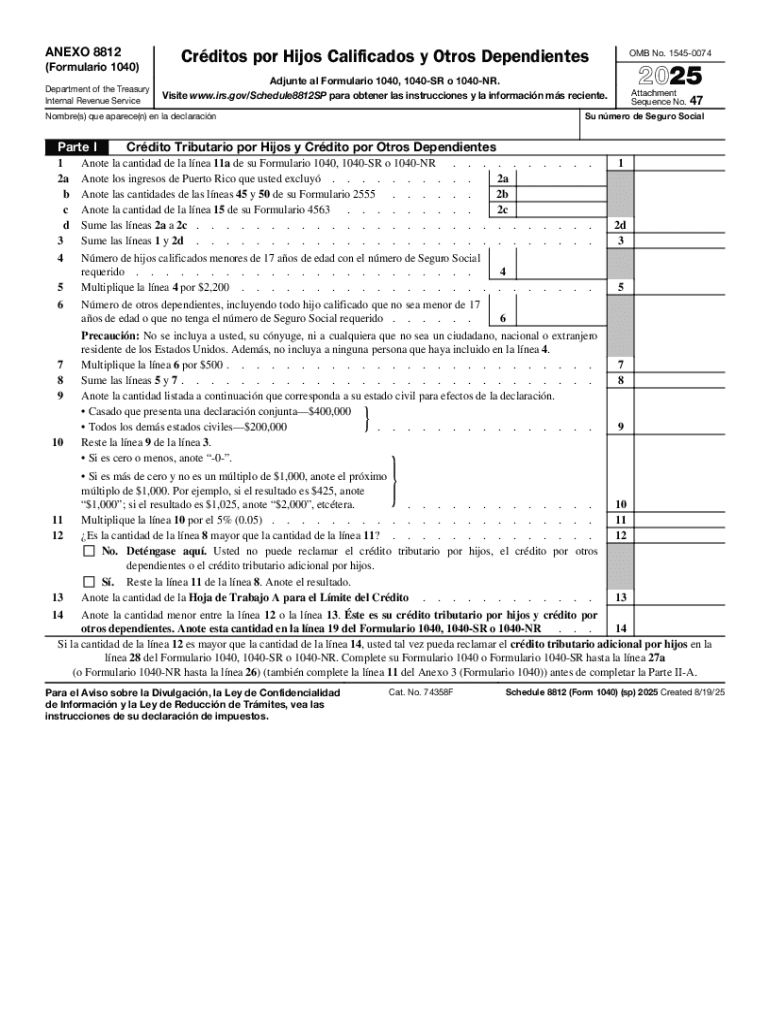
Schedule 8812, also known as the Additional Child Tax Credit form, is a supplemental form to Form 1040 used by taxpayers in the United States. Its primary purpose is to calculate the refundable portion of the Child Tax Credit. The form assists those taxpayers whose Child Tax Credit exceeds their tax liability, allowing them to receive a refund of the excess amount. This helps families by providing financial relief through direct refunds. The form is essential for taxpayers with qualifying children, ensuring they receive the full benefit of the tax credits available to them.
Steps to Complete Schedule 8812
Step 1: Determine Eligibility for the Child Tax Credit
- Verify that each child qualifies as a dependent.
- Ensure the child meets age, residency, and relationship requirements.
- Confirm the child has a valid Social Security Number.
Step 2: Calculate the Base Child Tax Credit
- Refer to your income level to determine the initial credit amount.
- Use the IRS guidelines to ensure accuracy.
Step 3: Complete Part I of Schedule 8812
- Enter your Child Tax Credit from Form 1040.
- Detail any foreign income and exemptions.
Step 4: Complete Part II - Additional Child Tax Credit
- Enter the information from your Form 1040 regarding earned income.
- Follow the form instructions to calculate the refundable credit.
Required Documents for Completing Schedule 8812
- Form 1040, U.S. Individual Income Tax Return
- Social Security Numbers for each qualifying child
- Documentation of earned income (e.g., W-2s, 1099s)
- Details of any foreign income or tax credits
- Previous tax returns for reference
Ensuring all the required documents are available before starting the form will streamline the process and reduce errors.
Filing Deadlines and Important Dates
- Tax Day: Schedule 8812 must be filed by the standard tax filing deadline, typically April 15, unless extended.
- Extensions: If granted a filing extension, ensure Schedule 8812 is submitted by the extended deadline, usually October 15.
Missing the filing deadline can result in delayed refunds and possible penalties, so it is critical to adhere to the IRS timelines.
Eligibility Criteria for Schedule 8812
- Eligible for Child Tax Credit: Taxpayers must first qualify for the Child Tax Credit.
- U.S. Residency: The taxpayer and child must meet U.S. residency requirements.
- Income Thresholds: The taxpayer’s income must fall within certain thresholds to qualify for the additional credit.
Understanding these criteria will ensure that the form is correctly filled out and submitted, maximizing potential refunds.


Taxpayer Scenarios: Who Uses Schedule 8812?
- Families with multiple children may greatly benefit as they often qualify for higher credits.
- Low to moderate-income households can leverage this form for additional refunds.
- Individuals with partial tax liability, where the Child Tax Credit is greater than taxes owed, will find this form essential.
Different scenarios illustrate the wide usage of Schedule 8812, highlighting its role in providing tax relief to a range of taxpayers.

IRS Guidelines and Instructions
- The IRS provides an instruction booklet specifically for Schedule 8812, detailing step-by-step completion instructions.
- Updates: Check the IRS website for the latest updates, as forms and instructions may change annually.
Following the IRS guidelines ensures compliance and that all calculations on the form are correct, avoiding issues during tax processing.
Penalties for Non-Compliance
- Failure to file Schedule 8812 with Form 1040 can result in ineligibility for the refund.
- Inaccurate information may lead to penalties or the need to amend tax returns.
Ensuring accurate and timely filing of Schedule 8812 is crucial to avoid financial penalties and ensure the maximization of tax benefits.
Digital vs. Paper Versions of Schedule 8812
- Online Submission: Utilizing digital tax software can simplify the process and ensure direct submission to the IRS.
- Paper Forms: Traditional paper submission is still available but may result in slower processing times.
Choosing the right submission method can simplify tax filings, and digital options generally provide speedier processing and assistance with potential errors.