






Definition and Purpose of Form 1120
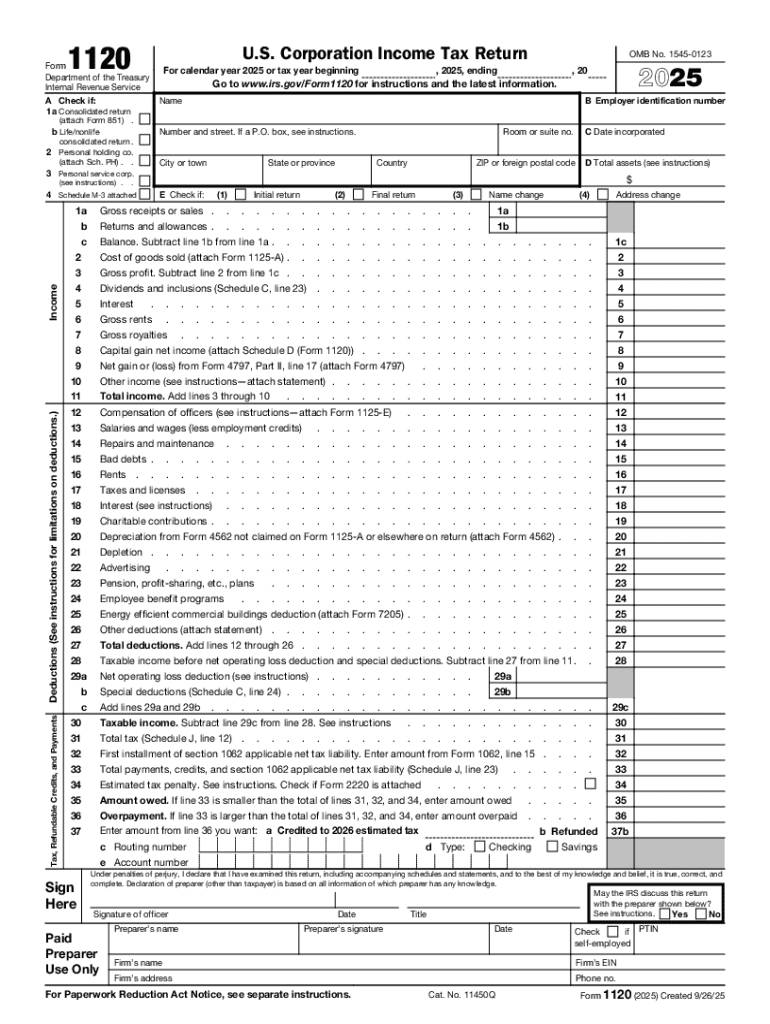
Form 1120, known as the U.S. Corporation Income Tax Return, is a critical document for corporations operating in the United States. This form is required by the Internal Revenue Service (IRS) for any domestic corporation to report its income, gains, losses, deductions, credits, and to calculate its income tax liability. Understanding its purpose is essential for business compliance and for avoiding potential legal and financial repercussions. The primary goal of Form 1120 is to ensure that corporations accurately disclose their financial status to the government, providing transparency and accountability.
Obtaining the Form 1120
Corporations can obtain Form 1120 from several sources. Primarily, the IRS website provides downloadable PDF versions suitable for both digital and printed submissions. Corporations may also receive the form from tax professionals or software platforms specializing in tax preparation. Online tax preparation tools often offer integrated options to fill out Form 1120, streamlining the process and ensuring accuracy. It's crucial for businesses to ensure they are working with the most current version of the form to comply with any recent tax law changes.
Step-by-Step Guide to Completing Form 1120
Filling out Form 1120 involves several specific steps to ensure completeness and accuracy:
- Basic Information Section: Include the corporation's name, address, Employer Identification Number (EIN), and the date of incorporation.
- Income Section: Report total income, including gross receipts or sales, by subtracting returns and allowances.
- Deductions: Provide detailed information on allowable deductions to calculate taxable income, such as operating expenses and cost of goods sold.
- Tax and Payments: Compute the total tax due, account for estimated tax payments, and tax credits to determine the final amount owed or to be refunded.
- Schedule M-1 and M-2: Reconcile financial statement income with taxable income and report changes in retained earnings.
Accurate completion of each step ensures compliance and prevents filing errors that could lead to penalties.
Filing Deadlines for Form 1120
Filing Form 1120 on time is critical to avoid penalties. For calendar-year corporations, the deadline is typically the 15th day of the fourth month following the end of the corporation's tax year, which is usually April 15th for those using the calendar year. If the date falls on a weekend or holiday, the deadline is extended to the next business day. Extensions can be requested using Form 7004, granting an additional six months to file, though any taxes owed must still be paid by the original deadline.
Who Typically Uses Form 1120
Form 1120 is specifically designed for C corporations, which are legal entities that separate the owners' personal assets from those of the business. However, specific variations, such as Form 1120-S, are used by S corporations that pass income directly to shareholders to avoid double taxation at the corporate level. Understanding which form to use based on the business structure is vital for accurate tax reporting and to capitalize on potential tax benefits associated with the chosen corporate structure.
IRS Guidelines for Form 1120
Adhering to IRS guidelines is paramount when completing Form 1120. These guidelines cover a range of topics, including proper accounting methods, income sources recognition, deduction eligibility, and credit claims. The IRS also provides directives on changes in tax laws and updates that affect corporate tax returns. Corporations are encouraged to consult these guidelines or engage with tax professionals to ensure their submissions are compliant with current tax regulations.
Penalties for Non-Compliance
Failing to file Form 1120 on time, or providing inaccurate information, can result in significant penalties. These penalties may include fines based on the amount of tax owed and interest on any unpaid tax liabilities. The IRS can impose penalties for negligence, substantial understatement of tax, or failure to pay tax owed. Corporations need to be diligent in their filing efforts to avoid these costly repercussions.
Software Compatibility and Integration
Utilizing tax software can simplify the process of completing and filing Form 1120. Programs such as TurboTax or QuickBooks offer feature integrations that help manage financial data for seamless tax preparation. These platforms can assist with data importation, calculation accuracy, and can sometimes link directly with IRS e-filing systems, ensuring timely submission. Choosing software compatible with Form 1120 can save time and reduce errors in the overall filing process.