






Definition & Meaning of IRS Form 8962
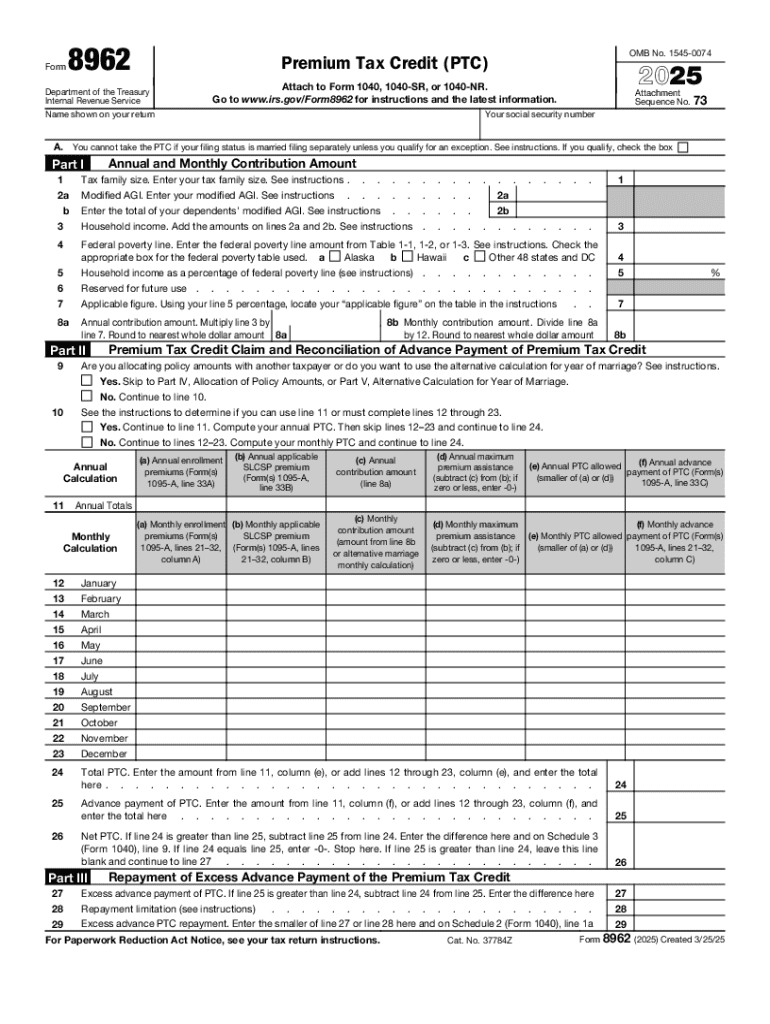
IRS Form 8962, also known as the Premium Tax Credit (PTC) form, is utilized by individuals to reconcile the advance payments of the premium tax credit with the actual premium tax credit allowed for the tax year. The form is essential for taxpayers who received advance payments of the premium tax credit (APTC) for coverage under the Health Insurance Marketplace. By effectively completing this form, taxpayers can claim additional credit or repay excess APTC, ensuring compliance with tax laws and aligning their reported income with the estimates made when applying for health insurance.
Function of Premium Tax Credit (PTC)
- Reduction in Insurance Costs: PTC serves to lower the monthly premium costs for health insurance plans purchased through the Marketplace.
- Income-based Credit: The credit amount is based on the taxpayer's income and family size, making healthcare more affordable for families with low to moderate income.
- Reconciliation of APTC: If advance payments were made, the form serves to reconcile those with the actual credit, adjusting for any changes in income or family size.
Steps to Complete IRS Form 8962
Completing the IRS Form 8962 involves a sequence of detailed steps to ensure accuracy and compliance. Below are step-by-step instructions for effectively filling out the form.
-
Gather Necessary Information:
- Collect details regarding all Marketplace health plans you and your tax dependents were enrolled in during the year.
- Obtain Forms 1095-A from the health care Marketplace, which provides the information necessary for completing Form 8962.
-
Fill in Personal Information:
- Enter your personal details, including your name and the social security number exactly as shown on your tax return.
-
Determine Modified Adjusted Gross Income (MAGI):
- Calculate your household’s MAGI, crucial for determining the credit's eligibility and amount.
- Include income sources like wages, unemployment benefits, and any other taxable income.
-
Compute PTC Using Income & Family Size:
- Utilize the Federal Poverty Line chart to ascertain your applicable percentage table for computing PTC.
- Fill out Part II to compute the PTC using your MAGI and household size.
-
Reconcile Advance Payments:
- Use Part III to reconcile the advance payment of the PTC with the amount calculated.
- Check for any payment deficiency or excess that may require compensation.
-
Include the Total PTC on Your Tax Return:
- Place the total amount of the PTC calculated in Part V on Line 69 of your Form 1040.
Common Errors and Tips:
- Cross-verification: Ensure the income reported matches the MAGI used for calculating the credit.
- Precise Calculations: Recheck calculations in Part III to avoid discrepancies between APTC and the actual PTC.
- Record-keeping: Maintain thorough records of all submissions and correspondence with the IRS to reconcile discrepancies swiftly.
Eligibility Criteria for IRS Form 8962
Determining eligibility for the Premium Tax Credit and, consequently, the need to file Form 8962, involves understanding specific requirements aligned with the taxpayer's economic circumstances.
- Enrollment in Qualified Health Plan: The individual or family must be enrolled in a qualified health insurance plan bought through the Health Insurance Marketplace.
- Income Range: Successful applicants usually have incomes between 100% and 400% of the Federal Poverty Line (FPL) for their household size.
- Tax Filing Requirement: The taxpayer must not have gross income below the tax return filing threshold.


Common Eligibility Scenarios:
- Different Family Compositions: Variations arising from divorce, marriage, or childbirth which may affect the reported income or family size.
- Income Fluctuations: Changes in employment status or income earnings which could impact the eligibility throughout the plan year.
Understanding eligibility is crucial for accurately completing Form 8962 and ensuring that taxpayers receive the correct tax credit amount.
Filing Deadlines and Important Dates
Timeliness in submitting IRS Form 8962 is vital to avoid penalties and ensure correct tax credit reconciliation. Below are important deadlines associated with the form.
-
Tax Return Due Date:
- Generally due every year on April 15, along with Form 1040 or Form 1040SR.
-
Extension of Time for Filing:
- Taxpayers may apply for an automatic extension using Form 4868, providing an additional six months to file their returns and Form 8962.
Critical Reminders:
- Extensions do not defer payment: Even with a filing extension, any tax due must be paid by the April 15 deadline to avoid interest and penalties.
- Periodic Review of Deadlines: Stay informed about tax law changes affecting filing dates and deadlines, particularly during atypical tax seasons such as those resulting from pandemic-related extensions.
These timelines ensure that taxpayers maintain compliance with IRS requirements and avoid unnecessary interest or penalties.
Key Terms Related to IRS Form 8962
Grasping the terminology related to IRS Form 8962 and the Premium Tax Credit can help in accurately completing the form and understanding the tax obligations.
- Advance Premium Tax Credit (APTC): Payments made directly to an insurance company to lower the monthly premium costs.
- Household Income: The total income of all members of the household, including modifications for determining eligibility for PTC.
- Federal Poverty Line (FPL): A measure of income issued annually by the Department of Health and Human Services to determine eligibility for PTC.
Additional Useful Terms:
- Marketplace Coverage: Refers to health insurance plans and coverages available via the Health Insurance Marketplace.
- Reconciliation: The process of matching advance payments vs. the actual premium tax credit by assessing the financial year's income and family specifics.
Understanding these terms aids in the correct completion and filing of IRS Form 8962, facilitating accurate tax credit reconciliations.
Who Typically Uses IRS Form 8962
IRS Form 8962 is primarily utilized by taxpayers who have received advance payments on the premium tax credit and need to determine their actual premium tax credit eligibility.
Typical Users Include:
- Individuals and Families: Those enrolling in health plans through the Health Insurance Marketplace.
- Self-employed Individuals: Those with fluctuating income levels that may require PTC adjustments.
- Young Adults and Students: Often needing health insurance outside their parents’ plans and seeking independent premium support.
Scenarios Involving Frequent Usage:
- Recent Graduates: Entering the workforce may change income dynamics, requiring PTC adjustment.
- Families with New Dependents: Birth or adoption necessitating updates to the form based on new family size and income.
Understanding the typical users aids in delivering targeted information and assistance in filing the form accurately.
Legal Use of IRS Form 8962
The legal standing and use of IRS Form 8962 are grounded in the laws and guidelines established to govern the premium tax credit eligibility and reconciliation process, ensuring fair tax management.
Legal Aspects Include:
- Compliance with Tax Laws: Necessary to accurately report any excess advance payments and thereby avoid penalties or unpaid tax liabilities.
- Protection of Taxpayer Rights: Ensures that any discrepancies or adjustments are handled within the provisions of the IRS tax code.
Legal Obligations:
- Complete and Precise Reporting: Crucial for avoiding intentional misreporting penalties.
- Documentation Retention: Maintaining accessibility to all records used in completing the form for a minimum of three years, as required by law for audit purposes.
Understanding these legal frameworks underscores the importance of proper form submission and the associated taxpayer responsibilities.
How to Obtain IRS Form 8962
Securing IRS Form 8962 is a straightforward process, facilitated through multiple channels ensuring ease of access for taxpayers needing to file the form for tax credit reconciliation.
Methods to Obtain the Form:
-
Online Access:
- Visit the IRS official website to download a copy of Form 8962 directly. PDF versions are readily available for taxpayers.
-
Tax Preparation Software:
- Use commercial tax preparation software like TurboTax, which automatically includes the form when necessary based on taxpayer data.
-
Through Tax Professionals or Accountants:
- Contact a professional tax preparer who can secure and assist in completing the form accurately.
Important Considerations:
- Keep Forms Updated: Always access the latest version of Form 8962, ensuring compliance with current IRS regulations and guidelines.
- Cross-check Submission: Whether filing electronically or via mail, ensure all submitted documents are complete and verified for accuracy.
Acquiring the form through these channels aids in maintaining compliance and ensuring accurate tax credit reconciliations.
IRS Guidelines for Completing Form 8962
The IRS has established guidelines to aid taxpayers in properly filling out Form 8962, ensuring all necessary steps and checks are carried out.
Key Guidelines:
- Following Instructional Material: Refer to the IRS instructions for Form 8962 available online for detailed guidance.
- Verify Information: Double-check all entries on the form to match with the information provided in Form 1095-A.
- Adjusting for Income Changes: Any income alterations should be duly reflected in the MAGI section to maintain reconciliation accuracy.
Compliance Tips:
- Consistent Cross-verification: Regularly check for updates in IRS guidelines during tax season.
- Professional Assistance: Consider consulting a tax professional if uncertain about specific steps or requirements detailed in the IRS instructions.
These guidelines support taxpayers in correctly filing Form 8962, thereby eliminating errors and minimizing any issues with tax credit reconciliation.