






Definition & Meaning
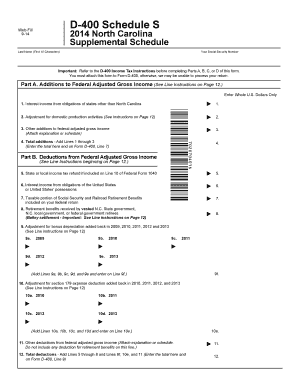
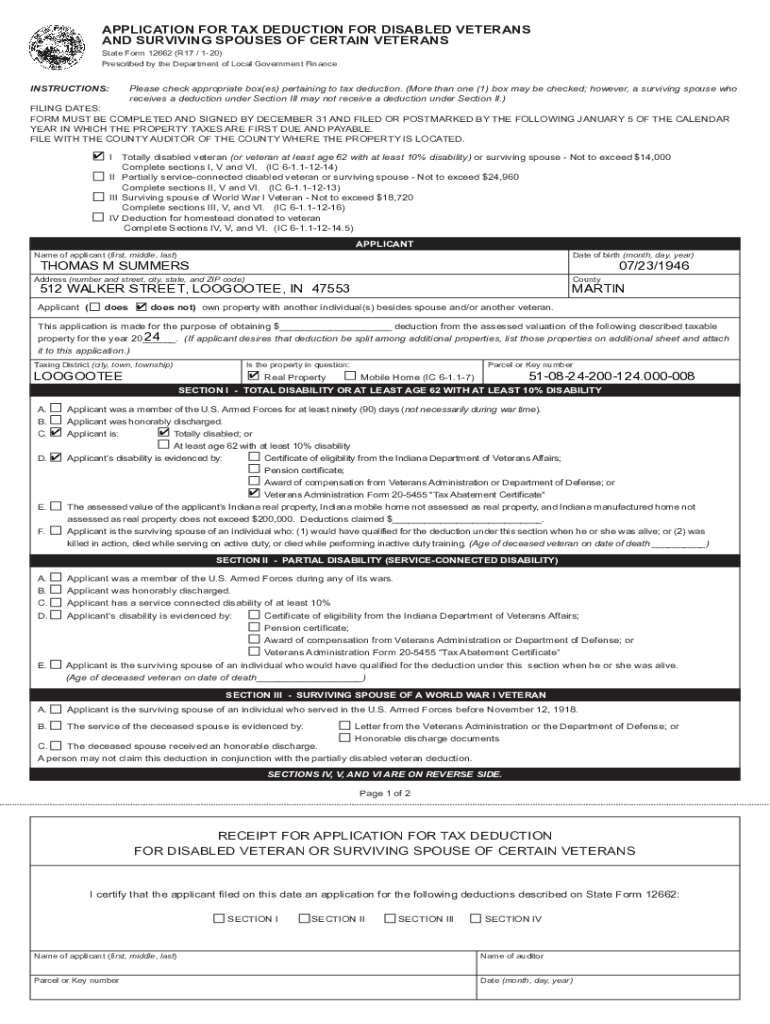
The application for tax deduction for disabled veterans and surviving spouses of certain veterans is designed to provide financial relief by reducing the taxable income for eligible individuals. This specific deduction acknowledges the sacrifices made by veterans and their families and aims to support them through tax savings. It is typically part of state-level tax legislation, while the eligibility and benefits can vary depending on the specific statutes in each state.
How to Obtain the Application
To obtain the application for a tax deduction for disabled veterans and surviving spouses, you can visit your state's Department of Revenue or the equivalent agency's website. Many states offer downloadable forms that you can print and fill out manually. Alternatively, some jurisdictions may provide an online application process. You can also request a physical form by contacting the agency's customer service line or visiting a local government office in person.
Steps to Complete the Application
-
Gather Required Documents: Collect all necessary documents, such as proof of disability status, military service records, and a copy of your most recent tax return.
-
Fill Out Personal Information: Complete sections that require your name, address, contact information, and social security number.
-
Provide Veteran Service Details: Enter information regarding your military service, including service dates and discharge status. Provide documentation as needed.
-
Verify Disability/Surviving Spouse Status: Include appropriate documentation that confirms your disability or status as a surviving spouse.
-
Sign and Date the Application: Carefully review all provided information before signing and dating the application.
-
Submit the Application: Follow submission instructions, which may include mailing the form to a specified address or submitting online if available.
Eligibility Criteria
Eligibility for the tax deduction application primarily hinges on:
- Service History: Applicants must typically have a verified history of military service, often requiring an honorable discharge.
- Disability Rating: A documented disability rating, usually provided by a Department of Veterans Affairs (VA) letter, is often required.
- Residency Requirements: Many programs require residency in the state where the application is filed for a specified period.
- Income Limits: Some states have income thresholds that applicants must not exceed to qualify for the deduction.
- Surviving Spouse Criteria: Documentation as a surviving spouse of a qualifying veteran is necessary for those applying under this category.


State-Specific Rules
Eligibility and the amount of tax deduction can vary significantly across different states due to differing tax laws and veteran benefits regulations. For example:
- California: May offer more comprehensive benefits to disabled veterans than smaller states due to larger veteran populations and economic capacity.
- Texas: Known for having specific county-level variations in how veterans' property tax exemptions are applied.
- New York: Can offer additional benefits to veterans, including exemptions from local and state taxes, dependent on legislative updates.
Researching your specific state's Department of Veteran Affairs or equivalent is crucial to fully understand these variations.
Required Documents
To ensure your application for a tax deduction is successful, gather the following documents:
- Proof of Military Service: DD Form 214 or equivalent service record
- Letter of Disability: Official documentation from the VA confirming disability status
- Proof of Residency: Utility bills, lease agreements, or other documents verifying your state residency
- Recent Tax Returns: A copy of your latest tax filing
- Surviving Spouse Documentation: Marriage and death certificates in cases where benefits are sought as a spouse
Keep copies of these documents for your records and submit originals or certified copies as per application instructions.
Filing Deadlines / Important Dates
Deadlines for filing this application often align with state income tax deadlines, typically around mid-April. However, some states may have specific deadlines for property tax-related deductions.
- Check Annually: Since dates can change, verify filing deadlines annually to ensure compliance.
- Extension Policies: Certain jurisdictions might allow for filing extensions. Research if applicable extensions or late submission policies are in place.
Form Submission Methods
- Online: If your state offers an online application portal, submission can be quick and convenient.
- Mail: Traditional paper forms can be mailed to the appropriate state authority.
- In-Person: Visit state tax offices for a more direct submission process, which may also allow for immediate confirmation of receipt.
Understand your state’s preferences and the available methods to ensure prompt and proper submission.
Application Process & Approval Time
The approval process for the tax deduction varies widely depending on individual state processing times.
- Initial Review: Typically involves verifying the completeness of the application and the accuracy of provided documents.
- Formal Evaluation: In-depth assessment of eligibility criteria, with communication for any additional information or clarifications required.
- Notification: Approval or denial notices are generally sent via the preferred contact method outlined on the application.
Processing times can range anywhere from a few weeks to several months, depending on the volume of applications and specific state efficiencies. Maintain contact with your state tax department for updates on your application status.