






Definition and Purpose of the Nwcg Task Book for the Positions of Prescribed Fire Burn Boss
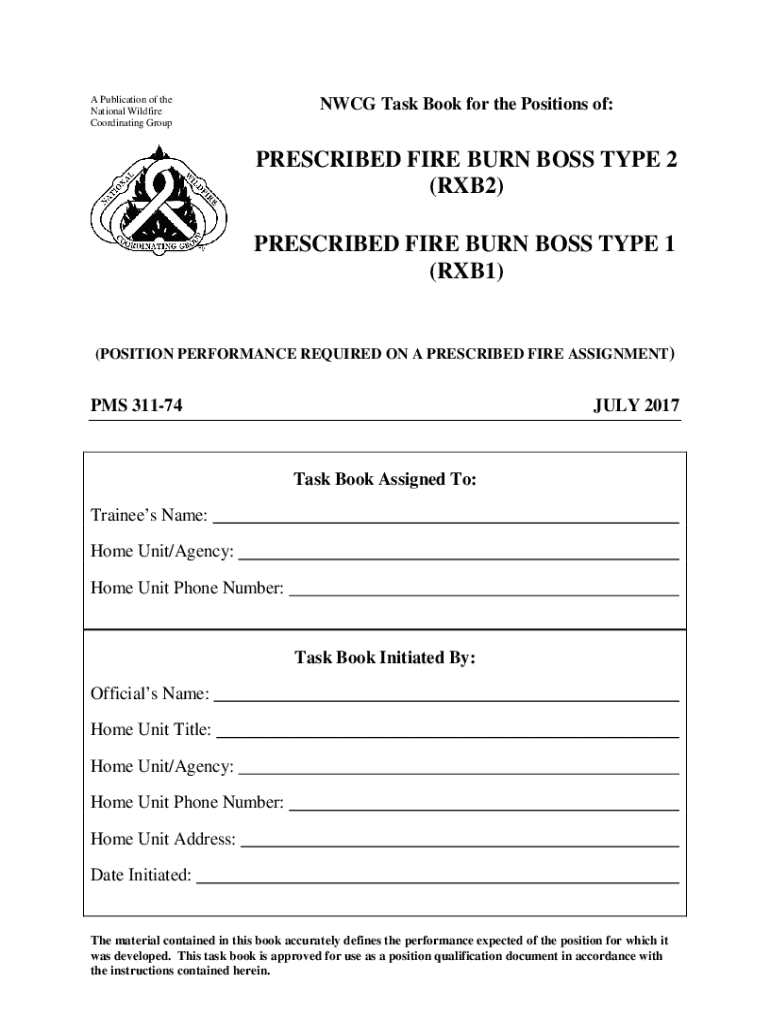
The Nwcg Task Book for the Positions of Prescribed Fire Burn Boss serves as a comprehensive guide for individuals aiming to qualify as a Prescribed Fire Burn Boss. This document is essential for outlining the performance expectations and responsibilities that come with the Prescribed Fire Burn Boss Type 1 (RXB1) and Type 2 (RXB2) positions. It defines the necessary skills and competencies required for effective management and execution of prescribed fire operations.
How to Use the Nwcg Task Book Effectively
To effectively leverage the Nwcg Task Book, candidates should familiarize themselves with its structure, which typically includes sections for listing qualifications, performance evaluations, and task verifications. Users should:
- Review the prerequisites and qualification requirements outlined in the task book.
- Engage in training and hands-on experiences necessary to meet these requirements.
- Document achievements and completed tasks diligently, as these records are essential for validating qualifications.
- Obtain necessary signatures from evaluators and mentors for task completion verification.
Acquisition Process for the Nwcg Task Book
Candidates interested in obtaining the Nwcg Task Book can procure it through their respective agencies involved in wildfire management, such as the National Wildfire Coordinating Group (NWCG). It is also commonly accessible through training programs or through direct request to national or regional wildfire management administrations.
Steps to Complete the Nwcg Task Book
Completing the Nwcg Task Book involves a systematic approach to mastering the competencies required for the Prescribed Fire Burn Boss positions:
- Understand the Required Tasks: Begin by reviewing each task to comprehend the expected outcomes and required performance standards.
- Engage in Training: Participate in formal training sessions, workshops, or on-the-job training that targets specific tasks.
- Document Progress: Accurately record progress and completion of each task in the task book, ensuring all sections are filled with appropriate details.
- Evaluate and Sign Off: Work closely with a qualified evaluator to review and verify the completion of tasks. The evaluator is responsible for providing feedback and certifying the completion within the task book.
Significance of the Nwcg Task Book
The Nwcg Task Book plays a critical role in the professional development of fire managers:
- Standardization of Competencies: It ensures that all candidates meet standardized competencies before assuming crucial fire management roles.
- Credential Validation: Serves as official documentation validating the qualifications necessary to responsibly manage prescribed fire operations.
- Career Advancement: Successfully completing the task book can lead to career promotions and higher responsibility roles within wildfire management.
Primary Users of the Nwcg Task Book
The task book is predominantly used by:
- Fire Management Personnel: Individuals who aspire to manage and execute prescribed burns, including firefighting crew leaders and fire management officers.
- Training and Development Coordinators: Professionals responsible for training candidates in prescribed fire management.
- Evaluators and Mentors: Experienced personnel tasked with verifying the competency and task completion of candidates.
Essential Terminology in the Nwcg Task Book
Familiarity with key terms is essential for candidates effectively utilizing the task book:
- Prescribed Fire: A planned fire used to manage forest or grassland vegetation under specific environmental conditions.
- Burn Boss: The individual responsible for planning and executing prescribed burns safely and effectively.
- Evaluation Task: Specific activities or competencies that the candidate must demonstrate proficiency in before advancing in the qualification process.
Legal Framework Surrounding the Nwcg Task Book
In the United States, using the Nwcg Task Book aligns with federal and state regulations pertaining to wildfire management and prescribed burns. Ensuring all task book processes comply with these laws is crucial to avoid legal repercussions and ensure environmental safety.
State-Specific Guidelines for the Nwcg Task Book
States may have specific guidelines and regulations for prescribed fire operations that must be adhered to when completing the task book. Understanding these local provisions helps ensure compliance with regional environmental policies and prescribed fire codes.