






Understanding the Instructions to Closing Attorney
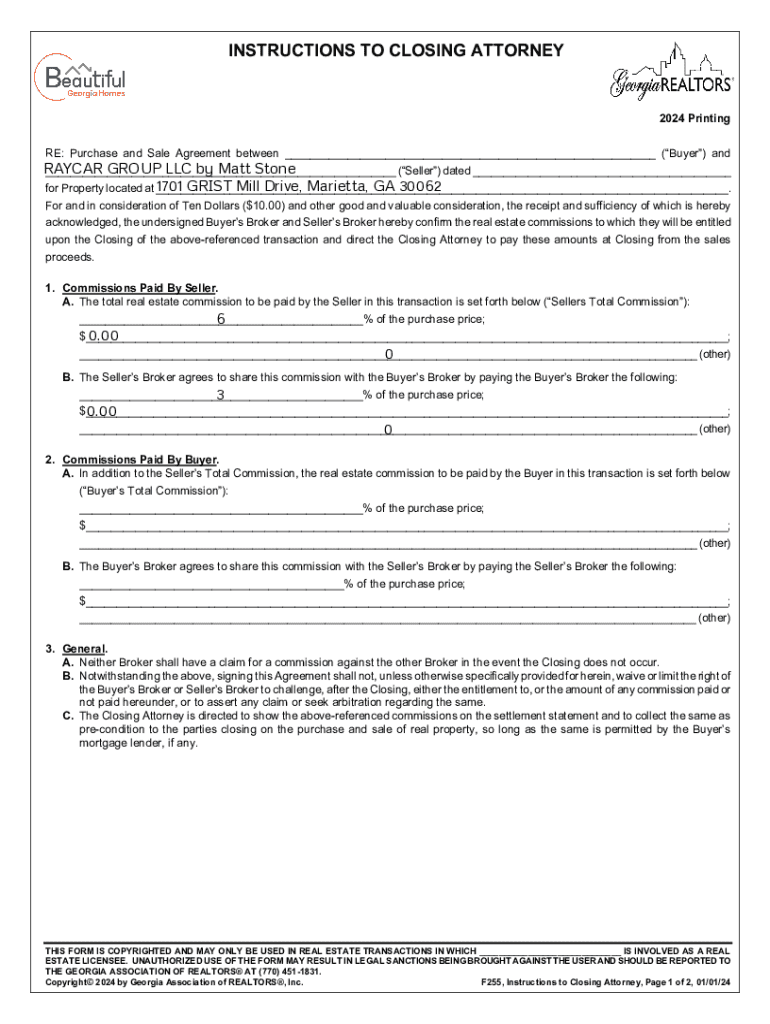
The "Instructions to Closing Attorney" is a critical document used in real estate transactions in the United States. It provides comprehensive guidance to the attorney responsible for overseeing the closure of a real estate deal. This document outlines the specific tasks and responsibilities that the closing attorney must perform to ensure a smooth transaction between the buyer and the seller.
How to Use the Instructions to Closing Attorney
-
Review Contract Details: Begin by closely examining the purchase and sale agreement between the parties involved. This includes understanding the terms and conditions agreed upon by the buyer and seller.
-
Prepare Documentation: Gather all necessary documents required to legally conclude the transaction. This typically includes title documents, loan payoff statements, and any necessary regulatory forms.
-
Coordinate with Financial Institutions: Work with lenders to receive and organize mortgage or loan documents. This step ensures that all financial arrangements are in place for the transfer of funds.
-
Schedule Closing Date: Collaborate with all parties involved to set a convenient date and time for the closing. This date should allow sufficient time for all necessary parties to review documents and make arrangements.
-
Conduct the Closing Process: Facilitate the actual closing by overseeing the signing of contracts, distribution of funds, and finalization of any outstanding requirements.
Key Elements of the Instructions to Closing Attorney
-
Title Examination: Verify the validity of the property’s title to ensure there are no encumbrances or issues that could hinder the transfer of ownership.
-
Settlement Statement: Prepare a comprehensive settlement statement detailing all financial transactions, including buyer and seller credits, insurance fees, and taxes.
-
Escrow Management: Manage escrow accounts during the transaction to securely hold funds until closing requirements are satisfactorily met.
-
Document Recording: Ensure all legal documents, such as deeds and liens, are correctly recorded with the appropriate county or state registrar to formalize the property transfer.
Steps to Obtain the Instructions to Closing Attorney
Real estate transactions typically involve the buyer or seller engaging a closing attorney. To obtain the instructions, these parties should:
-
Contact the Real Estate Agent: The agent can provide initial guidance and refer to the necessary legal contacts.
-
Engage a Closing Attorney: Professional legal services will prepare and manage the instruction particulars, assisting in comprehensive transaction closure.
-
Request the Document: Directly ask the engaged attorney for the official "Instructions to Closing Attorney" to familiarize oneself with each party's roles and expectations.
Legal Use of the Instructions to Closing Attorney
The instructions serve a legal purpose, ensuring all real estate closings adhere to both state and federal laws. They mandate the closing attorney to execute duties including:
-
Compliance with State Laws: Follow all applicable state-specific regulations that govern real estate transactions, varying across jurisdiction.
-
Adherence to Real Estate Laws: Uphold the integrity of the transaction by ensuring all real estate agreements comply with statutory requirements.
Important Terms Related to the Instructions to Closing Attorney
-
Earnest Money: An upfront deposit made by a buyer to signal serious intent to purchase property.
-
Lien Release: A legal document that resolves any outstanding debts or claims against the property being sold.
-
Disbursement: The process of distributing funds from the escrow account to respective parties once closing conditions are met.
State-Specific Rules for the Instructions to Closing Attorney
Different states may have unique rules that the closing attorney must adhere to, such as:
-
Disclosure Requirements: Varying levels of information required to be disclosed to buyers about the property's condition, zoning, and related legal matters.
-
Attorney Presence: Some states mandate the presence of an attorney during the closing process for it to be legally binding.
Practical Examples of Using the Instructions to Closing Attorney
-
Residential Purchases: Commonly used in buying or selling homes, wherein the attorney ensures all residential real estate laws are followed.
-
Commercial Transactions: For larger and more complex transactions involving office buildings or retail spaces, requiring detailed legal oversight.
Common Variations of the Instructions
While the core contents remain consistent, there might be variations depending on:
-
Property Type: Residential versus commercial properties might necessitate different forms of the instruction.
-
Transaction Complexity: More intricate transactions, such as those involving unique financing or multiple buyers, may require tailored instructions.
Why Follow the Instructions to Closing Attorney
Following these instructions ensures that all legal, financial, and administrative aspects of the transaction are handled competently and transparently. This helps mitigate risks of disputes or litigation post-closing.