






Definition and Meaning of Ek-1
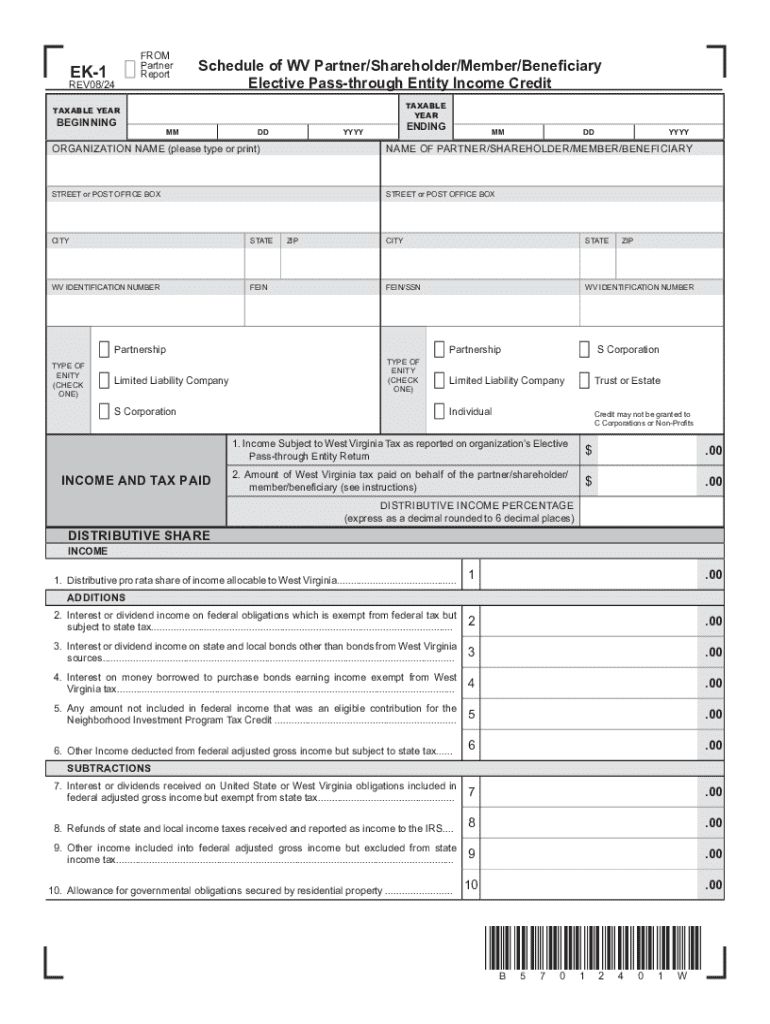
The Ek-1 form is a crucial document used primarily for reporting purposes. It is commonly associated with tax filings in the United States, where it plays a significant role in detailing the distribution of income, tax payments, and credits among partners, members, or shareholders of a pass-through entity. The form ensures that financial allocations are recorded accurately, maintaining compliance with both state and federal regulations.
Key Functions of the Ek-1
- Income Reporting: Documents the distributive share of income for partners or shareholders.
- Tax Payments: Details any taxes paid by the entity, ensuring accurate accounting.
- Credits and Deductions: Lists any credits generated which may be applicable for tax reductions.
Steps to Complete the Ek-1
Completing the Ek-1 form involves a series of detailed steps that must be followed to ensure accuracy and compliance.
- Gather Necessary Information: Collect details on income, distributions, and any tax-related data for the reporting period.
- Enter Personal Details: Include the names, addresses, and identification numbers of all partners or shareholders.
- Document Income Allocations: Accurately record each individual's share of income or loss from the entity.
- Include Tax Credits: Note any applicable credits that can be utilized by the partners or shareholders.
- Review for Accuracy: Double-check all entries to ensure they align with both state and federal requirements.
Considerations for Specific Tax Scenarios
- Multiple Partners: Ensure each partner's share is correctly apportioned and justified with supporting documentation.
- Credits and Deductions: Proper documentation is critical for the application of any credits or deductions reported on the form.
Important Terms Related to Ek-1
Understanding specific terminology is vital when dealing with the Ek-1 form to ensure proper completion and compliance.
- Distributive Share: The amount of income or loss attributed to each partner based on their ownership percentage.
- Pass-Through Entity: A business structure where the income is passed directly to the owners, avoiding corporate income tax.
- Tax Credits: Direct reductions in tax liability, potentially resulting from specific criteria met by the taxpayer or entity.
Why Should You Use Ek-1
Using the Ek-1 form is essential for ensuring precise financial reporting and maintaining compliance with tax regulations.
- Legal Requirement: Many states mandate the use of this form for pass-through entities to report income and tax details.
- Accurate Allocation: It provides a clear mechanism for allocating income and tax responsibilities among partners.
- Financial Transparency: By detailing distributions and credits, it upholds financial transparency within an organization.
Legal Use of the Ek-1
Utilizing the Ek-1 form is not only beneficial for accurate financial reporting but also a legal requirement for certain business entities under U.S. regulations.
Compliance Necessities
- Federal and State Regulations: The form must meet both federal and individual state-specific requirements, which vary.
- Documentation: Supporting documentation must be retained and provided if required during audits to verify the reported figures.
Who Typically Uses the Ek-1
The Ek-1 form is generally used by entities operating as pass-through businesses, such as partnerships, S corporations, or trusts.


Specific User Types
- Business Owners: Especially those in partnerships or S corporations.
- Accountants and Tax Preparers: Individuals responsible for preparing and filing these forms on behalf of businesses.
- Legal Advisors: Those ensuring compliance with tax laws and regulations.
IRS Guidelines for the Ek-1
The Internal Revenue Service (IRS) provides specific guidelines regarding the completion and submission of the Ek-1 form.
Compliance Guidance
- Timely Filing: Ensuring the document is filed within IRS-prescribed deadlines to avoid penalties.
- Accurate Information: All data must be correct and substantiated with documentation.
- Updates and Changes: Staying informed of any changes in the regulations or form versions issued by the IRS.
State-Specific Rules for Ek-1
Each state may have unique requirements or variations related to the Ek-1 form.
Considerations by State
- West Virginia Example: The West Virginia Schedule EK-1 variant is used for reporting state-specific financial details for partners.
- Research Requirements: Businesses need to investigate and adhere to the specific guidelines applicable in their state to ensure compliance with local laws.
Filing Deadlines and Important Dates
Filing the Ek-1 form in a timely manner is critical to avoid penalties and ensure compliance.
Important Timelines
- Federal Deadlines: Typically aligning with the business’s tax filing schedule.
- State Deadlines: Vary by state; entities must check local guidelines to ensure timely submission.
- Penalties for Late Filing: Failing to meet deadlines can result in financial penalties or legal repercussions.