






Definition & Meaning
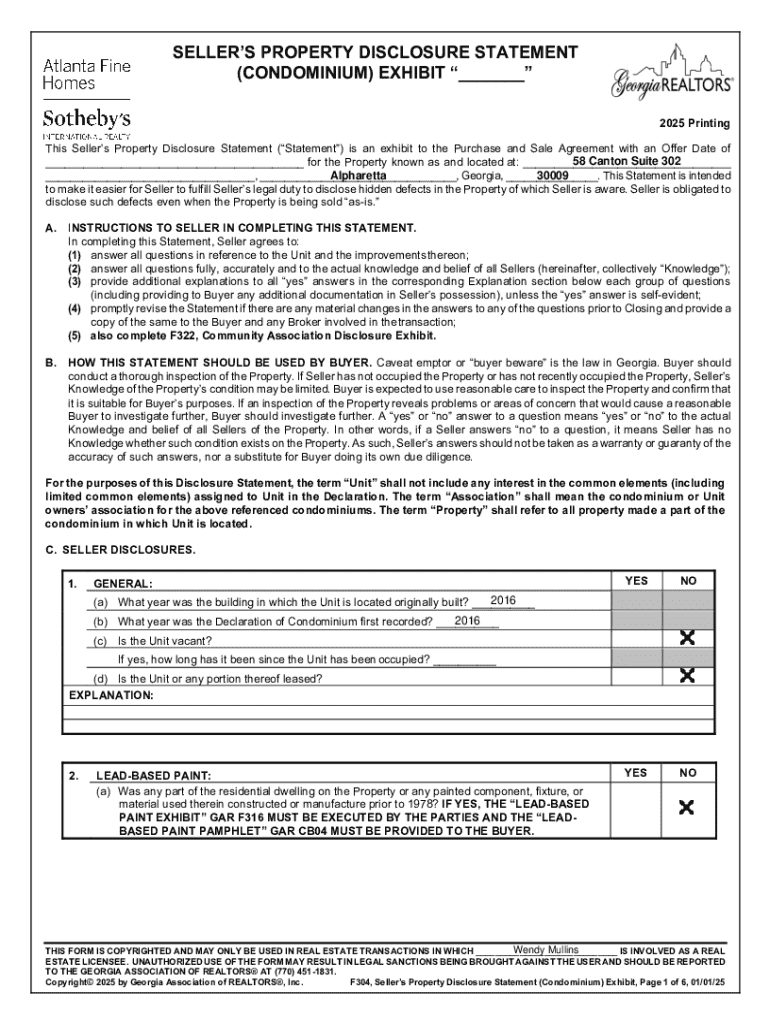
The Seller’s Property Disclosure Statement (condominium) is a legal document used in real estate transactions within the United States. This statement provides potential condo buyers with critical insights into the property's condition, including known defects and material facts that may influence their purchasing decision. By disclosing such information, sellers facilitate transparency and help buyers make informed purchases. The document often includes environmental, structural, and maintenance details specific to the condominium unit.
Key Components:
- Environmental Information: Includes data on past remediation efforts and compliance with environmental laws.
- Physical Condition: Covers structural aspects like roofing, plumbing, and electrical systems.
- Association Details: May detail homeowners' association regulations and financial obligations.
Steps to Complete the Seller’s Property Disclosure Statement (condominium)
-
Gather Necessary Information: Sellers should compile details about the condominium’s physical state, legal issues, and any renovations or repairs.
-
Complete Each Section: Begin by filling out personal details and property information. Move through major sections like environmental concerns, structural components, and legal disclosures.
-
Verify Accuracy: Double-check all entries for completeness and accuracy. Ensure no required fields are left blank.
-
Consult Legal Advice: To ensure compliance with local regulations, sellers might consult with a real estate attorney.
-
Sign and Date: Finalize the document by signing and dating it, affirming that all information is accurate to the best of your knowledge.
Example Scenario:
A seller discloses water damage resulting from past plumbing issues in the condo’s kitchen, providing repair invoices for transparency.
Key Elements of the Seller’s Property Disclosure Statement (condominium)
- Property Details: Specifics about the location and dimensions.
- Material Defects: Listing of any defects, including structural damage or system failures.
- Recent Repairs: Documentation of repairs made within recent years.
- Legal Disclosures: Information on any legal claims associated with the property.
- Owner’s Associations: Details on the responsibilities and rules enforced by the homeowner's association.
Who Typically Uses the Seller’s Property Disclosure Statement (condominium)
- Property Sellers: Obligated to provide potential buyers with an overview of the property's current status and any known issues.
- Buyers: Use this document to assess the property's condition and identify any red flags before making a purchase.
- Real Estate Agents: Facilitate the completion and thorough review of the disclosure to ensure a transparent transaction process.
- Legal Experts: Often involved in advising either party about compliance with state-specific real estate laws.


Legal Use of the Seller’s Property Disclosure Statement (condominium)
Sellers use this statement to legally disclose essential facts, minimizing miscommunication about the property’s state between parties. In some states, failure to provide complete and honest declarations can lead to legal consequences, including lawsuits. This document is pivotal in protecting both sellers and buyers during transactions.
Legal Considerations:
- State Laws: Regulations vary; understanding specific state requirements is crucial.
- Disclosure Obligations: Sellers must report all known material defects.
- Data Privacy: Personal data must be handled in accordance with privacy laws.
Important Terms Related to the Seller’s Property Disclosure Statement (condominium)
- Material Defects: Significant issues that affect a property's value or structural integrity.
- Homeowner’s Association (HOA): An organization governing condominium properties, often with specific rules and dues.
- Environmental Liability: Responsibilities related to prior environmental hazards, such as asbestos or mold.
State-by-State Differences
States have different mandates regarding what sellers must disclose. For instance, California may require detailed environmental disclosures, while other states focus more on structural integrity. A broad understanding of these distinctions can help ensure compliance, protecting sellers from potential legal disputes.
Notable Differences:
- California: Strong emphasis on earthquake and environmental disclosures.
- Florida: Focus on flood zone information and hurricane impact history.
- Texas: Requires detailed reporting on utility failures and plumbing issues.
Examples of Using the Seller’s Property Disclosure Statement (condominium)
- Scenario 1: A seller in Florida discloses previous flood damages and its repairs, aligning with state requirements for transparency.
- Scenario 2: A buyer in California carefully reviews disclosures about past materials used in the construction, including any hazardous chemicals.
These examples illustrate a commitment to legal compliance and effective communication during property transactions.