






Definition and Meaning
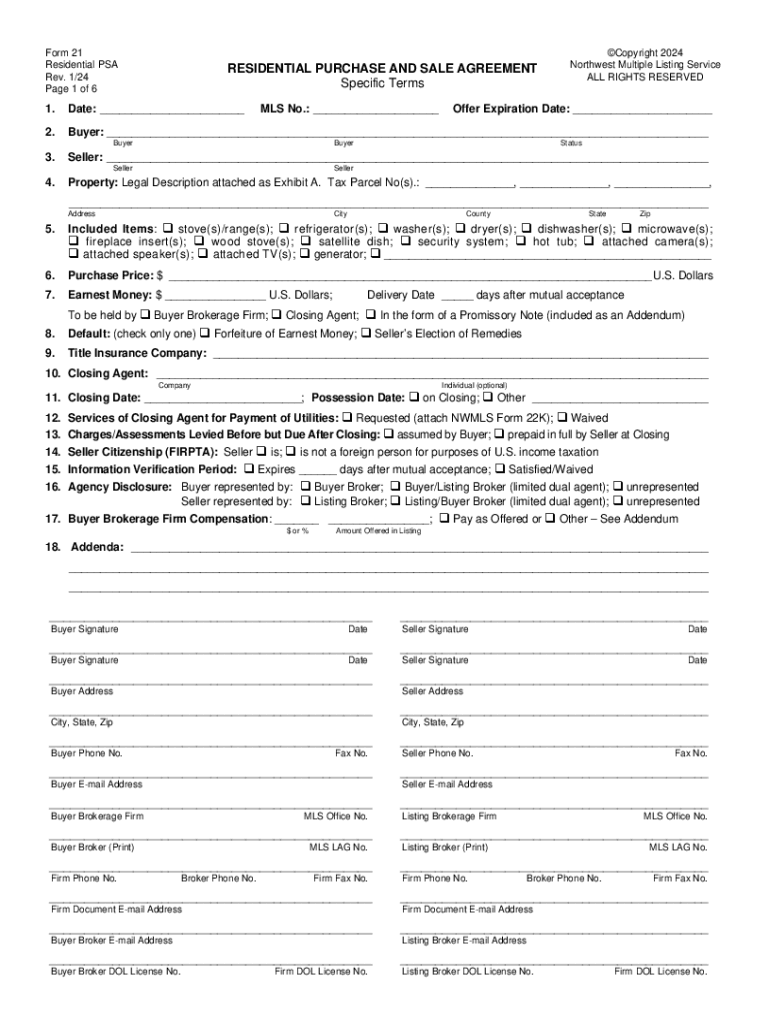
The Form 21 Residential Purchase and Sale Agreement is a legal document commonly used in real estate transactions within the United States. It outlines the terms and conditions under which a residential property will be sold from one party to another. This agreement serves as a binding contract that ensures both parties adhere to the negotiated terms, encompassing elements like purchase price, closing date, property condition, and any contingencies that must be met prior to finalizing the sale. Understanding this form is crucial for buyers and sellers to ensure a smooth transaction and prevent legal disputes.
How to Use the Form 21 Residential Purchase and Sale Agreement
Using the Form 21 Residential Purchase and Sale Agreement involves several key steps:
-
Complete Initial Details:
- The agreement should begin with the full names of the buyer and seller along with the property address.
- Include the MLS number if applicable.
-
Specify Financial Terms:
- Clearly state the purchase price and how it will be paid, whether through financing or cash.
- Define the earnest money deposit amount and conditions for its release.
-
Detail Conditions:
- Outline any contingencies such as inspections, loan approvals, and appraisals that must be satisfied before closing.
- Include deadlines for these conditions to prevent delays.
-
Legal Obligations:
- Set forth each party's obligations, such as disclosures by the seller and repair requests by the buyer.
-
Signatures:
- Both parties must sign and date the agreement for it to be valid.
Key Elements of the Form 21 Residential Purchase and Sale Agreement
Several critical elements feature in the Form 21 Residential Purchase and Sale Agreement:
-
Property Description:
- Includes a detailed description and legal address of the property.
-
Purchase Price and Payment Terms:
- Explicitly outlined including any deposit, financing terms, and balance due at closing.
-
Contingencies:
- Covers conditions such as inspection, financing, and appraisal contingencies.
-
Closing Date:
- Specifies the agreed date for transaction completion and transfer of ownership.
-
Disclosures and Representations:
- Lists any known defects of the property and other mandatory disclosures under state law.
Steps to Complete the Form 21 Residential Purchase and Sale Agreement
Completing this form requires careful attention to detail:
-
Gather Necessary Information:
- Collect all required buyer and seller information, as well as property details.
-
Draft Terms:
- Collaborate with real estate agents or attorneys to ensure terms are fair and meet legal standards.
-
Review and Negotiate:
- Both parties should review the terms and negotiate modifications until mutually satisfying agreements are reached.
-
Final Revision:
- Ensure all completed sections accurately reflect the transaction and agreement.
-
Execution:
- Sign the agreement in the presence of a notary or as per local requirements to ensure legality.
Legal Use of the Form 21 Residential Purchase and Sale Agreement
This agreement must comply with state real estate laws to be legally enforceable. Its use is bound by several principles:
-
Compliance with State Laws:
- Each state may have specific rules governing real estate transactions that must be reflected in the form.
-
Disclosure Obligations:
- Sellers must fulfill any disclosure obligations about the property's condition or legal encumbrances.
-
Enforcement:
- Breaches of the agreement terms can lead to legal action, with remedies including litigation or contract rescission.
Important Terms Related to the Form 21 Residential Purchase and Sale Agreement
To effectively navigate the agreement, understanding certain terms is crucial:
-
Earnest Money:
- A deposit made by the buyer to demonstrate commitment to the transaction.
-
Contingency:
- Clauses that must be satisfied or waived for the sale to proceed.
-
Title:
- The legal documentation that proves ownership of the property.
-
Closing Costs:
- Fees associated with the finalization of the real estate transaction, often shared between buyer and seller.
State-Specific Rules for the Form 21 Residential Purchase and Sale Agreement
Different states may have variations in enforceable requirements:
-
Mandatory Disclosures:
- Vary by state, requiring sellers to disclose specific property details, such as previous pest infestations or flood zones.
-
Notarization Requirements:
- Some states necessitate notarization of the agreement to validate the transaction.
-
Timeframes:
- States may have differing expectations for the timing of contingencies and completion.
Examples of Using the Form 21 Residential Purchase and Sale Agreement
Understanding real-world usage scenarios can aid in comprehending the form's applicability:
-
First-Time Homebuyers:
- May require additional contingencies for financing and inspection, providing safeguards against unforeseen issues.
-
Investment Purchases:
- Investors focus on clauses related to property condition and potential repairs.
-
As-Is Sales:
- Buyers agree to purchase the property without requesting seller repairs, limiting contingencies.
These examples demonstrate the form's versatility and the nuances in its application across different transaction types.