






Definition and Meaning of the Checklist for Verification
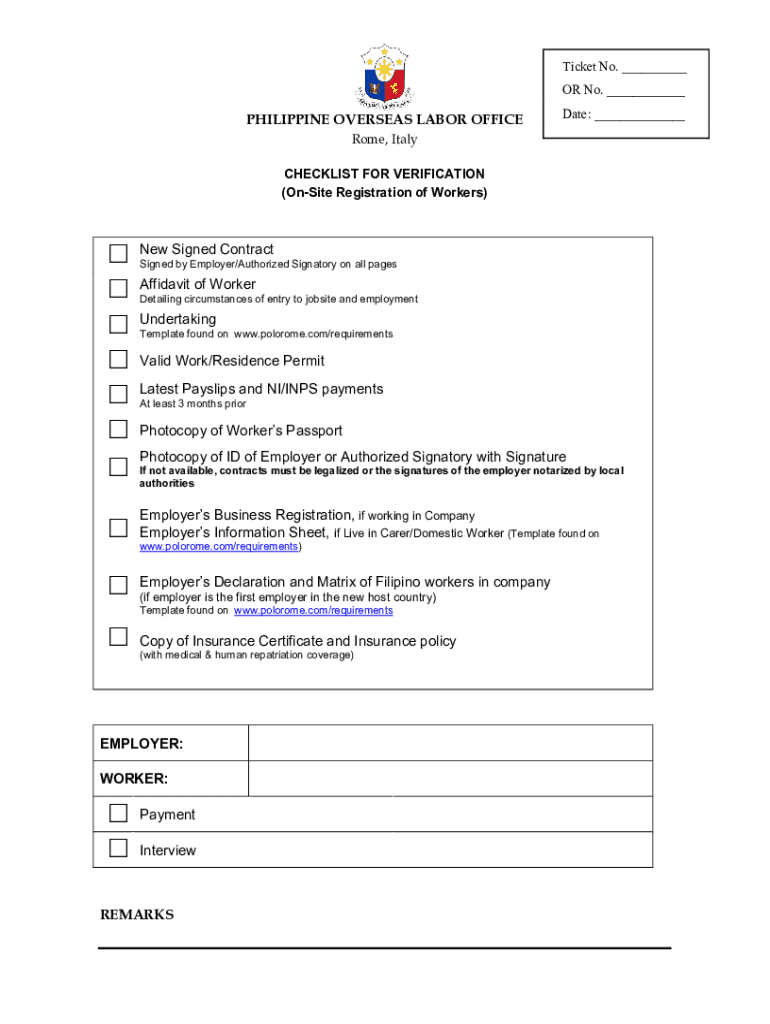
The checklist for verification serves as an essential tool to ensure all required components and information are present and correct before submitting documents. It functions as a detailed guide, listing necessary items such as contracts, affidavits, permits, and certifications to meet regulatory and procedural requirements. This checklist is designed to streamline the document verification process, providing clarity and uniformity for both individuals and organizations.
Purpose and Application
- Compliance Assurance: Checklists are vital in ensuring that documents comply with relevant regulations, such as employment laws in different jurisdictions.
- Error Minimization: By systematically verifying all required elements, checklists help in minimizing errors and omissions in document submissions.
- Time Efficiency: They save time by preventing repeat submissions due to missing or incorrect information.
How to Use the Checklist for Verification
Using the checklist for verification effectively involves a methodical approach. It requires a thorough review of each item listed, ensuring all prerequisites are in place.
Step-by-Step Usage
- Initial Review: Begin by reading through the checklist to understand all required items.
- Gather Documents: Collect all necessary documents as outlined in the checklist.
- Cross-Verification: Compare each document against the checklist to ensure compliance and accuracy.
- Final Review: Conduct a final review to ensure nothing is missed and all items satisfy the checklist criteria.
Key Considerations
- Document Integrity: Ensure all documents are original and legible.
- Consistency Check: Verify that details across documents are consistent to prevent discrepancies.
Steps to Complete the Checklist for Verification
Completing the checklist for verification is a step-by-step process that demands attention to detail and systematic organization.
Detailed Steps
-
Preparation:
- Collect preliminary information about the verification process.
- Understand the context and purpose of verification.
-
Compilation:
- Assemble necessary documents such as signed agreements, permits, and identity proofs.
- Organize documents in a logical order for easy access.
-
Verification:
- Use the checklist as a guide to verify each document’s compliance and accuracy.
- Mark off completed items to track progress.
-
Submission:
- Ensure all checklist items are satisfied before submission.
- Package documents securely if sending by mail or ensure digital security for online submissions.
Practical Tips
- Documentation: Keep a record of verified items and any additional notes or discrepancies found during the process.
- Coordination: Work with relevant stakeholders to resolve any issues identified during verification.
Why Should You Use a Checklist for Verification?
Employing a checklist for verification offers multiple advantages that enhance workflow efficiency and accuracy in document handling.
Benefits
- Consistency: Ensures standardized procedures are followed during verification, promoting reliability.
- Accountability: Provides a tangible record of items verified, reinforcing accountability.
- Efficiency: Reduces the risk of errors that could lead to delays or non-compliance penalties.
Real-World Scenarios
- Legal Compliance: For firms needing to verify contracts under stringent regulatory requirements.
- Employment Checks: When verifying the credentials and documents of new hires.
Key Elements of the Checklist for Verification
Understanding the critical components of the checklist for verification enhances its practical application and effectiveness.
Essential Components
- Document Types: The checklist typically requires items such as contracts, permits, and identification documents.
- Compliance Information: Details about legal and regulatory requirements specific to the verification process.
- Submission Guidelines: Instructions on how to appropriately submit the verified documents.
Importance of Each Element
- Contracts: Validate the terms agreed upon between parties.
- Permits: Confirm authorization for specific activities, ensuring legality and compliance.
- Identifications: Verify the identity of involved parties, maintaining security and trust.
Who Typically Uses the Checklist for Verification?
The checklist for verification is utilized by various entities across different sectors requiring document validation.


Common Users
- Businesses: For verifying contractual agreements and regulatory compliance documents.
- Government Agencies: In processing permits, licenses, and compliance checks.
- Legal Professionals: To ensure all necessary legal documents are prepared and verified for court proceedings.

Sector-Specific Examples
- Human Resources: Utilizes checklists for employment verification, ensuring candidates meet all employment criteria.
- Real Estate: Uses checklists to ensure property documents are accurate and complete.
Legal Use of the Checklist for Verification
Legal considerations are crucial when employing a checklist for verification to ensure adherence to applicable laws and regulations.
Regulatory Framework
- Legal Compliance: Checklists help ensure that all required legal documents meet jurisdictional requirements, such as those outlined in employment law.
- Data Protection: Ensure that personal data is handled according to privacy regulations, safeguarding sensitive information.
Practical Applications
- Contractual Obligations: Ensure all contractual documents are verified before execution.
- Employment Documentation: Verify that all employee documents comply with legal standards.
Examples of Using the Checklist for Verification
Illustrating the practical use of checklists for verification through specific examples highlights their versatility and utility.
Case Studies
- International Employment: Verify documentation for workers at international offices, ensuring compliance with host country labor laws.
- Business Licensing: Use the checklist to compile necessary permits and corporate documents for new business establishment.
Practical Scenarios
- Document Renewal: Verification checklists ensure all renewal forms are complete and accurate, avoiding delays in processing.
- Academic Credentialing: Universities use checklists to verify applicant documents for admissions and certifications.
By following these comprehensive guidelines, individuals and organizations can effectively implement a checklist for verification, ensuring thoroughness and precision in document handling processes.