






Definition and Meaning of Separation
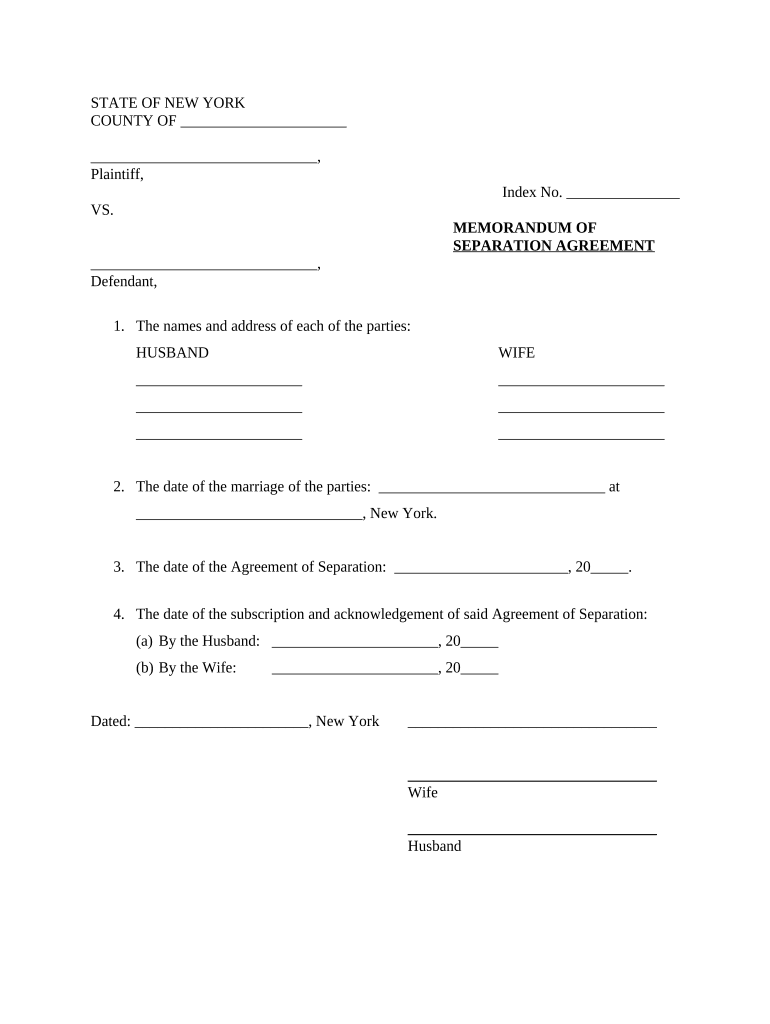
Separation, in the context of a legal agreement, refers to a formal contract between two parties who are choosing to live apart. This document outlines the responsibilities and rights of each party, covering aspects such as financial accounts, property division, and child custody. In essence, a separation agreement acts as a roadmap for the dissolution of a partnership, whether personal, like a marriage, or business-related. It serves as a binding legal framework that specifies the terms under which the separation will proceed.
Practical Examples and Scenarios
- Marital Separation: A couple in New York decides to separate after several years of marriage. Their separation agreement details who will keep the family home, the amount of spousal support, and visitation rights with their children.
- Business Separation: Two business partners decide to dissolve their partnership. Their agreement includes how remaining assets will be divided, handling of liabilities, and distribution of business responsibilities.
How to Use a Separation Agreement
Separation agreements are pivotal in ensuring that all parties clearly understand their rights and obligations during a separation. Using the agreement effectively requires thorough consideration and proper documentation.
Step-by-Step Use
- Review the Necessities: Before drafting a separation agreement, consider all required aspects such as financial obligations, child custody, and asset division.
- Consult Legal Counsel: It's advisable to consult with a lawyer to ensure that the agreement aligns with state laws and adequately protects one's interests.
- Discuss Terms with Involved Parties: Open communication with the other living party can prevent misunderstandings and facilitate the drafting process.
- Draft the Agreement: Incorporate all agreed-upon terms, ensuring clarity in language and stipulations.
- Legal Validation: Some agreements may require notarization for added legal validity, especially in states like New York.
Steps to Complete the Separation Process
Completing a separation involves several crucial steps to ensure that the agreement is thorough and valid.
Detailed Process
- Preliminary Discussion: Often, the first step involves discussing the decision to separate and the terms with the other party.
- Gathering Required Information: Both parties should compile a list of assets, liabilities, and relevant personal information.
- Draft Agreement: A formal document is drafted, including all agreed terms. Professional legal assistance can help refine this draft.
- Review & Amend: Both parties should review the agreement and suggest necessary amendments to cover all concerns.
- Finalize and Sign: The final document is signed, often in the presence of a notary public, to ensure authenticity.
Important Terms Related to Separation
A robust understanding of terms related to separation can ensure clarity and comprehension when drafting or reviewing the document.
Key Terms
- Custody Arrangements: Terms that outline the living arrangements and decision-making responsibilities for any children involved.
- Spousal Support: Financial support paid by one party to another following a separation.
- Asset Division: The equitable distribution of joint property and financial assets.
- Legal Separation vs. Divorce: Legal separation is not a final end to marriage but a recognized limitation of marital rights.
Legal Use of the Separation Agreement
It's critical to be aware of the legal framework that dictates how separation agreements can be used and enforced.
Legal Considerations
- Enforceability: For enforceability, the agreement must be drafted in adherence to state laws and accepted by both parties.
- Modifications: Any changes to the agreement must be documented and agreed upon by both parties for validity.
- Breach of Terms: Non-compliance with the terms can lead to legal proceedings and potential penalties, impacting one’s legal standing or custody rights.
Key Elements of a Separation Agreement
Understanding the fundamental elements of a separation agreement can ensure all aspects are adequately covered.
Essential Components
- Identification of Parties: Names and addresses of both parties involved in the agreement.
- Effective Date: Specifies when the agreement comes into effect.
- Agreement Terms: Detailed conditions related to financial, custodial, and property matters.
- Confidentiality Clause: Often included to protect personal and sensitive information.
State-Specific Rules for Separation
Each state may have unique regulations governing the drafting and enforcement of separation agreements.
New York-Specific Guidelines
- Time Frame: According to New York State Law, a separation agreement must be adhered to for a year before it can be the basis for a divorce.
- Notarization Requirement: In New York, signatures on a separation agreement are often required to be notarized to be considered legitimate in the court.
Examples of Using a Separation Agreement
Examples provide a deeper understanding of various ways separation agreements can be applied in real-world contexts.
Scenario Illustrations
- Emotional Relief: A separation agreement brings clarity and peace of mind to both parties by outlining expectations and obligations, reducing potential conflicts.
- Financial Clarification: Separating business partners use the agreement to define financial settlements and terminate joint accounts, ensuring smooth financial disentanglement.
Required Documents for a Separation Agreement
Gathering the necessary documentation is pivotal when drafting a separation agreement to ensure comprehensive coverage.
Document Checklist
- Identification Documents: Driver’s license or ID for both parties.
- Financial Records: Bank statements, mortgage documents, and any joint financial contracts.
- Property Documentation: Titles or deeds for properties involved.
- Custody Records: Any existing custody agreements or court orders regarding children.
The meticulous crafting of a separation agreement not only secures immediate needs but also lays a foundation for future interactions between the involved parties. Understanding the depth and nuances of this process can create a smoother transition during personal or business separations.