






Definition and Meaning of Form EST-IUnderpayment of Estimated Tax by
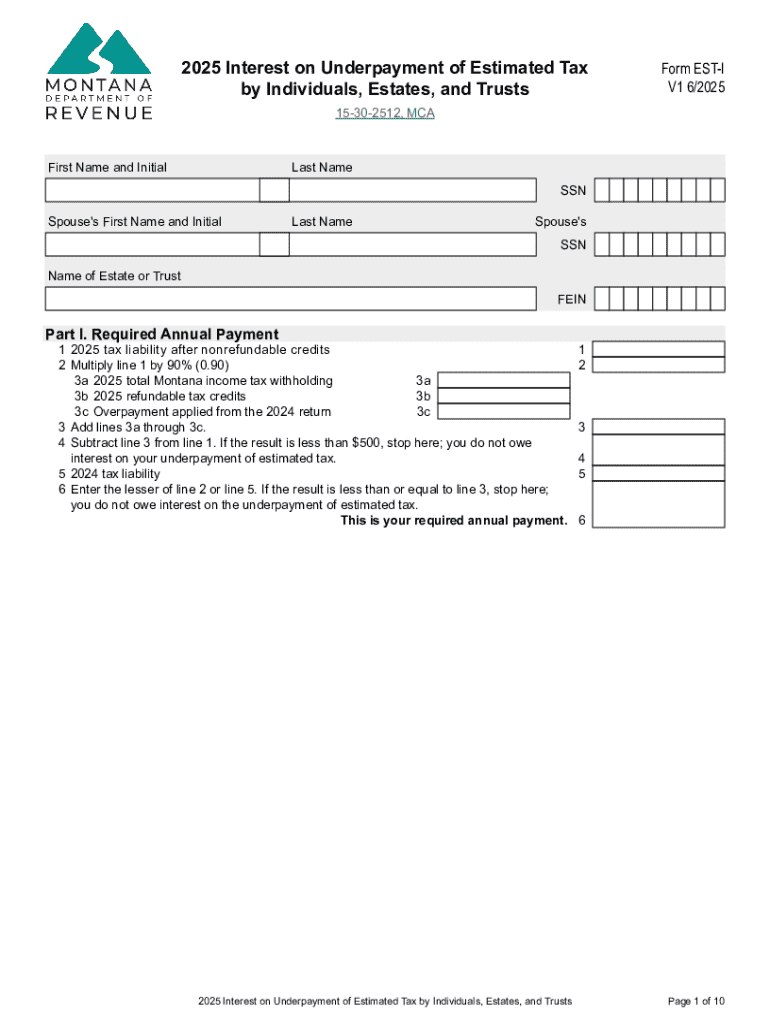
Form EST-IUnderpayment of Estimated Tax by is specifically designed to address the potential underpayment of estimated taxes by individuals, estates, and trusts. Individuals who fail to meet certain tax responsibilities throughout the year may need to file this form to reconcile differences. The form serves as a detailed calculation tool to help determine the extent of any underpayments and outlines necessary actions to correct them. Understanding the purpose of Form EST-I is crucial in ensuring compliance with tax obligations while minimizing potential penalties.
How to Use the Form EST-I
Using Form EST-I requires a clear understanding of its components and the information required from the taxpayer. The primary function of the form is to calculate any underpayment of estimated tax, which involves analyzing income, deductions, and previously submitted estimated tax payments.
-
Identify Income Sources: Gather detailed records of all income sources including wages, interest, dividends, and other taxable income.
-
Determine Deductions: Include allowable deductions that may impact your taxable income. This could include typical deductions like mortgage interest, medical expenses, and charitable contributions.
-
Calculate Estimated Taxes: Using your income and deductions, calculate the estimated taxes due for the entire year.
-
Account for Payments Made: Subtract any estimated tax payments already made during the year, possibly through tax withholding or quarterly payments.
-
Determine Underpayment: Evaluate the difference between the estimated taxes due and the payments made to determine if underpayment exists.
-
Complete the Form: Input the relevant calculations onto Form EST-I, verify your entries, and complete any additional required fields.
Completing the form accurately ensures timely corrections to your tax payments and keeps you in good standing with tax authorities.
Steps to Complete the Form EST-IUnderpayment of Estimated Tax by
Completing Form EST-I is a meticulous process that ensures you accurately report any tax underpayment. Here are step-by-step instructions to assist you:
-
Collect Financial Documents: Gather all financial documentation, including income, deductions, and tax payment records.
-
Officially Obtain the Form: Ensure you have the current version of Form EST-I by downloading it from authorized sources or receiving it directly from the IRS.
-
Follow the Form's Instructions: Carefully read the instructions, noting any changes from previous tax years that may affect your filing.
-
Calculate Estimated Tax: Carefully compute your estimated tax based on income and deductions using provided worksheets.
-
Subtract Payments Made: Subtract any payments already made or withheld to find any discrepancies.
-
Enter Information Accurately: Fill in all required fields with precision to avoid errors that could result in processing delays or penalties.
-
Review the Completed Form: Double-check all calculations and ensure every section is completed correctly.
Properly completing this form helps avoid unnecessary tax issues and streamlines the resolution of any underpayments.
Key Elements of the Form EST-I
The structure of Form EST-I includes several essential components that must be filled out:
-
Personal Information: Includes basic taxpayer details like name, address, and Social Security Number or Employer Identification Number for estates and trusts.
-
Income Details: Accurate listing of all income sources, ensuring a comprehensive view of taxable income.
-
Deduction Information: Documentation of allowed deductions to correctly adjust taxable income.
-
Tax Payments: A record of all estimated tax payments made throughout the tax year, including withholdings.
-
Underpayment Calculations: Worksheets that assist in determining any tax underpayments.
Understanding and correctly completing these components are critical for ensuring the accurate reporting of estimated tax underpayments.
Common Scenarios and Examples for Form EST-I
Underpayment of estimated tax can arise in various scenarios. Here are some practical examples:
-
Self-Employed Individuals: Often need to use Form EST-I if they do not have a standard withholding from an employer and have estimated payments that fall short.
-
Retirees: May encounter underpayment issues due to changes in income sources, such as starting to receive pensions or Social Security benefits differently than anticipated.
-
Estates and Trusts: Can experience underpayment when substantial income changes or unexpected financial events occur during the tax year.
-
Seasonal Workers: May miscalculate their estimated taxes due to variability in income from season to season.
Each of these scenarios requires careful calculation and completion of Form EST-I to correct any tax shortfalls accurately.
Penalties for Non-Compliance with Form EST-I
Failing to properly submit Form EST-I or having an underpayment of estimated tax may lead to penalties. These penalties are typically calculated based on:
-
Amount Underpaid: The larger the underpayment, the higher the potential penalty.
-
Duration of Underpayment: Lengthy underpayments can result in increased penalties.
-
Reason for Underpayment: If the underpayment is due to avoidable errors, penalties may be less forgiving. However, valid reasons such as significant changes in income may mitigate the penalty.
Understanding the potential financial implications reinforces the importance of accurate tax calculations and timely submissions.
Filing Deadlines and Important Dates for Form EST-I
Timeliness is crucial for tax filings. The key deadlines for ensuring compliance with Form EST-I are:
-
Quarterly Payment Dates: Estimated tax payments are typically due four times a year – in April, June, September, and January for the following year.
-
Annual Tax Filing Deadline: Usually falls on April 15, unless coinciding with weekends or holidays, extending the due date to the next business day.
Adhering to these deadlines helps avoid excess penalties and ensures your tax obligations are fulfilled.
State-Specific Rules for Form EST-I
Different states can have varying rules and requirements concerning estimated tax payments and the completion of forms equivalent to Form EST-I. Some considerations might include:
-
State-Specific Form Variations: Some states might have their own versions that must be filed in addition to the federal Form EST-I.
-
Unique Deductions and Credits: States can offer deductions or credits affecting your filing.
-
Distinct Penalties and Interest Calculations: The way penalties and interest are calculated may differ from federal guidelines.
Taxpayers are encouraged to check with state tax authorities to comply fully with both federal and state regulations when handling underpayments of estimated taxes.