
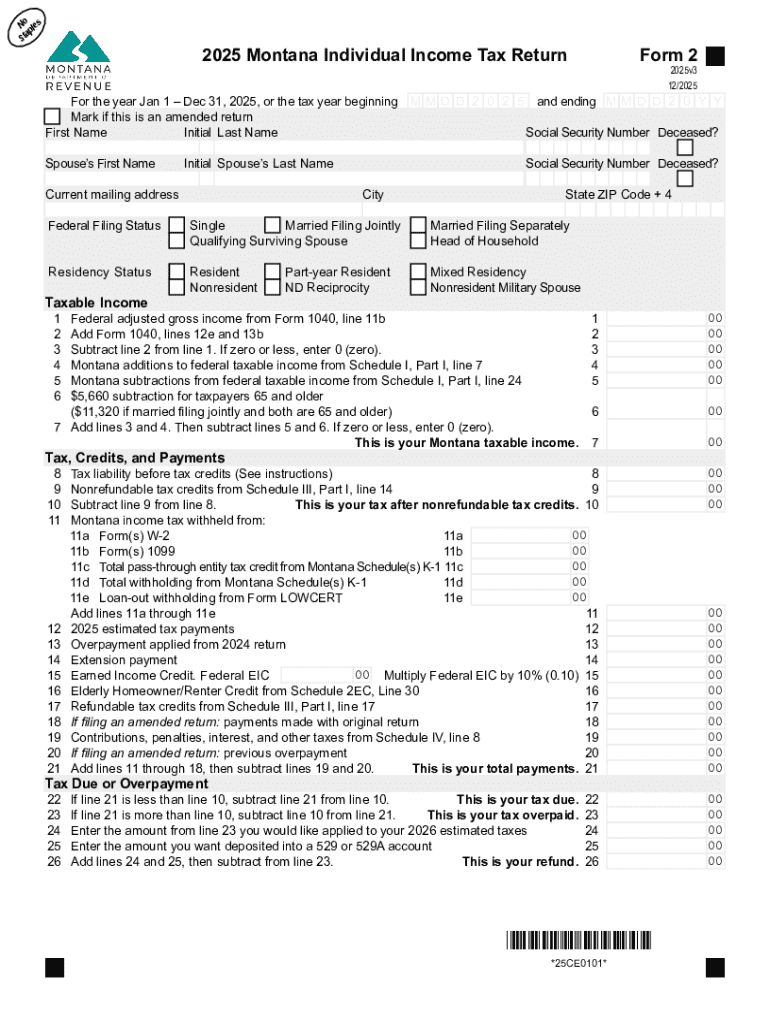







Definition and Purpose of Montana Income Tax Forms
Montana income tax forms are crucial documents used by residents and businesses in the state to report their income to state tax authorities. These forms ensure individuals and entities comply with Montana tax laws by accurately calculating and remitting their state income taxes. Generally, these forms accommodate a range of taxpayers, from employed individuals to self-employed persons and businesses of various structures, such as LLCs, corporations, and partnerships. Each form serves a specific purpose, from reporting personal earnings to detailing business income, and helps maintain transparency and legality in financial reporting.
How to Obtain Montana Income Tax Forms
Acquiring the correct Montana income tax forms is a straightforward process. These forms are available electronically, accessed via the Montana Department of Revenue's official website. Taxpayers can download and print the forms at their convenience, reducing the need for physical trips to governmental offices. Alternatively, some individuals prefer traditional paper forms, which can be requested directly from the Department of Revenue through mail or phone. Several tax preparation software programs, like TurboTax and QuickBooks, also integrate these forms, automatically selecting the appropriate documents based on the information provided by the user.
Steps to Complete Montana Income Tax Forms
Filling out Montana income tax forms requires careful attention to detail to ensure accuracy.
-
Gather Necessary Information: Collect personal identification details, income reports (such as W-2s and 1099s), deductible expense records, and any previous year's tax documents.
-
Choose the Correct Form: Depending on your tax filing status and income sources, select the appropriate form – Form 2 for individuals, for instance, is typically used for annual returns.
-
Fill Out Personal Information: Begin by entering your name, address, social security number, and filing status.
-
Report Income: Use information from your income statements to accurately report earnings, including wages, interest, dividends, and other taxable income.
-
Claim Deductions/Credits: List allowable deductions and credits to reduce taxable income legally.
-
Calculate Tax: Use the tax tables provided to find your tax liability and subtract any credits to determine the amount owed or refund due.
-
Review and Sign: Carefully double-check the information entered on the form, sign, and date it to affirm the accuracy of your return.
Relevant Filing Deadlines and Important Dates
The deadline for filing Montana income tax forms generally aligns with the federal tax deadline, which typically falls on April 15. If the date lands on a weekend or holiday, it shifts to the next business day. Taxpayers needing more time can file for an extension, allowing them up to October 15 to submit their forms, although any taxes owed are due by the original April deadline to avoid penalties and interest. Monitoring these dates is essential for ensuring compliance and avoiding unnecessary late fees.
Required Documents for Filing
Accurate and effective completion of the Montana income tax forms necessitates specific documentation:
-
Identification: Social security numbers for all persons listed on the form.
-
Income Reports: W-2 forms from employers and 1099 forms for other income types such as freelance work, interest, and dividends.
-
Deduction Proofs: Receipts and records for deductible expenses, like medical bills, mortgage interest, and charitable contributions.
-
Past Return Information: Copies of prior year tax forms provide a useful reference and ensure consistent reporting.
Ensuring that all necessary documents are organized and at hand facilitates a smoother and more efficient filing process.
Software Compatibility and Use
Montana income tax forms integrate seamlessly with various tax preparation software programs, enhancing ease of filing. Software tools like TurboTax, QuickBooks, and others not only aid in selecting the appropriate forms but also provide guided assistance through the completion process with step-by-step instructions. This compatibility simplifies the filing process by automating calculations, ensuring compliance with the latest tax codes, and offering e-filing capabilities, which speeds up processing and reduces the potential for error compared to manual entries.
Penalties for Non-Compliance
Failure to properly file Montana income tax forms by the due date can result in numerous penalties and legal consequences. These include late filing fees, calculated as a percentage of the unpaid taxes, and interest accrued daily on any outstanding debts. Failing to submit the forms might also increase the likelihood of an audit by the tax authorities. Consistently neglecting to comply with the state's tax regulations could lead to legal action, increasing the severity of the financial and legal repercussions faced by the taxpayer.
Filing Methods: Online, Mail, In-Person
Montana provides multiple methods for submitting income tax forms, allowing for flexibility based on individual preferences and circumstances:
-
Online E-Filing: Encouraged for its speed and efficiency, electronic submissions reduce processing times significantly and provide immediate confirmation upon receipt.
-
Mail: Traditional mailing of physical forms is still an option, allowing fingerprinting and attachment of additional documents if needed.
-
In-Person: Rarely used in today's digital age, but certain taxpayers may opt to deliver their completed forms to the local Department of Revenue office for verification.
Each submission method has its benefits, so choosing depends on factors like convenience, access to digital resources, and personal preference.




