
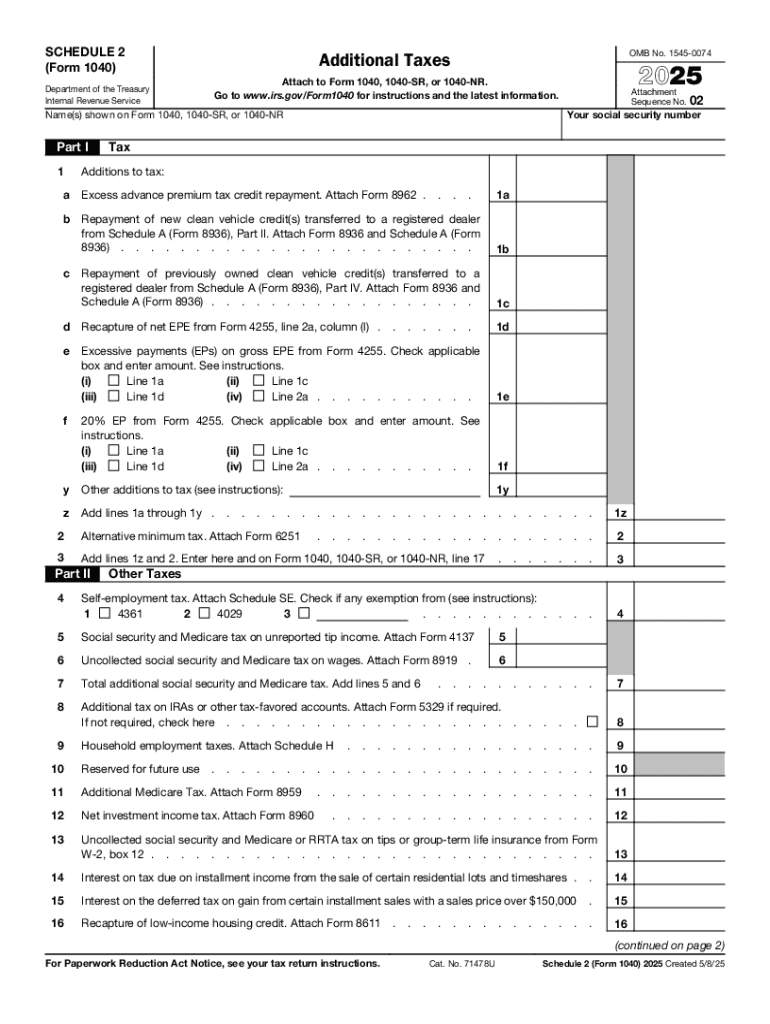







Definition & Purpose of 2025 Schedule 2 (Form 1040)
The 2025 Schedule 2 (Form 1040) is used by taxpayers in the United States to report additional taxes owed beyond the standard income tax. This form captures taxes like the alternative minimum tax and repayment of excess advance premium tax credits. Its purpose is to ensure taxpayers account for these obligations alongside their main tax return, Form 1040. This form is particularly relevant for those who have complex financial situations that incur extra tax liabilities. Understanding its role helps taxpayers comply with IRS requirements and avoid potential underpayment penalties.
Steps to Complete the 2025 Schedule 2 (Form 1040)
- Collect Required Information: Gather documents related to additional income and deductions that affect taxes calculated on Schedule 2.
- Calculating the Alternative Minimum Tax (AMT): For taxpayers subject to AMT, detailed instructions on calculating this necessity.
- Adding Other Taxes: Include taxes such as self-employment tax or household employment taxes, if applicable.
- Review and Attach to Form 1040: After completion, attach Schedule 2 to your main tax return, ensuring calculations are correct.
- Submit by Deadline: Make sure the completed form and any attachments are submitted by the federal tax filing deadline to avoid late penalties.
IRS Guidelines & Important Dates
Align your filing with IRS guidelines to ensure proper compliance:
- Official Instructions: Search for the latest IRS instructions specific to Schedule 2.
- Filing Deadline: Generally, file by April 15, unless the date falls on a weekend or holiday, in which case the deadline is the next business day.
- Extensions: If the deadline cannot be met, apply for an extension to submit the completed form later in the year.
Required Documents & Information
- Previous Tax Returns: Offers baseline data for calculating certain taxes.
- W-2 or 1099 Forms: Report income from wages or self-employment.
- Records of Advance Premium Tax Credits: Document to reconcile credits if applicable.
- Other Tax Forms: Related forms that report income, deductions, or credits that influence Schedule 2.
Legal and Compliance Considerations
Schedule 2 adherence ensures legal compliance with U.S. tax laws. It includes:
- Correct Tax Reporting: Ensures all additional tax liabilities are correctly reported to avoid penalties.
- Audit Preparedness: Keeps detailed records for possible IRS audits.
- Staying Updated: Regularly check for IRS updates on any changes to the form or filing processes.
Who Typically Uses the 2025 Schedule 2 (Form 1040)?
Individuals who generally need to file this form include:
- High-Income Earners: Often subject to the alternative minimum tax.
- Self-Employed Individuals: Who need to account for self-employment taxes.
- Household Employers: Required to pay taxes on household employees like nannies.
- Those Receiving Advance Credits: Individuals who’ve received advance premium tax credits.


Software Compatibility & Digital Filing
- Tax Preparation Software: Most major tax prep software like TurboTax and QuickBooks support Schedule 2.
- Digital Filing Benefits: Filing online can result in faster processing and confirmation. Double-check software compatibility and updates related to the form.
Penalties for Non-Compliance
Failure to complete and file Schedule 2 as required can result in:
- Late Fees and Penalties: For not filing on time or underreporting taxes.
- Interest Charges: On taxes owed that aren't paid by the deadline.
- Potential Audit Flags: Increased scrutiny from the IRS leading to audits or further inquiries.




