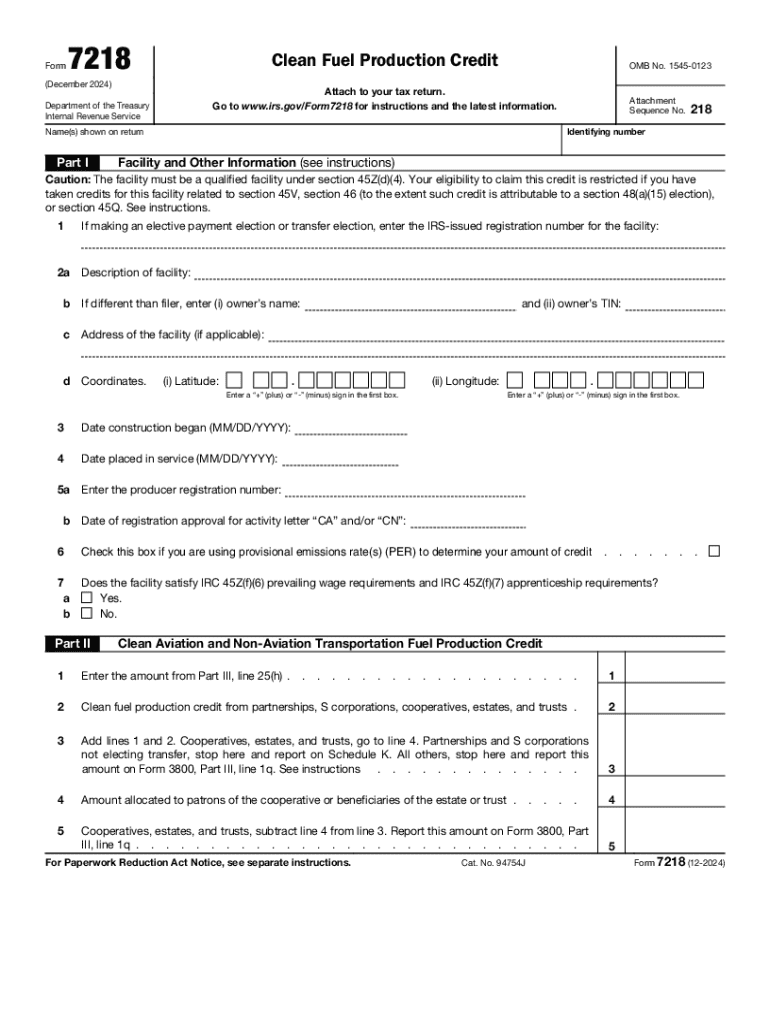







Understanding Form 7218
Form 7218, known as the Clean Fuel Production Credit form, is an important document for taxpayers engaged in the production of clean fuels. It is used to calculate and claim tax credits associated with clean fuel production, which incentivizes environmentally friendly energy production and reduces overall emissions. By accurately completing this form, eligible taxpayers can benefit from financial incentives provided by the U.S. government to support the production and use of clean energy.
Purpose and Utility of Form 7218
The primary purpose of Form 7218 is to allow taxpayers to claim credits for producing qualifying clean fuels. These credits can significantly decrease the tax liability for businesses that meet the necessary criteria, providing an economic edge in pursuing clean energy initiatives. Tax incentives such as these not only support business operations but also encourage the shift toward more sustainable production methods, contributing to broader environmental goals.
Steps to Complete Form 7218
-
Gather Necessary Information: Start by collecting essential data regarding the clean fuels produced, including production volumes, types of fuels, and associated costs.
-
Fill Out the Identification Details: Enter essential taxpayer information, such as name, taxpayer identification number, and tax year.
-
Calculate the Credit: Proceed to the sections of the form where you will compute the credit amount based on the percentage and volume of qualified fuels produced.
-
Complete Applicable Sections: Fill out detailed sections regarding the type of fuel, production processes, and any relevant deductions or adjustments that apply.
-
Review Entries for Accuracy: Ensure all calculations and data entries are correct to avoid discrepancies that might lead to processing delays or errors.
-
Attach to Tax Return: Once completed, the form must be attached to your tax return for submission.
Eligibility Criteria for Form 7218
Eligibility for using Form 7218 typically revolves around the type of clean fuels produced and the specifics of the production process. Eligible clean fuels might include biofuels, hydrogen, or other renewable energy sources. The taxpayer must demonstrate that the fuels align with the IRS's criteria for clean energy production. It's crucial to be familiar with federal guidelines and stipulations regarding eligible fuels, which can significantly impact the qualification process.


Filing Deadlines and Submission Methods
The submission deadline for Form 7218 is generally aligned with the taxpayer's annual tax return deadline. It's critical to verify specific due dates, as they can vary if extensions or special circumstances apply. Regarding submission methods, taxpayers have the option to file the form and corresponding tax returns online through the IRS e-file system or by mailing a paper copy to the appropriate IRS processing center. Each method has its own set of instructions and advantages depending on convenience and access to electronic resources.
Key Elements of Form 7218
- Fuel Type and Production Volumes: Clear documentation of the type of clean fuel produced and precise records of production volumes are essential components of the form.
- Credit Calculation Sections: Lines designated for calculating the total tax credit based on qualified production are pivotal in determining the benefit your business receives.
- Supplementary Supporting Documents: Additional documentation that supports claims made on the form, such as proof of production and fuel types, should be prepared in advance.
Digital vs. Paper Filing of Form 7218
Form 7218 can be filed digitally or on paper, depending on the taxpayer's preference and resources. Digital filing often ensures faster processing and decreased error rates due to system checks in IRS e-filing platforms. However, some businesses may prefer paper filings due to internal processing or record-keeping practices. Regardless of format, ensuring all information is complete and accurate is vital to a successful submission.
IRS Guidelines and Compliance Details
Strict compliance with IRS guidelines is required when completing and submitting Form 7218. This includes adhering to all instructions regarding calculations, eligible fuels, and applicable deadlines. Failure to comply can result in denied credits, penalties, or further audits. Keeping abreast of any updates in tax guidelines or fuel qualification criteria is recommended to avoid missteps in claiming clean fuel production credits.