






Definition & Purpose
The Fuel Tax Credit from the Internal Revenue Service (IRS) serves as a financial relief mechanism for businesses and individuals that incur federal excise taxes on specific fuel types used in commercial or governmental purposes. Understanding the intricate nuances of this credit can substantially impact entities looking to recoup these expenses. The credit is primarily applicable to fuels used for off-highway business purposes, including farming, and provides relief by reducing the overall tax liability of the taxpayer. This section aims to elucidate the core function and significance of this tax provision.
- The credit applies to specific types of fuels, such as gasoline, diesel, and certain alternative fuels.
- Industries such as agriculture, construction, and mining are typical beneficiaries of this credit.
- This measure promotes fair taxation by adjusting for fuel taxes paid on non-highway usage.
Eligibility Criteria
Understanding the eligibility for the Fuel Tax Credit is pivotal for correct application and compliance. Entities and individuals must meet specific criteria to claim this credit. Such requirements often encompass both the purpose of fuel usage and the type of entity applying for the credit.
- Only fuel used for business, off-highway, or farming purposes qualifies.
- Eligible entities include farms, construction companies, and government units.
- The fuel must not be used in personal motor vehicles unless designated for exempt purposes.


Steps to Complete the Fuel Tax Credit
Completing the Fuel Tax Credit form involves meticulous attention to detail to ensure accuracy and compliance with IRS regulations. Essential steps include:
- Gather Required Documentation: Maintain receipts and records for all qualifying fuel purchases.
- Calculate Credit Amount: Use IRS guidelines to determine the credit based on fuel type and usage.
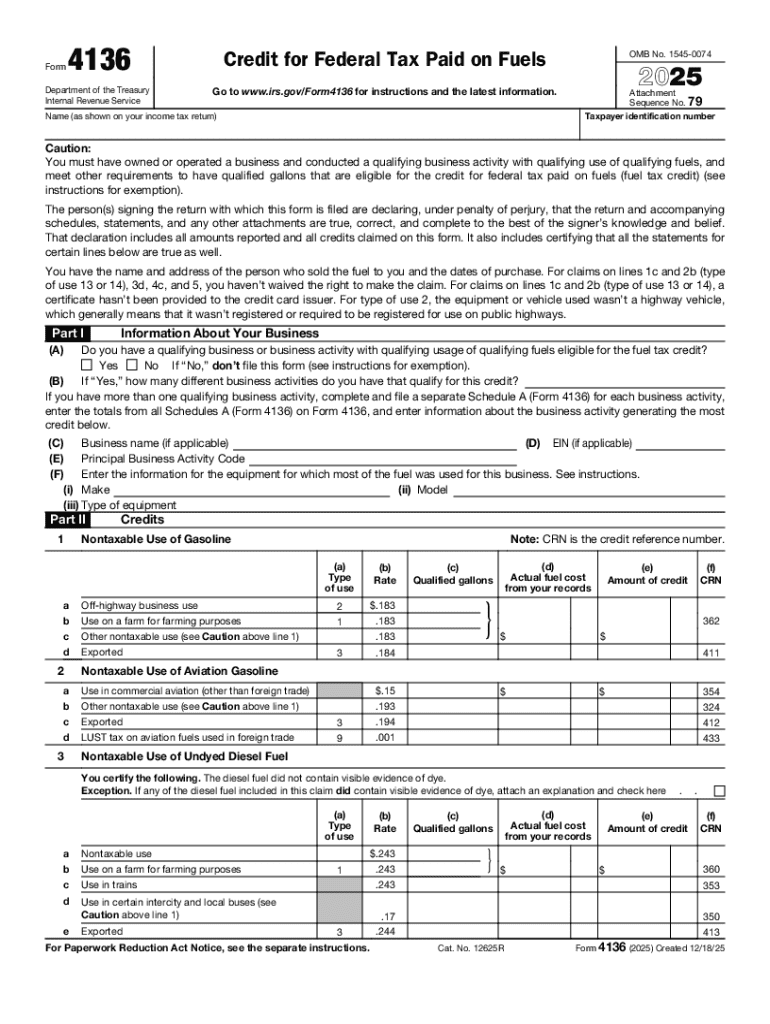
- Complete IRS Form 4136: This form is utilized to claim the credit and must be attached to your annual tax return.
- Review Submission: Double-check all information for accuracy before submission to avoid complications or penalties.
Required Documentation and Forms
Collecting the proper documentation is a critical step in effectively claiming the Fuel Tax Credit. Accurate and comprehensive record-keeping ensures that your submission is credible and complete.
- Receipts showing the type and amount of fuel purchased.
- Logs or records demonstrating the usage of fuel in qualifying activities.
- IRS Form 4136, used to articulate the credit claim in your tax return.
IRS Guidelines and Compliance
Adhering to IRS guidelines is crucial for the lawful application of the Fuel Tax Credit. The guidelines provide a framework ensuring that credits are claimed rightfully and in adherence to federal tax laws.
- Follow the specific instructions on IRS Form 4136 to avoid errors.
- Keep abreast of any changes in tax laws that may affect eligibility or the claiming process.
- Be prepared to provide additional documentation if audited.
Common Use Cases & Examples
The Fuel Tax Credit can be applied across a variety of scenarios, illustrating its practical benefits and effectiveness. Consider the following common use cases:
- Agricultural Operations: Farmers using diesel for powering tractors and other non-highway machinery.
- Construction Projects: Use of fuel in cranes, bulldozers, and other construction equipment not operated on public highways.
- Government Use: Fuel utilized by municipalities for non-road vehicles like street sweepers.
Penalties for Non-Compliance
Non-compliance with IRS regulations regarding the Fuel Tax Credit can incur several penalties, highlighting the importance of precise and honest reporting.
- Falsification of claims or documentation can lead to fines and audits.
- Incorrect application or failure to file the necessary paperwork can result in delayed refunds or disqualification from the credit.
- Maintain accurate records and ensure all submissions adhere strictly to IRS guidelines to avoid these repercussions.
Digital vs. Paper Submission
Selecting the appropriate method for submitting your Fuel Tax Credit claim is influenced by various factors, including ease of access and personal preference.
- Digital Submission: Offers convenience, speed, and a streamlined process; ideal for those who are tech-savvy.
- Paper Submission: Preferred by those who are more comfortable with traditional methods or where digital access is limited.
- Ensure the form is complete and accurate irrespective of the submission method to ensure smooth processing by the IRS.