






Definition & Meaning
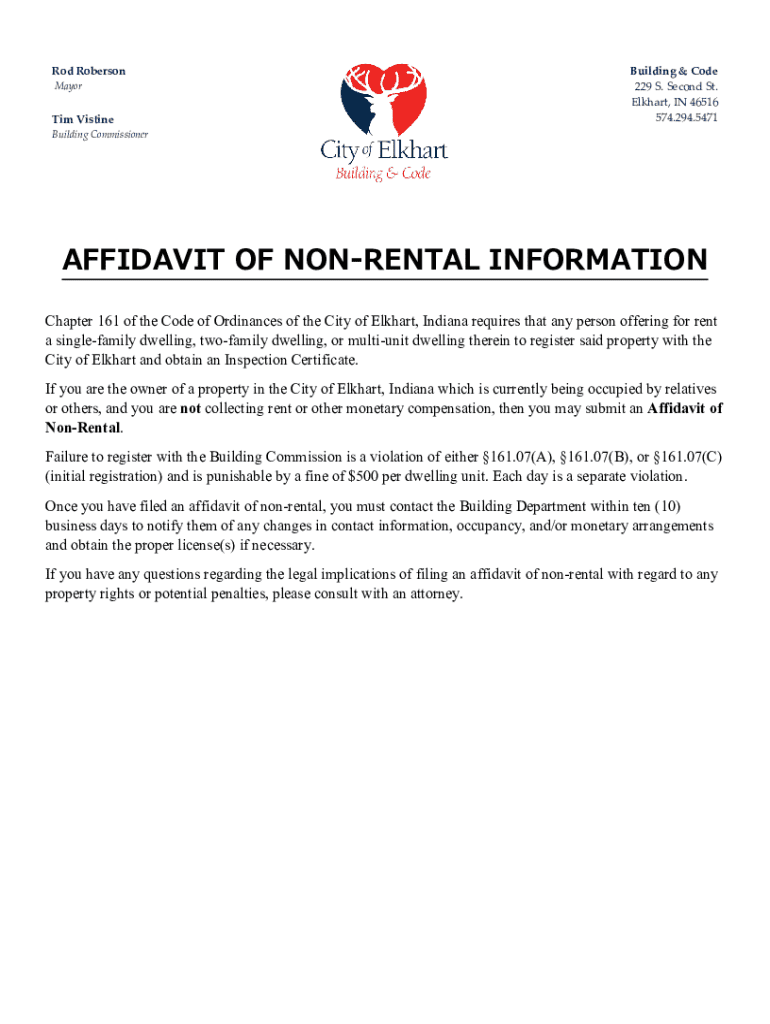
The Affidavit of Non-Rental Information is a legal document that individuals or entities utilize to declare that a particular property is not being used for rental purposes. This affidavit serves as a formal statement, under oath, that the property in question is not generating rental income and is not subject to the related regulatory obligations and tax requirements. This document can play a crucial role in both legal and financial contexts, ensuring clear communication with authorities or legal entities that require proof of non-rental status.
Context and Application
- Legal Confirmation: It verifies non-rental status to governmental bodies or legal entities.
- Tax Implications: Provides evidence that can impact tax evaluations, potentially averting misclassification.
- Property Classification: Assists in maintaining correct property classification which is important for compliance.
How to Use the Affidavit of Non-Rental Information
Using the Affidavit of Non-Rental Information necessitates understanding its purpose and correctly executing its instructions, ensuring that the document can be submitted to appropriate authorities or used in legal proceedings.
Execution Guidelines
- Obtain Jurisdiction-Approved Format: Ensure you have the correct version applicable to your state or local jurisdiction, as requirements may vary.
- Complete with Accurate Information: Fill in all required fields truthfully, as providing incorrect information could lead to legal consequences.
- Notarize the Document: Typically, this document requires notarization to confirm the authenticity of the declarant's signature.
Steps to Complete the Affidavit of Non-Rental Information
Completing this affidavit involves several steps to ensure that all relevant information is accurately recorded and authenticated.
- Gather Necessary Information: Ensure you have all required details about the property and ownership status.
- Fill Out Personal and Property Details: Include personal information and specified property details with precision.
- Declare the Non-Rental Status: Provide a clear statement indicating the absence of rental activity.
- Sign and Notarize: Sign the affidavit in the presence of a notary to validate your declaration.
- Submit to Relevant Entities: Submit the completed affidavit to the appropriate agency or retain it for any necessary legal or financial use.
Key Elements of the Affidavit of Non-Rental Information
The affidavit contains several critical components that must be accurately completed to ensure its validity.
Essential Components
- Declarant Information: Full name and contact information of the individual making the declaration.
- Property Description: The address and legal description of the property in question.
- Statement of Non-Rental: A clear assertion that the property is not rented or leased.
- Date of Declaration: The specific date on which the affidavit is signed and notarized.
Legal Use of the Affidavit of Non-Rental Information
This affidavit serves as a legal instrument to formally assert the non-rental status of a property, often used in various legal frameworks to ensure compliance or to serve as evidence in disputes or audits.
Common Legal Applications
- Legal Disputes: Used in court to clarify property use.
- Regulatory Compliance: Helps satisfy municipal or state requirements concerning property categorization.
- Audit Protection: Provides a clear record if tax authorities question rental income reporting.
State-Specific Rules for the Affidavit of Non-Rental Information
Regulations surrounding the affidavit's use can vary considerably across different jurisdictions, impacting how one completes and submits the form.
Notable Variations
- Format Differences: Each state may have its required format or specific language.
- Filing Requirements: Some states might have additional documentation requirements.
- Submission Channels: State-specific rules could dictate where and how the affidavit must be submitted.
Importance of the Affidavit of Non-Rental Information
Understanding why this affidavit is essential can help stakeholders appreciate its role in their legal and financial strategies.
Advantages and Benefits
- Clarification of Property Use: Provides clear evidence to stakeholders and authorities about property use.
- Tax Benefits: May help avert taxes or penalties related to rental income by proving a property's non-rental status.
- Simplifies Disclosures: Ensures all stakeholders are aware of facts pertaining to property income, minimizing potential conflicts.
Who Typically Uses the Affidavit of Non-Rental Information
This document is typically employed by a range of individuals and entities that have a vested interest in declaring a property's non-rental status.


Typical Users
- Property Owners: Especially those with multiple properties needing clear categorization.
- Estate Planners: Professionals managing property assets within estate planning.
- Legal Representatives: Lawyers who assist clients in fulfilling legal declaration requirements.
These sections are designed to provide comprehensive and detailed insights into the structure, application, and significance of the Affidavit of Non-Rental Information, offering practical guidance and context to users facing this specific documentation requirement.