






Definition and Meaning of the Expired Statute of Limitations Letter
An Expired Statute of Limitations letter is a formal communication used by individuals to inform creditors or debt collectors that the time period allowed by law to sue for a debt has passed. This statute varies by state, typically ranging from three to 10 years, and once elapsed, it legally prohibits creditors from taking action through the court to collect the debt. The letter’s primary purpose is to assert the debtor's legal rights and prevent further collection attempts on a time-barred debt.
How to Use the Expired Statute of Limitations Letter
Using an Expired Statute of Limitations letter involves several key steps. It's crucial to first verify that the statute of limitations on the specific debt has indeed expired. Calculating this requires knowing the last activity date on the account, such as the last payment made. Once confirmed, compose the letter, citing relevant laws and clearly stating that the debt is time-barred. Send this letter via certified mail with a return receipt to ensure proof of delivery. It's often advisable to maintain a copy for personal records.
Steps to Complete the Expired Statute of Limitations Letter
- Gather Necessary Information: Collect all relevant details, including creditor’s name, account numbers, and important dates regarding the debt.
- Verify Statute of Limitations: Check the statute period for your state and confirm it's applicable.
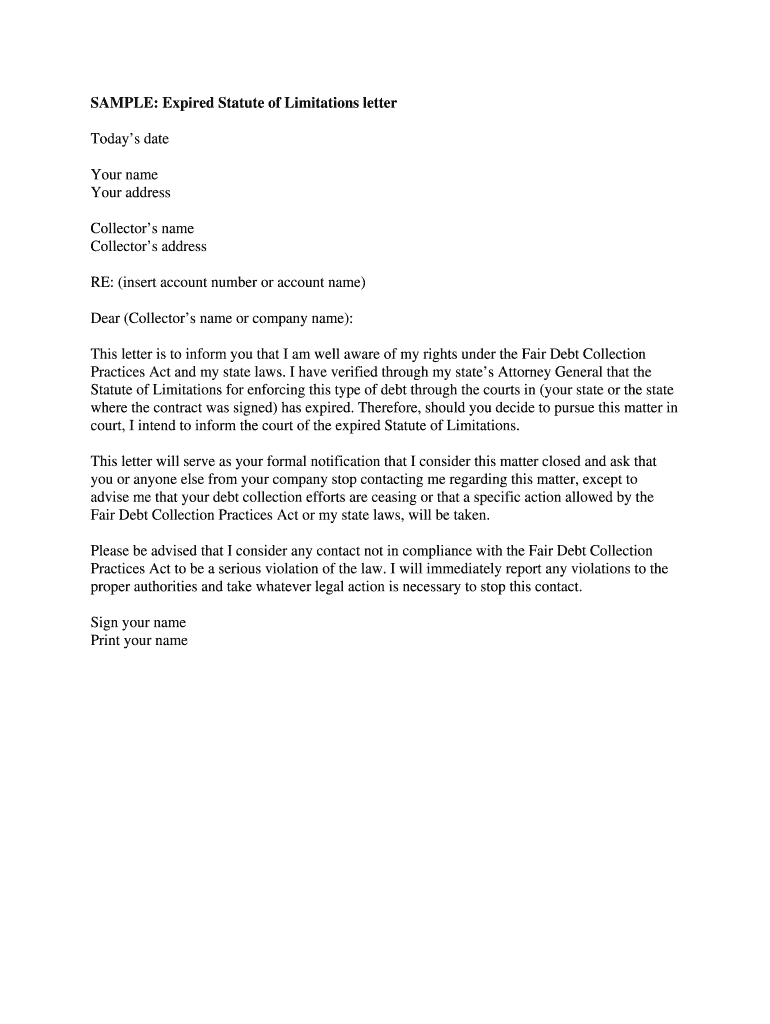
- Draft the Letter: Use a clear and respectful tone. Include your name, address, the date, creditor’s name, and address. Specify the debt, assert the expiration of the statute, and request cessation of collection activities.
- Include Legal References: Mention specific laws pertinent to your state if possible, to reinforce your position.
- Proofread: Ensure clarity and accuracy in your message.
- Send the Letter: Use certified mail to send the letter and keep the receipt as proof of delivery.
- Maintain Records: Store a signed copy of the letter and any responses received for future reference.
Key Elements of the Expired Statute of Limitations Letter
- Personal Information: Your name and address, ensuring accurate identification.
- Collector’s Details: Name and address of the collector or collection agency.
- Account Information: Specific account number or debt details that the letter addresses.
- Legal Assertion: Direct statement that highlights the expiration of the statute of limitations on the debt.
- Cessation Request: A formal request to stop further communication and collection efforts concerning the debt.
- Signature: Your signature to validate the letter’s authenticity.
Legal Use of the Expired Statute of Limitations Letter
The legal standing provided by this letter allows debtors to protect themselves from unlawful collection actions. It capitalizes on statutes that bar legal proceedings for debt collection after a certain period. This letter does not erase the debt; it stops the possibility of legal recourse. This is particularly vital in scenarios where creditors might attempt to renew the debt’s statute through induced payments post-expiration, highlighting the need to avoid any payments that could inadvertently reset the statute.
State-Specific Rules for the Expired Statute of Limitations Letter
Statute expiration periods differ significantly across states. For instance, in California, the statute of limitations for most debts is four years, while in New York, it is six years. Furthermore, certain actions, like making a payment or acknowledging the debt in writing, may restart or toll the statute in some jurisdictions. Debtors must be acutely aware of their local laws and consult legal resources or professionals for precise guidance tailored to their circumstances.
Who Typically Uses the Expired Statute of Limitations Letter
Typical users include individuals seeking to cease collection activities on debts they believe are no longer legally enforceable. This includes consumers who have accumulated credit card debts, medical bills, or other forms of unsecured debts that have surpassed the statute of limitations. This letter is also relevant for those who have been contacted by collection agencies regarding old debts and wish to assert their legal rights without engaging in payment negotiations.


Importance of the Expired Statute of Limitations Letter
This letter is crucial for maintaining financial integrity and protecting consumers from unfair debt collection practices. By clearly stating that the statute of limitations has expired, it serves as a protective measure against potential harassment or threats of legal action from collectors. Additionally, it educates consumers on their legal rights, empowering them to make informed decisions regarding their finances and improving their confidence in handling old debts.
Examples of Using the Expired Statute of Limitations Letter
Consider a scenario where a consumer receives a letter from a collection agency about a credit card debt last active six years ago. Given their knowledge of a five-year statute of limitations in their state, the consumer drafts and sends an Expired Statute of Limitations letter, citing the debt’s age and requesting cessation of communication. In another example, an individual receives a persistent call about a medical debt allegedly owed and uses the letter to successfully halt the unwarranted collection actions once the statute period is confirmed expired.