




01. Edit your red energy authority to act form online
Type text, add images, blackout confidential details, add comments, highlights and more.

Type text, add images, blackout confidential details, add comments, highlights and more.

Draw your signature, type it, upload its image, or use your mobile device as a signature pad.

Send it via email, link, or fax. You can also download it, export it or print it out.
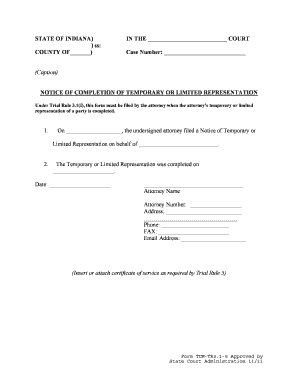
An "authority to act form" is a legal document granting a designated individual or entity the power to act on behalf of another person. This form is often used in situations where an individual cannot represent themselves. The designated person can make decisions and act within the scope defined in the document.
When constructing an authority to act form, various elements are crucial to ensure its effectiveness and legality.
The legal application of an authority to act form extends across various fields, providing a structured means to delegate decision-making capabilities.
Filling out the authority to act form accurately is vital to ensure legal compliance and effectiveness.
Completing an authority to act form requires the collection of several essential documents.
The form is broadly applicable, but certain groups are more likely to utilize it.


While the form is generally universal, specific rules can vary by state.
Understanding practical implementations is helpful to grasp the full utility of the form.
Each of these blocks provides comprehensive information tailored to encompass various facets of an authority to act form, underscoring its importance, variations, and implications.
At DocHub, your data security is our priority. We follow HIPAA, SOC2, GDPR, and other standards, so you can work on your documents with confidence.




Nov 27, 2024 4. I understand that I may only revoke (withdraw) a Granting Authority to Act before DCWP issues the applicable license, permit, or certificate.Read more
I grant my agent and any successor agent general authority to act for me with respect to the following subjects as defined in the Uniform Power of Attorney Act,Read more
This shall be my (our) good and sufficient authority to act on my (our) behalf and to negotiate or bond on my behalf.


