




01. Edit your form online
Type text, add images, blackout confidential details, add comments, highlights and more.

Type text, add images, blackout confidential details, add comments, highlights and more.

Draw your signature, type it, upload its image, or use your mobile device as a signature pad.

Send it via email, link, or fax. You can also download it, export it or print it out.
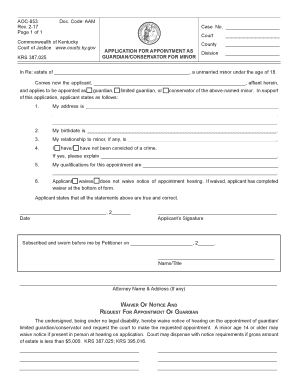
The Conservator's Report PC-371 REV is a legally mandated document used in the United States to report on the status of a conservatorship. A conservatorship is a legal concept whereby a court appoints an individual or organization, known as a conservator, to care for and manage the affairs of another person, called the conservatee, who cannot manage their own finances or personal matters due to age, disability, or incapacity. This report provides a comprehensive summary of the financial and personal well-being of the conservatee. It includes detailed accounts of the conservatee's assets, liabilities, income, and expenses, as well as updates on their living conditions and healthcare needs.
Gather Required Information: Collect all necessary financial records, including bank statements, receipts, and any relevant documents pertaining to the conservatee's assets and liabilities. Ensure you have up-to-date information about the conservatee’s living conditions, health status, and any changes since the last report.
Complete Financial Details: Fill out the financial sections of the report with accuracy, detailing the conservatee’s income sources, monthly expenses, and any changes in assets or liabilities. Be precise in documenting these financial details, as they form a critical part of the conservatorship’s accountability to the court.
Describe the Conservatee's Condition: Provide a narrative of the conservatee's current living situation and overall welfare. Include information on their health status, daily routine, and any services or assistance provided by the conservator to maintain their quality of life.
Review and Verify: Double-check all entries for accuracy and completeness. Ensure all sections of the form are filled out according to state-specific guidelines. Verifying the accuracy of all data helps prevent delays in court approval and maintains the conservator’s credibility.
Submit to the Court: After completing the report, submit it to the appropriate court for review. Depending on the jurisdiction, submissions may be done online, via mail, or in person.
Typically, this form is utilized by conservators, who are appointed to manage the financial and personal affairs of conservatees. Users often include:


The report is a legal requirement to maintain transparency and accountability in conservatorship. It ensures that conservators act in the best interest of the conservatee, and it allows courts to monitor the ongoing suitability and performance of the conservator. Filing this report in a timely manner is crucial, as failure to do so may result in legal penalties or the removal of the conservator.
State laws govern the frequency, format, and specific requirements for completing the Conservator's Report. For instance, while some states may require an annual report, others might mandate semi-annual or quarterly updates. Familiarizing oneself with state-specific mandates is essential to ensure compliance and avoid potential legal repercussions.
Through meticulous completion of the Conservator's Report PC-371 REV, conservators provide necessary insight into the care and management of those unable to advocate for themselves effectively.
At DocHub, your data security is our priority. We follow HIPAA, SOC2, GDPR, and other standards, so you can work on your documents with confidence.




by J Long 2025 In Arkansas, one may be a conservator (guardian under the states language) of the person and of the estate if he or she is (1) a resident of.Read more
Instructions: A conservator of the person may use this form to report to the Probate Court at least annually on the condition of the person underRead more


