






Definition & Meaning of the Mutual Exchange Information Sheet
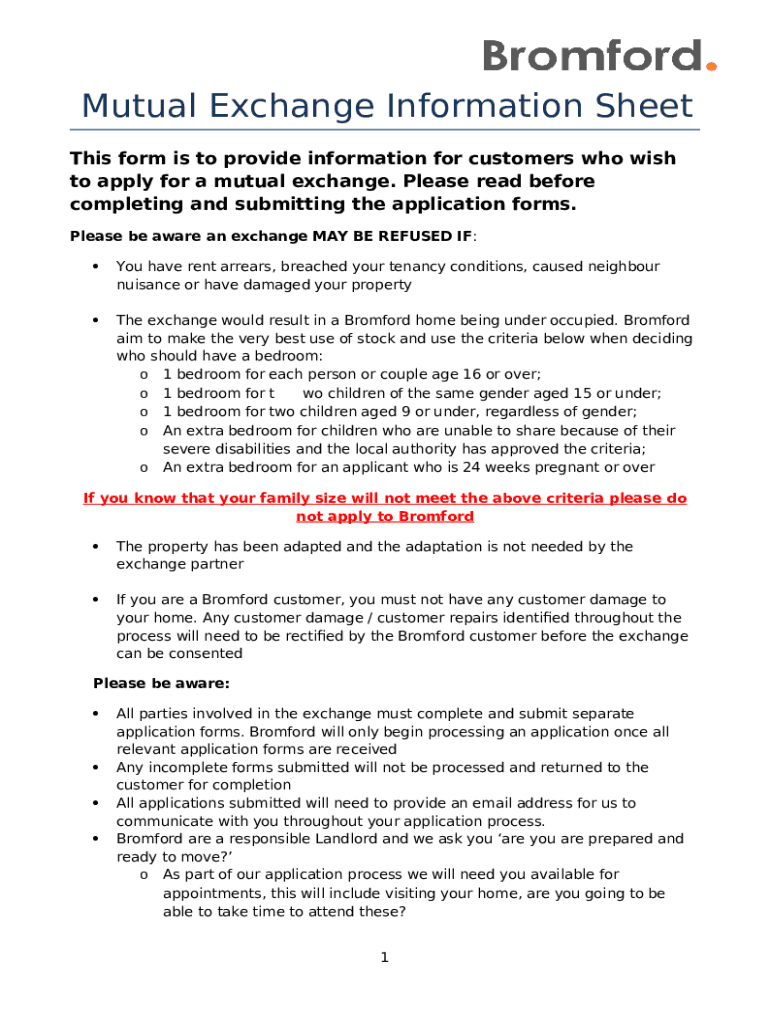
The mutual exchange information sheet is a critical document used primarily in housing associations and local councils. It serves as a comprehensive guide for tenants looking to swap their homes under mutual exchange policies. This form outlines all necessary details, eligibility criteria, and involves an exchange of rights between tenants wishing to switch residences. By detailing the terms and conditions of such exchanges, this document ensures a transparent and fair process.
Mutual exchange allows tenants with a secure or assured tenancy to swap their homes with another tenant. This document is pivotal as it encompasses the rules and regulations that both parties need to adhere to, ensuring a smooth transition and compliance with legal requirements. Through this form, tenants can better understand the obligations they must fulfill to successfully move forward with the exchange.
How to Use the Mutual Exchange Information Sheet
Understanding how to use the mutual exchange information sheet is key to successfully navigating the exchange process. The document provides a step-by-step guide that tenants must follow:
-
Eligibility Verification: Assess your qualification for a mutual exchange based on tenancy type and property condition. Ensure that both parties are eligible before proceeding.
-
Completion of the Form: Carefully fill out all sections of the information sheet, providing accurate and up-to-date personal and property details.
-
Submit Supporting Documents: Compile any required supporting documents such as identification, proof of tenancy, and financial statements, if necessary.
-
Council Approval: Submit the form along with supporting documents to the relevant housing officer or council authority for review and approval.
-
Arrange Home Inspections: Coordinate with the other tenant and housing officials to arrange for property inspections to ensure all housing standards are met.
-
Finalizing the Exchange: Once all conditions have been satisfied, schedule a date for the exchange, ensuring all parties have agreed upon the terms.
By thoroughly completing these steps as outlined in the information sheet, tenants can effectively facilitate their mutual exchange with minimal complications.
Eligibility Criteria for Mutual Exchange
Eligibility criteria play a pivotal role in the mutual exchange process. Understanding who qualifies is essential for participating tenants:
-
Tenancy Type: Only tenants with secure or assured tenancies are typically eligible to engage in a mutual exchange. Licensees and temporary tenants are usually excluded.
-
Condition of Tenancy: Tenants must not be in rent arrears or under possession proceedings. Properties must meet all safety and maintenance standards before a swap can occur.
-
Permission from Landlords: Both respective landlords must agree to the exchange without unreasonable delay or conditions.
-
Property Size and Suitability: Eligible exchanges must ensure that properties match the tenants' needs in terms of size and facilities. Overcrowding or under-occupancy could lead to disapproval.
Meeting these criteria is crucial before proceeding with further documentation or planning the swap, a detail prominently highlighted in the mutual exchange information sheet.


Steps to Complete the Mutual Exchange Information Sheet
Completing the mutual exchange information sheet can be a straightforward process if proper attention is given to each detail. Here is a breakdown of the steps involved:
-
Read Instructions Carefully: Begin by thoroughly reviewing the provided guidelines to ensure clarity on each section.
-
Fill Personal and Property Details: Accurately input all requested personal details, including names, current addresses, and contact information, along with property descriptions.
-
Verify and Attach Documentation: Confirm that all listed supportive documentation is verified and attached, such as identification and tenancy agreements.
-
Complete Consent Sections: Make sure all required consents from both tenants and landlords are completed, ensuring mutual agreement.
-
Review and Sign: Before submission, double-check all data entries for accuracy then sign the document to confirm completion.
-
Submit to Authorities: Present the form to the relevant housing authority or landlord for processing and approval.
Following these steps methodically helps prevent errors and potential delays in the exchange process.
Application Process & Approval Time
The completion and submission of a mutual exchange information sheet mark the beginning of the formal application process. Here's what to expect:
-
Initial Review: Once submitted, housing authorities review the application to ensure all guidelines and criteria are met. This includes verifying tenancy status, property conditions, and eligibility.
-
Inspection Arrangements: Following a successful initial review, property inspections are scheduled to verify suitability and compliance with housing standards.
-
Final Approval: The entire approval process often takes several weeks, during which landlords or housing associations deliberate before granting the final swap authorization.
-
Notifications: Both tenants are notified about the approval status and any additional requirements needed before the exchange can be finalized.
Timely response and accurate adherence to instructions can significantly streamline this process, reducing unnecessary waiting periods.
Required Documents for a Mutual Exchange
Submitting the correct documentation with the mutual exchange information sheet is vital for a seamless approval process. The typical documents required include:
-
Proof of Tenancy: Current tenancy agreements for both parties.
-
Identification: Valid identification documents for all adults involved in the exchange (passport, driver's license).
-
Financial Statements: Though not always required, some councils may ask for proof of financial stability, such as recent pay stubs or benefit statements.
-
Condition Reports: Up-to-date reports or proofs of recent maintenance that meet statutory safety standards.
Ensuring these documents are accurate and current can prevent delays and facilitate a more efficient exchange process.
Key Elements of the Mutual Exchange Information Sheet
The information sheet contains specific sections critical to the mutual exchange process:
-
Contact Information: Detailed personal contacts for both parties involved.
-
Residence Details: Full address and property details, including current size and structure.
-
Tenancy Information: Comprehensive tenancy history and status, along with landlord details.
-
Consent and Approval: Sections requiring signatures to confirm agreement to the terms and conditions of the exchange.
Each section's completeness and accuracy are recognized as vital for successfully processing an exchange, a principle clearly detailed within the sheet.
Legal Use of the Mutual Exchange Information Sheet
The legal implications of using the mutual exchange information sheet are significant:
-
Agreement Binding: Once filled and submitted, the terms outlined in the sheet become legally binding upon approval.
-
Compliance: Tenants must adhere to all outlined legal requirements and provide truthful and complete information to avoid legal repercussions.
-
Lease Modifications: The sheet facilitates changes in lease agreements, making sure all parties understand revised responsibilities and privileges.
Given its legal standing, careful attention to detail is paramount to avoid disputes or liabilities down the line.
Examples of Using the Mutual Exchange Information Sheet
Real-world applications abound for mutual exchange information sheet use:
-
Interstate Tenancy Swaps: Tenants relocating to another state for employment often use the sheet to facilitate home swaps with counterparts in that area.
-
Family Requirement Adjustments: Families growing in size who require a larger dwelling exchange with others needing to downsize.
In both cases, the information sheet ensures structured transitions aligned with both parties' legal rights and responsibilities.