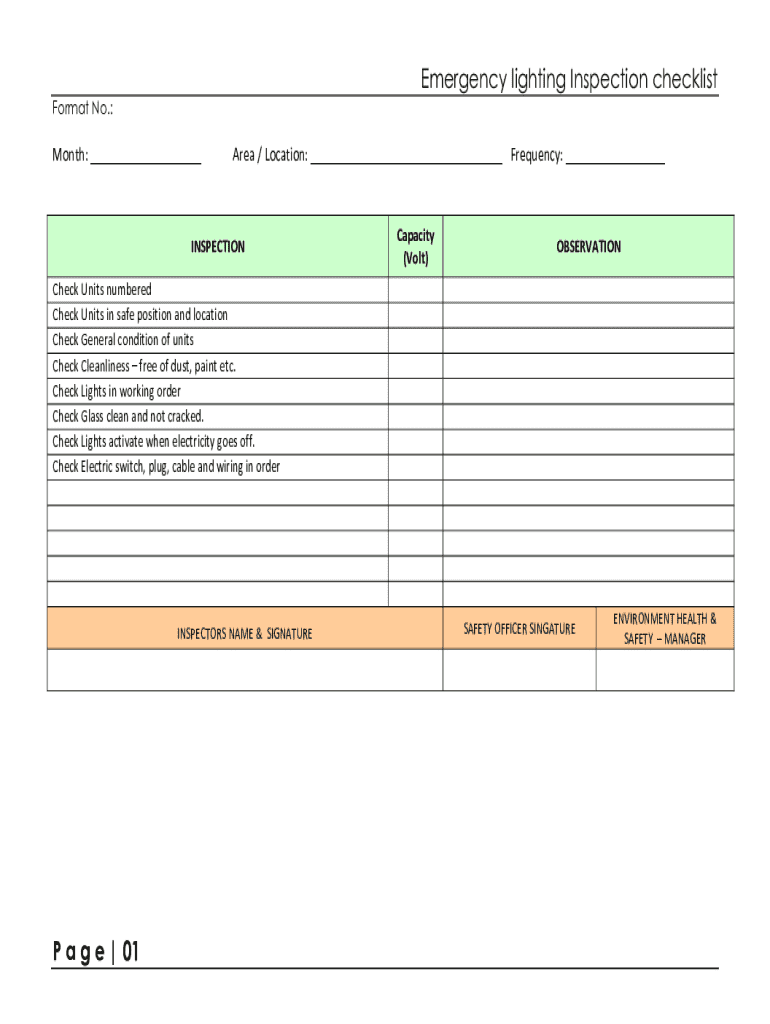







Definition & Meaning
The Emergency Lighting Inspection Checklist is a critical tool used to ensure that all emergency lighting systems function correctly and comply with safety standards. These systems are essential for providing illumination during power outages or emergencies, facilitating safe evacuation routes in buildings and public spaces. The checklist is primarily utilized by maintenance teams and safety inspectors to identify and resolve issues with emergency lighting equipment. The goal is to maintain operational efficiency and safety compliance, thereby reducing risks associated with non-functional emergency lighting.
Key Elements of the Emergency Lighting Inspection Checklist
The checklist includes several crucial components that need thorough evaluation:
- Battery Duration and Charging: Inspect the battery life to ensure it can sustain lighting for the required duration, typically 90 minutes. Verify that the charging mechanism is functioning correctly.
- Light Output and Bulb Condition: Check that all bulbs are intact and capable of providing adequate illumination. Replace any burnt-out or dimming bulbs.
- Power Supply Connections: Confirm that all connections to the main power supply and backup sources are secure and functioning.
- Signage Visibility: Ensure that all exit signs and emergency lighting indicators are clearly visible and not obstructed.
- Operational Controls: Test the manual test switch and automated control systems to guarantee they operate as expected under simulated emergency conditions.
Steps to Complete the Emergency Lighting Inspection Checklist
- Preparation: Gather necessary tools and safety gear. Review previous inspection records for any recurrent issues.
- Initial Testing: Activate the emergency lighting manually to observe the performance of all lights and signs under stress conditions.
- Detailed Inspection: Examine each component individually, including bulbs, batteries, and connections. Document any faults or malfunctions.
- Resolution: Replace or repair faulty components as needed. Make detailed notes of all corrective actions taken.
- Final Testing: Repeat the manual activation to confirm that all issues are resolved and systems function optimally.
- Documentation: Update the inspection log with findings, actions taken, and next scheduled inspection date.
Who Typically Uses the Emergency Lighting Inspection Checklist
Typically, maintenance personnel, safety officers, and building inspectors use this checklist. It is essential in environments like hospitals, commercial buildings, educational institutions, and public facilities where emergency lighting is mandated by law. These professionals ensure that emergency systems are up-to-date and compliant with relevant safety regulations, contributing to the overall safety strategy of the establishment.


Legal Use of the Emergency Lighting Inspection Checklist
In the United States, emergency lighting systems must comply with regulations outlined in codes such as the National Fire Protection Association (NFPA) 101 Life Safety Code. Regular inspections documented using the checklist can help demonstrate compliance with these codes and enhance a building's legal defense during audits or investigations. Non-compliance can lead to penalties, including fines and increased liability in the event of an incident.
State-Specific Rules for the Emergency Lighting Inspection Checklist
Different states may have variations in codes and regulations governing emergency lighting. For instance, some states might require more frequent inspections than others or stipulate specific documentation procedures. It's essential to consult state-specific safety codes and engage with local regulatory bodies to ensure compliance with all local mandates.
Software Compatibility
Various digital solutions can facilitate the use of the Emergency Lighting Inspection Checklist by offering mobile apps or software systems for recording and managing inspection data. Platforms such as DocHub enable users to edit, annotate and manage checklist documents digitally, offering integration capabilities with cloud storage services. This allows seamless sharing and updating of inspection records without the need for paper versions.
Examples of Using the Emergency Lighting Inspection Checklist
Consider a large manufacturing facility that conducts quarterly emergency lighting inspections using the checklist. During one inspection, they identify that several backup batteries are near the end of their operational life. By documenting these findings and replacing the batteries promptly, the facility ensures compliance with safety standards and reduces the risk of lighting failure during an emergency. This proactive approach prevents potential operational interruptions and enhances workplace safety.