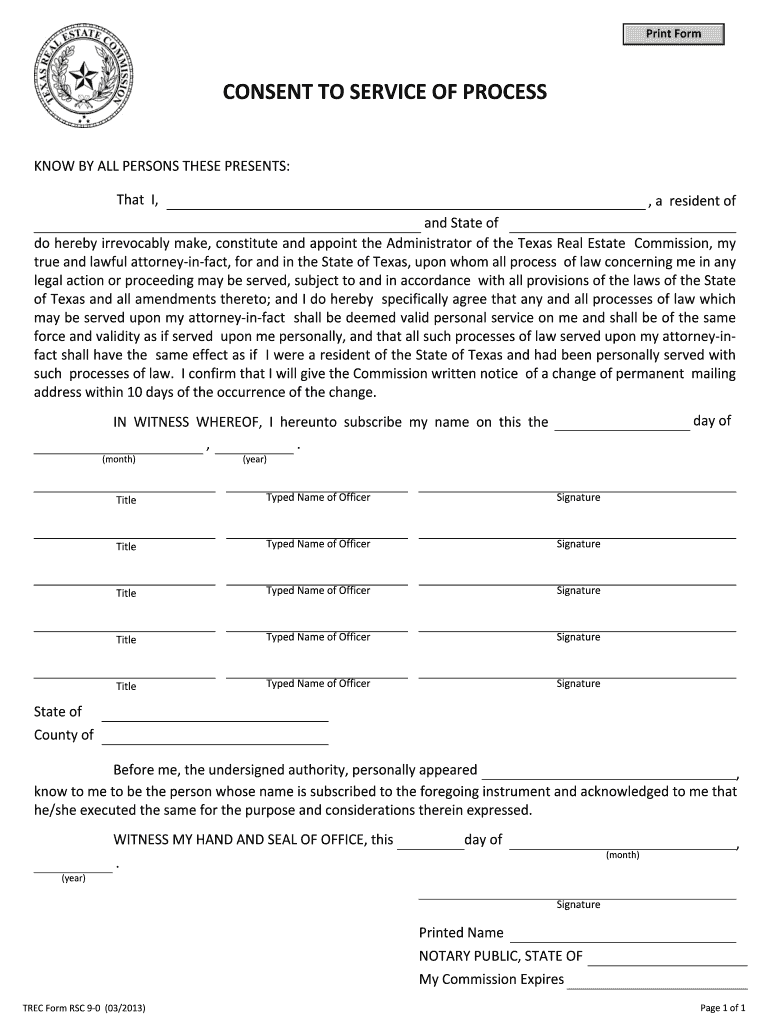







Definition & Meaning
The "Consent to Service of Process" is a legal document through which an individual or entity gives authorization to a specific party, such as a state's administrator, to act as their agent for receiving legal documents like subpoenas and lawsuits. This consent acts as an assurance that legal proceedings can be commenced efficiently without the need for physical presence or specific geographical constraints, which is particularly beneficial for businesses operating in multiple states.
- The term is widely used in corporate settings where companies do business across state lines and need to appoint representatives to handle legal matters.
- It is often mandatory in regulated industries to ensure that there is a clear process for legal notifications, reducing the time and complexity involved in interstate and international legal processes.
Key Elements of the Consent to Service of Process
The form typically includes specific elements to ensure it fulfills its legal purpose effectively. These elements are critical for understanding the implications and responsibilities associated with consenting to the service of process.
- Identity of the Appointer: The individual or organization granting the authority, including relevant identification details.
- Designation of the Representative: The person or office being authorized to receive legal documents, often referred to as an agent.
- Scope of Authority: The precise terms outlining what the designated agent is authorized to do, which usually includes accepting legal documents on behalf of the appointer.
- Legal Jurisdiction: The specific legal jurisdiction in which the consent applies, ensuring clarity on where and how the representative can operate.
- Duration of Consent: Sometimes, the document specifies a timeframe during which the consent is valid unless otherwise revoked or modified by law.
Steps to Complete the Consent to Service of Process
Filling out the form correctly is crucial for ensuring its validity and effectiveness in legal matters. Below is a structured step-by-step guide to completing the form:
- Identify Relevant Parties: Clearly list the parties involved, including the appointer and the representative. Ensure names and addresses are correct.
- Define the Scope: Specify the type of processes for which the representative is given authority. Clearly define the responsibilities and limitations.
- Determine Jurisdiction: State the jurisdiction where the consent will be applicable to ensure clarity in legal proceedings.
- Validate by Signature: Both the appointer and the authorized representative need to sign the document. This dual signature validates the mutual consent and understanding of responsibilities.
- Notarization: In some cases, notarization may be required to formally authenticate the document, especially when used in interstate commerce or corporate filings.
Why Should You Consent to Service of Process
Agreeing to this consent provides significant advantages, particularly in streamlining cross-jurisdictional legal arrangements and minimizing logistical challenges in legal matters.
- Legal Compliance: Ensures compliance with state and federal requirements for companies and individuals operating beyond their home jurisdiction.
- Operational Efficiency: Simplifies the process of handling legal notices, reducing delays and potential legal hurdles.
- Protected Legal Rights: Safeguards your legal rights by ensuring you have a dedicated point of contact for receiving all legal processes, minimizing the risk of missed notifications.
Who Typically Uses the Consent to Service of Process
This form is commonly used across various sectors and for different types of entities. Understanding who utilizes this document can offer insight into its far-reaching applicability.
- Corporations and LLCs: Businesses that operate across state lines or internationally often use this consent to appoint registered agents.
- Financial Institutions: Banks and insurance companies rely on this form to handle legal documents efficiently across different jurisdictions.
- Real Estate Firms: Agencies dealing with properties in different states use this to facilitate property law compliance and disputes.


Legal Use of the Consent to Service of Process
The document plays a critical role in multiple legal contexts, which can vary based on industry and jurisdictional requirements.
- Corporate Registrations: Often required during the formation or registration of a business entity in states where it plans to operate.
- Litigation Procedures: Helps in the expedient service of legal documents during litigation, ensuring all parties are informed and legally protected.
State-Specific Rules for the Consent to Service of Process
Different states may have unique rules governing how this form is used and its requirements. Knowledge of these variations is crucial for ensuring compliance.
- Texas: Requires consent for non-resident companies for real estate transactions and corporate registrations.
- California: Has specific guidelines for how the designated representative or agent must be a resident or a business entity registered within the state.
Examples of Using the Consent to Service of Process
Real-life instances illustrate the form's utility and importance in various scenarios.
- Cross-state Business Operations: A Delaware-registered company operating in California consents to service of process to handle litigation related to employment law.
- International Corporations: A foreign corporation establishes a U.S.-based agent to streamline its legal correspondence related to U.S. market activities.
Important Terms Related to Consent to Service of Process
Understanding related legal jargon and terms provides comprehensive knowledge, aiding in better comprehension and application of the document.
- Agent for Service of Process: An appointed person or business designated to receive legal documents.
- Statutory Agent: Similar to a registered agent, they receive official communications and service of process notices.
This detailed explanation and structured content aim to offer valuable insights and practical knowledge about the consent to service of process, facilitating informed decision-making and efficient legal document handling.