






Definition & Meaning
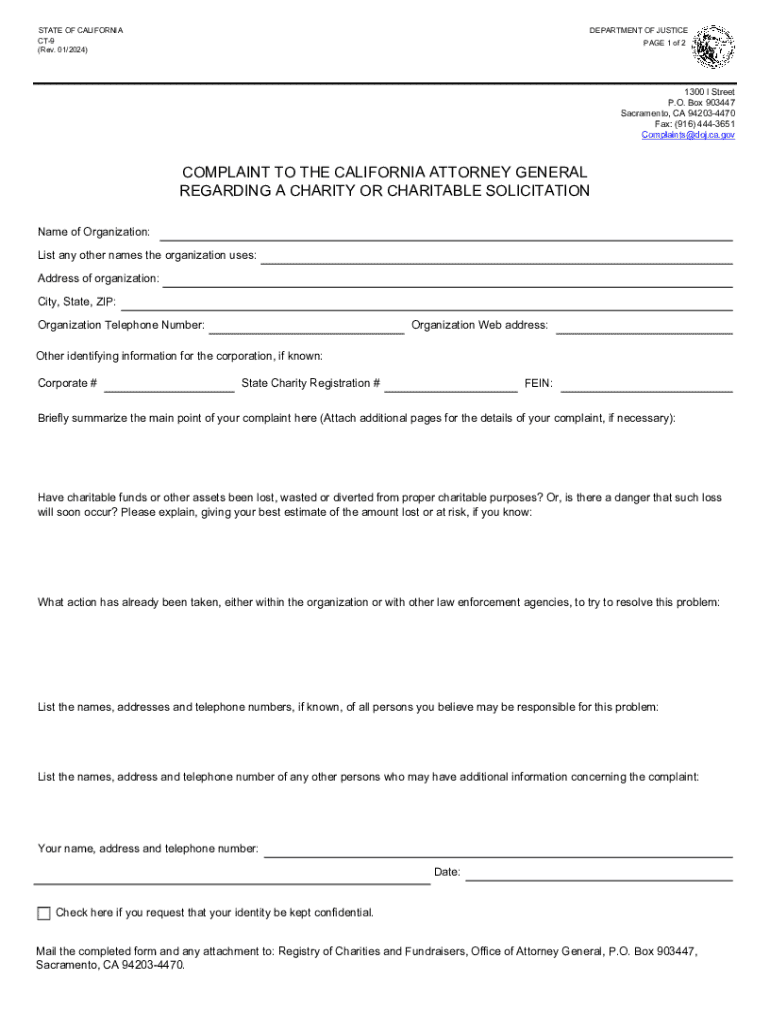
The "Complaint to the California Attorney General Regarding a Charity or Charitable Solicitation" is a formal document used by individuals or organizations to report concerns about the activities of charities and charitable solicitations within California. This form facilitates the submission of allegations regarding mismanagement, fraud, false advertising, or any inappropriate actions by a charity. It is part of the regulatory framework allowing citizens to ensure charitable organizations adhere to legal and ethical standards, promoting transparency and accountability within the charitable sector.
Key Purposes
- Provides a mechanism for public oversight and accountability of charities.
- Assists in identifying fraudulent or unethical practices in charitable operations.
- Supports the Attorney General's office in regulating and monitoring charitable activities.
How to Obtain the Complaint Form
Acquiring the complaint form is straightforward and can be accomplished through several channels. Primarily, the California Attorney General's official website offers direct access to download a PDF version of the form. Furthermore, individuals can request a physical copy via mail by contacting the Attorney General's office directly.
Access Points
- Online Download: Visit the California Attorney General's website; the form is typically available under the charitable solicitations section.
- Mail Request: Contact the Attorney General's office to request a paper form, providing your mailing address for delivery.
Steps to Complete the Complaint Form
Filing a complaint involves a structured process to ensure that all necessary information is accurately captured. The following steps outline the completion of the form:
-
Provide Personal Information: Fill out your full name, address, and contact details to aid in the processing of your complaint.
-
Describe Charity Details: Accurately record the name, address, and contact details of the charity in question.
-
Outline the Issue: Clearly explain the nature of your complaint, including date and location of the incident, specific practices in question, and any communications exchanged with the charity.
-
Attach Supporting Documents: Include any relevant documentation or evidence, such as emails, invoices, or promotional materials, that support your complaint.
-
Submit the Form: Follow submission guidelines to send in your completed form and any supporting documents.
Submission Tips
- Ensure all required fields are completed to prevent delays.
- Double check the accuracy of the charity's details and your personal contact information.
Why You Should File a Complaint
Filing a complaint is essential for advocating for transparency and ethical conduct within the charitable sector. It can lead to investigations that correct misconduct and prevent future occurrences, ultimately protecting public donated funds and trust.
Benefits of Filing
- Protect Public Interest: Ensures donations are used effectively and ethically.
- Enhance Sector Accountability: Holds charities to their professed missions and operational promises.
- Prevent Fraud: Deters fraudulent activities by elevating issues to regulatory attention.
Key Elements of the Complaint Form
Understanding the structure of the complaint form is crucial for accurately capturing all relevant information. The form is typically divided into several sections that guide the complainant through the process.
Core Sections
- Complainant Information: Details about the individual or entity lodging the complaint.
- Charity Information: Specifics about the organization involved in the report.
- Complaint Details: A comprehensive account of the issue or incident.
- Attachments: Space to indicate accompanying documents that substantiate the complaint.
Legal Use of the Complaint Form
Using the complaint form properly is vital for ensuring your complaint is considered valid and actionable. Only legitimate grievances tied to legal infractions or ethical breaches should be submitted.
Legal Considerations
- Ensure allegations are founded on documented evidence or verifiable events.
- Maintain copies of the form and all submissions for personal records.
- Understand that false claims may be subject to penalties under law.
Required Documents
When filing the complaint form, certain documents may be needed to support the claims made. The completeness of your submission is enhanced by thorough documentation.
Examples of Required Documents
- Receipts or Invoices: Evidencing donations or transactions with the charity.
- Correspondence: Any written communication with charity representatives.
- Promotional Materials: Referencing specific solicitations in question.
Form Submission Methods
Submitting the completed form comes with multiple options, allowing for flexibility based on personal preference or convenience.
Submission Options
- Online Submission: Through the Attorney General's digital platform for immediate acknowledgment.
- Mail Submission: Send the physical form along with printed evidence to the relevant office address.
- In-Person: For those seeking a hands-on approach, visiting the office might be preferred.
Penalties for Non-Compliance
Failure to submit a legitimate complaint or providing false information may bear consequences. However, for charities, non-compliance with legal mandates reported through this form can provoke investigative actions, penalties, or shutting down operations if violations are severe.
Potential Penalties for Misconduct
- Fines: Monetary repercussions for proven violations.
- Legal Action: Potential for civil suits or criminal charges.
- Operational Restrictions: Limitations on fundraising or operational capacities.
Who Issues the Form
The California Attorney General's office is responsible for creating and disseminating the "Complaint to the California Attorney General Regarding a Charity or Charitable Solicitation" form. Their role ensures that charitable operations in the state align with legal, ethical, and operational standards.
Role of the Attorney General
- Oversight: Regulates and monitors charitable agencies and solicitations.
- Enforcement: Investigates deviations from the law and enforces corrective measures.
- Public Liaison: Serves as a channel for public concerns and complaints related to charities and charitable solicitations.