






Definition & Meaning
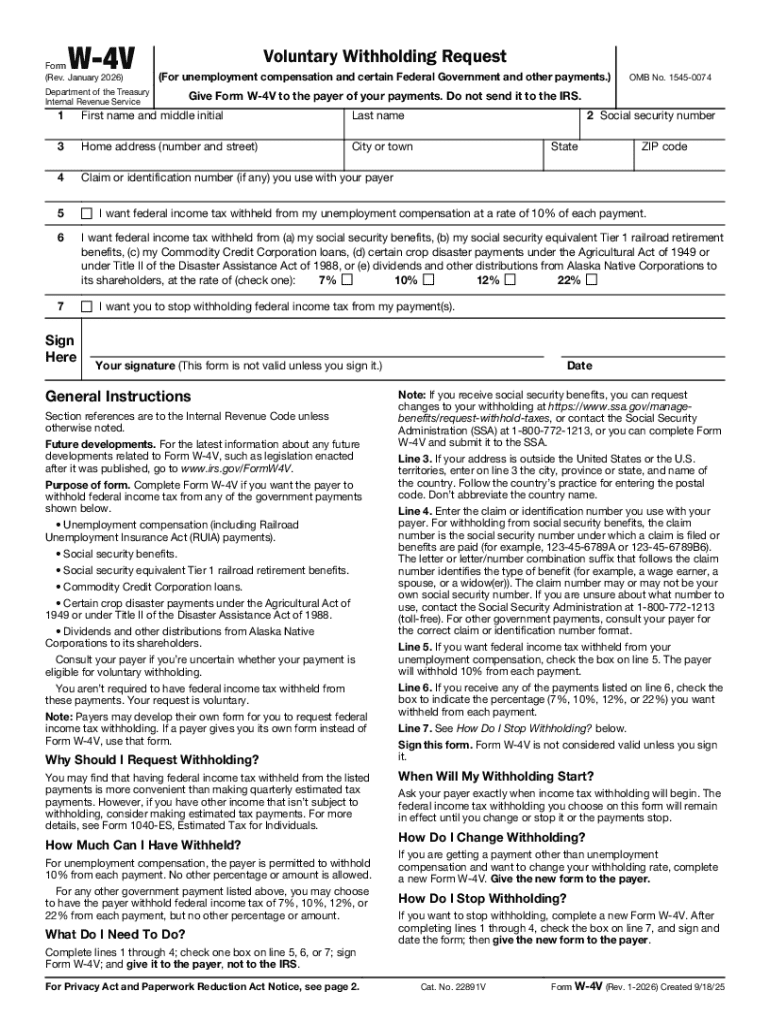
The Form W-4V (Rev January 2026) is a document used by individuals who wish to voluntarily have federal income tax withheld from certain types of payments, such as unemployment compensation and specific payments from federal programs. This form is crucial for taxpayers who want to ensure that taxes are appropriately withheld from their benefits to avoid underpayment penalties.
Components and Structure
- Basic Information: Users need to provide personal details, including their name, Social Security number, and address.
- Payment Types: The form specifies which payments the taxpayer wants the withholding applied to, such as Social Security or Railroad Retirement benefits.
- Withholding Rate: Taxpayers can select a withholding percentage from a few predetermined options.
How to Use the Form W-4V
To use the Form W-4V, individuals need to fill it out and submit it to the agency paying the benefit. It is important to complete this process accurately to ensure correct tax withholding.
Step-by-Step Instructions
- Gather Information: Collect all necessary personal and financial details before starting.
- Select Withholding Option: Choose the desired withholding percentage that aligns with your overall tax strategy.
- Fill in Personal Details: Enter your full name, address, and Social Security number.
- Submit the Form: Send the completed form to the payer agency by mail or using their preferred submission process.
How to Obtain the Form W-4V
The Form W-4V can be easily obtained from the IRS website, local IRS offices, or directly from the agency providing the payment. It is available in both digital and physical formats.
Sources for Obtaining the Form
- IRS Website: Download a fillable PDF version from the IRS official site.
- Local IRS Office: Visit an IRS office to pick up a physical copy.
- Payment Agency: Request the form from the agency from which you receive your benefits.
Who Typically Uses the Form W-4V
This form is primarily used by individuals receiving government payments who wish to manage their income tax withholding proactively.


Common Users
- Retirees: Those receiving Social Security benefits who want to adjust their withholding to reflect retirement income.
- Unemployed Individuals: Those receiving unemployment benefits and choosing to avoid tax bills by opting for upfront tax withholding.
- Railroad Retirement Beneficiaries: People obtaining Railroad Retirement benefits preferring preemptive tax compliance.

Key Elements of the Form W-4V
The form consists of several critical components that must be completed accurately to ensure correct functionality.
Major Sections
- Personal Identification: Ensures the identity of the taxpayer is verifiable.
- Income Source Identification: Specifies the types of payments the withholding applies to.
- Withholding Election: Designates the selected withholding percentage, influencing annual tax calculations.
IRS Guidelines for Form W-4V
The IRS provides specific guidelines to help taxpayers understand how to fill out Form W-4V effectively.
Essential IRS Instructions
- Withholding Rates: The form provides options, including 7%, 10%, 12%, and 22% withholding rates.
- Submission Protocol: The form must be submitted to the payer, not the IRS, ensuring proper processing.
Legal Use of the Form W-4V
Using the Form W-4V legally involves adhering to the IRS rules and accurately reporting your income and withholding choices.
Compliance and Regulations
- Legality of Withholding: Taxpayers must comply with IRS rules for legal income reporting.
- Purpose: Intended only for specific income sources specified on the form, ensuring the taxpayer cannot misuse it for other types.
Form Submission Methods
Submitting the Form W-4V can be done through various channels, making it accessible for all users.
Available Methods
- Mail: Send the completed form to the address provided by the payer agency.
- In-Person: Submit directly at the agency's office for immediate verification.
- Digital Submission: Some agencies may offer online submission options, providing convenience.
These sections provide a thorough understanding of Form W-4V (Rev January 2026), offering insights into its purpose, usage, and procedural nuances.