






Definition and Importance of Schedule K-2 and K-3
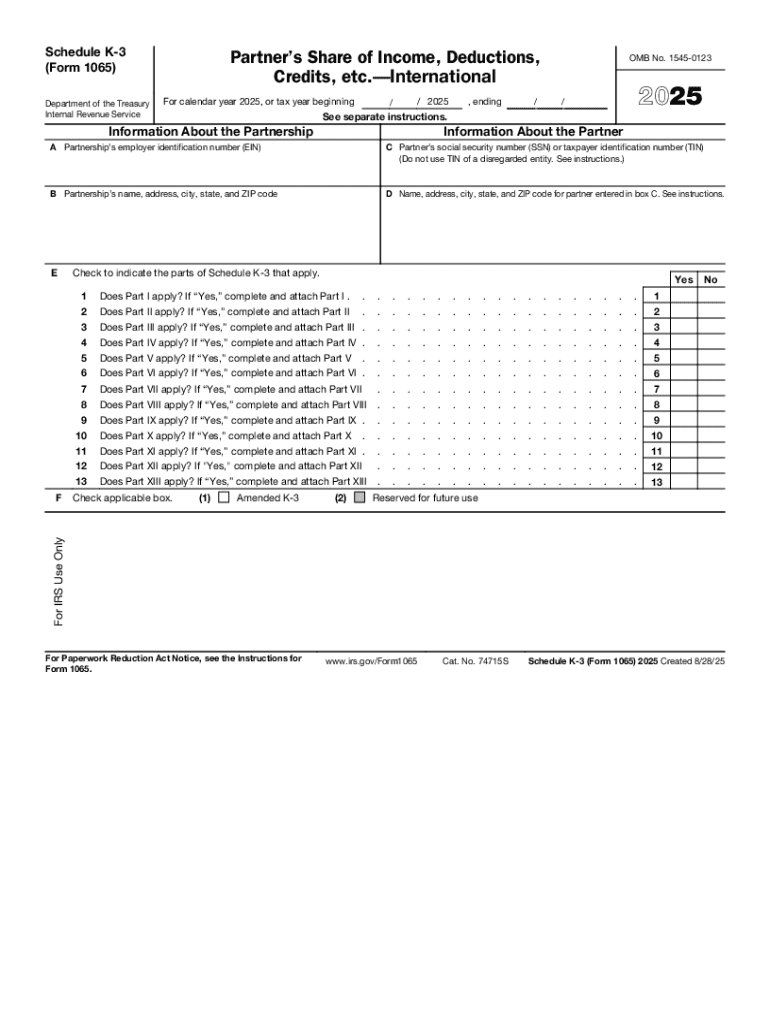
Schedule K-2 and K-3 are integral components of Form 1065, which is the U.S. Return of Partnership Income. These schedules play a critical role in reporting information concerning a partnership's international tax attributes. Specifically, they extend the detail previously included in Schedule K and K-1 to address foreign tax matters more comprehensively. This includes income, deductions, credits, and other tax implications relating to international operations.
- Schedule K-2 supplements the Schedule K, providing a more detailed breakdown of international tax data.
- Schedule K-3 further extends this detail to partners, akin to the way Schedule K-1 provides partners with details for domestic items. It ensures that partners receive sufficient information to report their share of partnership items on their own tax returns.
How to Use Schedule K-2 and K-3 of Form 1065
Using Schedule K-2 and K-3 involves understanding the requirements for accurate international tax reporting:
-
Determine Applicability: Assess whether your partnership has international activities, such as foreign income, transactions, or entities.
-
Identify Components: Familiarize yourself with the sections in both schedules, which include income, deductions, foreign tax credits, and other items.
-
Gather Relevant Data: Compile detailed reports on all international transactions and tax credits relevant to the partnership’s operations.
-
Complete Schedules: Input detailed information into relevant parts of the schedules for both the partnership’s regulatory compliance and the individual partners’ reporting needs.
-
Review and Submit: Ensure accuracy by conducting thorough reviews before submission, addressing both partnership-level data and individual partner allocations.
Obtaining Schedule K-2 and K-3
Acquiring the Schedule K-2 and K-3 is straightforward:
- Access via IRS Website: Both schedules can be downloaded from the official IRS website, alongside detailed instructions for completion.
- Tax Software Integration: Many tax preparation software, such as TurboTax and QuickBooks, offer integrated features that automatically generate these schedules based on entered data.
Steps to Complete Schedule K-2 and K-3
Completing these schedules requires specific attention to detail:
- Collect Financial Documents: Obtain all necessary financial records, focusing on international transactions and tax items.
- Fill Out Schedule K-2: Input data in designated sections that address foreign activities at the partnership level.
- Detail Information in Schedule K-3: Break down K-2 data for individual partners in K-3, ensuring comprehensibility for their personal returns.
- Verify Data: Cross-check entries against financial documents to confirm accuracy.
- Consult IRS Instructions: Regularly refer to IRS guidance to ensure compliance with regulatory updates and changes.
Relevance of Schedule K-2 and K-3
The pivotal role of these schedules is seen in:
- Compliance: Ensures partnerships are compliant with IRS regulations regarding international tax matters.
- Transparency: Provides partners with comprehensive tax details, aiding them in accurate personal tax filings.
- Optimization: Helps partnerships and partners maximize available tax credits and deductions while minimizing errors.
Typical Use Cases for Schedule K-2 and K-3
These schedules are vital for partnerships involved in:
- International Trade: Partnerships with cross-border transactions or income sources.
- Foreign Investments: Entities with investments outside the U.S. requiring detailed tax reporting.
- Global Operations: Companies engaging in international business necessitating allocation of foreign tax credits.
Key Elements of Schedule K-2 and K-3
Essential components include:
- Income Attribution: Detail foreign-source income segments for accurate taxation.
- Tax Credits: Outline foreign tax credits received, facilitating claiming by both partnerships and individual partners.
- Deductions: Specify deductions pertinent to international operations, ensuring tax obligations are minimized.
IRS Guidelines and Filing Deadlines
The IRS provides comprehensive instructions for these forms, which include essential timelines:
- Filing Deadlines: Schedule K-2 and K-3 must match the partnership’s Form 1065 filing, typically the 15th day of the third month after the tax year ends.
- Extensions: An extension may be requested, although penalties apply for late submissions without approved extension.
Who Issues the Form
The IRS is the authoritative body issuing these forms as part of its efforts to enhance reporting transparency for international transactions by U.S. partnerships.
Penalties for Non-Compliance
Failing to file or incorrectly filing Schedule K-2 or K-3 can result in penalties:
- Inaccurate Reporting: Can lead to penalties that include fines and interest on unpaid taxes.
- Omission: Missing or incomplete forms are subject to penalties under IRS regulations.
Software Compatibility
Schedules K-2 and K-3 are supported by many leading tax preparation software packages, allowing for easier data entry and error checking. Integration with platforms like TurboTax and QuickBooks streamlines the process, minimizing manual entry errors and ensuring compliance with the latest tax laws.
Business Types Benefiting from Schedule K-2 and K-3
Types of partnerships that see the most benefit include:
- Multinational Corporations: Those with an extensive footprint in foreign markets.
- Investment Partnerships: Entities leveraging global assets and requiring detailed tax reporting.
Understanding and properly managing the Schedule K-2 and K-3 of Form 1065 becomes pivotal for partnerships with international dealings, ensuring regulatory compliance and optimized tax positioning.