






Definition and Purpose of Form 8038
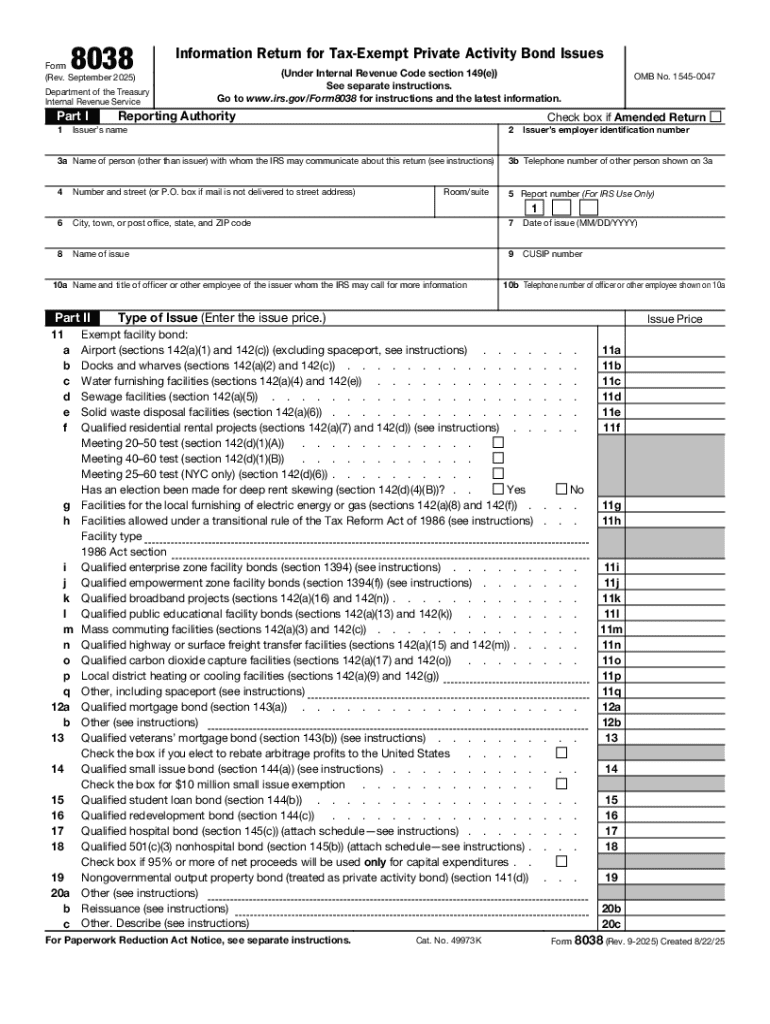
Form 8038, the information return for tax-exempt private activity, is an IRS form used by issuers of tax-exempt private activity bonds. These bonds are utilized to finance projects serving public interests yet managed by private entities. Common applications include infrastructure developments like hospitals, schools, and airports. Completing the form is mandatory to provide transparency on the bond activities and ensure compliance with federal tax laws.
How to Use Form 8038 Effectively
To effectively use Form 8038, issuers need to ensure accurate reporting of details related to the tax-exempt private activity bonds. This includes summarizing financial data and project descriptions. Precise details increase the trustworthiness of the return. Issuers should:
- Review all relevant financial transactions linked with the bond.
- Include purpose and type of bonds issued.
- Verify any regulatory compliance needs with legal counsel.
Applying these steps ensures that the form meets all IRS requirements and maintains the tax-exempt status of the bonds.
Steps to Complete Form 8038
Completing Form 8038 involves a comprehensive process covering various sections of the form. Here's a step-by-step guide:
-
Issuing Authority Identification
- Enter the name, address, and EIN of the issuing authority.
-
Description of Bonds
- Indicate the type of bond and its purpose.
-
Financial Information
- Provide details about the proceeds of the bond, its usage, and amounts involved.
-
Legal and Compliance Information
- Confirm adherence to federal and state regulations.
-
Signature
- Ensure an authorized official signs the form.
This multi-step completion ensures comprehensive documentation of all aspects of the bond issuance.
Filing Deadlines and Important Dates
Form 8038 must be filed no later than the 15th day of the second calendar month after the close of the calendar quarter in which the bonds were issued. For instance, if bonds are issued in March, the form is due by May 15th. Timely submission is crucial to avoid penalties and to maintain the tax-exempt status of the bonds.
Required Documents for Submission
Submitting Form 8038 necessitates assembling various supporting documents, ensuring the information provided is accurate and complete. These documents include:
- Detailed bond issuance records.
- Legal agreements pertaining to the bond issue.
- Financial statements and disclosures.
- Proof of use of bond proceeds.
Collecting all necessary documentation before filing the form helps avoid discrepancies during IRS review.
Who Typically Uses Form 8038
While the form is primarily used by issuers of tax-exempt private activity bonds, it's often completed by:
- Municipalities issuing bonds for public projects.
- Nonprofit organizations undertaking construction funded through bonds.
- Educational institutions financing facilities expansion via bonded debt.
These entities rely on the tax-exempt status provided by completing this form correctly and on time.
Legal Use and Compliance of Form 8038
Legal compliance is imperative when using Form 8038. To align with statutory requirements, issuers must:
- Adhere to IRS regulations, ensuring bonds meet the private activity bond tests.
- Maintain detailed records of financing transactions.
- Work alongside tax attorneys or advisors to confirm adherence to relevant IRS codes.
Meeting legal obligations affirms the legitimacy of the tax-exempt status for the bond.
Penalties for Non-Compliance
Failure to file Form 8038, or submitting it with inaccuracies, may result in sharp penalties, including:
- Monetary fines imposed by the IRS.
- Possible revocation of the bond's tax-exempt status.
- Increased scrutiny in future bond issuances.
Understanding the consequences underscores the importance of accuracy and timeliness in filing this essential tax document.