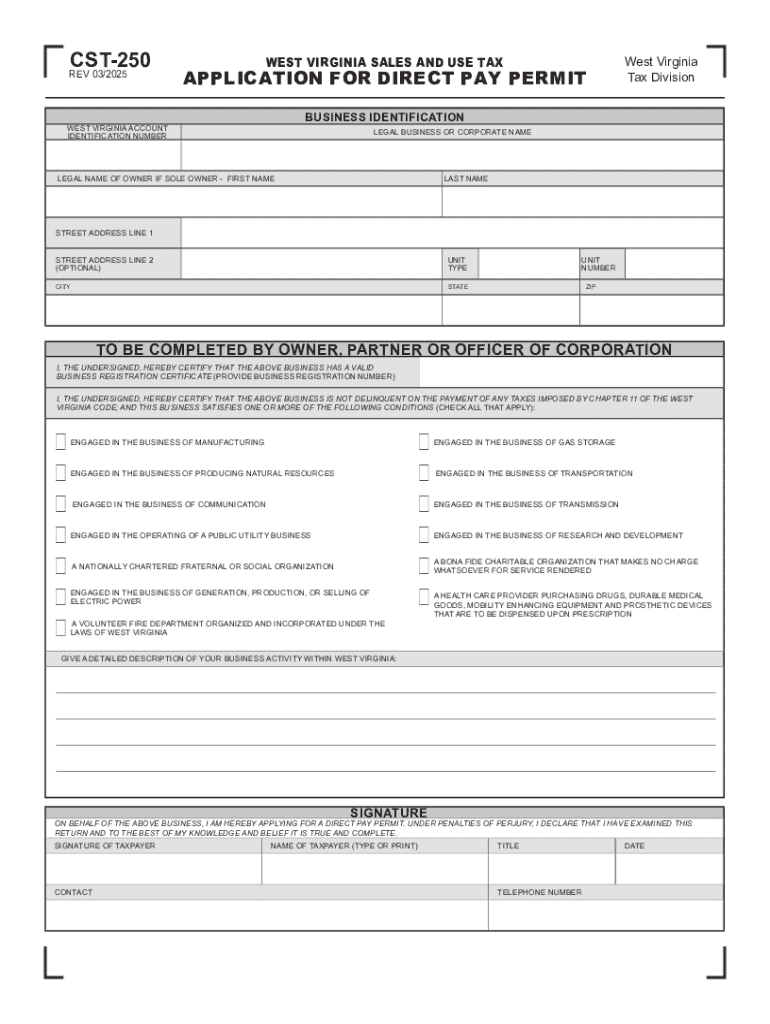







Definition & Meaning
The West Virginia Sales and Use Tax is a state-mandated tax on the sale, lease, or rental of tangible personal property and certain services. This tax is applicable to businesses operating in West Virginia that sell goods or offer taxable services. Tangible personal property refers to physical items such as electronics, furniture, and clothing, while taxable services might include repairs, installations, and telecommunications.
- Sales tax: Collected at the point of sale from customers purchasing goods or services.
- Use tax: Applies to goods and services purchased from out-of-state sellers for in-state use when sales tax is not collected.
This tax ensures fair competition between in-state and out-of-state businesses by leveling the tax obligations and maintaining state revenue streams for public services.
How to Use the West Virginia Sales and Use Tax
Utilizing the West Virginia Sales and Use Tax involves several steps for compliance and correct calculations. Businesses need to:
- Register for a West Virginia tax account to collect sales and use taxes. This can be done through the West Virginia State Tax Department.
- Calculate the correct tax amount on each transaction. The current rate is established by the state and must be applied uniformly.
- Collect the tax from the customer at the point of sale and ensure transparent disclosure on the sales receipt.
- Maintain detailed records of all sales and tax collections for future reference and audit purposes.
For consumers, understanding this tax is important for budgeting and assessing the total cost of purchases.
Steps to Complete the West Virginia Sales and Use Tax Form
Filing the West Virginia Sales and Use Tax form efficiently requires adherence to these critical steps:
- Preparation: Gather all necessary sales records for the reporting period, including invoices, receipts, and transaction logs.
- Calculation: Accurately compute the total sales tax collected during the period and ensure it matches the business records.
- Form Completion: Enter all required information on the designated fields of the tax form, including gross sales, taxable sales, and exemptions.
- Administrative Office: Submit the completed form either electronically via the state's online filing system or in paper form, as per your business's preference.
To avoid discrepancies, businesses should double-check figures and ensure that copies of the submitted form are retained for their records.
Why Companies Should Use West Virginia Sales and Use Tax
Implementing the West Virginia Sales and Use Tax in business practices offers multiple advantages:
- Legally required: Compliance with state tax laws avoids penalties and legal issues.
- Revenue collection: Ensures proper revenue flow to state agencies, which fund infrastructure, educational programs, and public welfare services.
- Business reputation: Demonstrates financial responsibility and integrity, fostering trust with customers and stakeholders.
Moreover, failing to collect and remit sales tax appropriately can result in penalties, fines, and potential audits, making adherence to tax requirements crucial for all businesses operating in West Virginia.
Eligibility Criteria
Entities eligible to manage the West Virginia Sales and Use Tax include:
- Businesses with a physical presence in the state, such as retail stores and service providers.
- Out-of-state businesses making sales of tangible personal property to West Virginia residents.
- Organizations providing taxable services within the state.
Businesses are required to obtain a business registration certificate and ensure compliance with current state regulations to lawfully conduct sales operations.


Key Elements of the West Virginia Sales and Use Tax
Several key elements define the West Virginia Sales and Use Tax system:
- Tax Rate: Stipulated by the state and subject to change. Businesses must apply the current rate accurately.
- Exemptions: Certain goods and services might be exempt, such as prescription medications and charitable donations.
- Remittance: Both sales and use taxes must be reported and paid periodically, typically on a monthly, quarterly, or annual basis, depending on the total sales volume.
Understanding these elements helps businesses manage tax obligations effectively and avoid non-compliance pitfalls.
Filing Deadlines / Important Dates
Remaining aware of crucial filing deadlines ensures timely submissions:
- Monthly filers: Returns are due by the 20th of the following month.
- Quarterly filers: Returns are due by the 20th of the month following each quarter’s end.
- Annual filers: Returns are typically due by January 31st for sales made in the prior year.
Failure to meet these deadlines can lead to interest charges and penalties, impacting business finances and operations.
Important Terms Related to West Virginia Sales and Use Tax
Grasping specific terminology bolsters comprehension and compliance:
- Nexus: A business's physical or economic connection to the state, necessitating tax collection obligations.
- Exemption Certificate: Documentation that permits certain purchases to be made free from sales tax if they meet specific criteria.
- Audit Compliance: Regular reviews by the state tax department to ensure accurate tax collection and reporting practices.
Familiarity with these terms aids businesses in navigating tax regulations smoothly and effectively.