






Definition and Purpose of the Prescription Drug Claim Form for Member Reimbursement
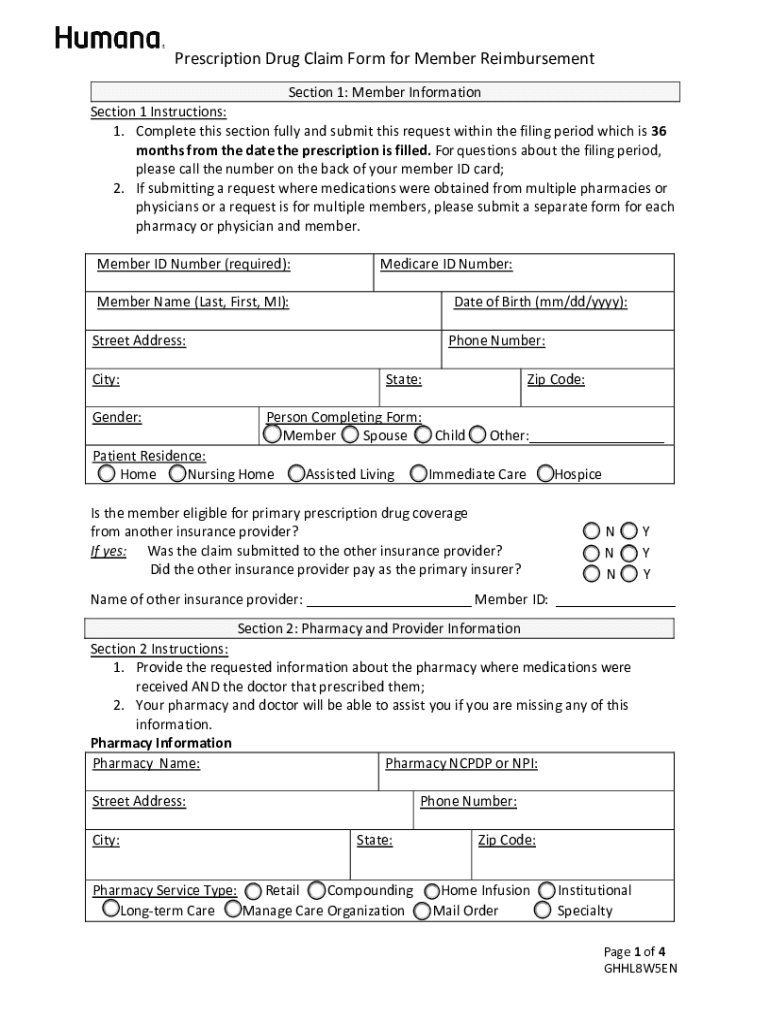
The Prescription Drug Claim Form for Member Reimbursement is a document primarily used by individuals who have made out-of-pocket payments for prescription medications and are seeking reimbursement under their health insurance policy. This form is essential for members who wish to claim these expenses against their policy, ensuring that they are reimbursed in accordance with their plan’s terms and conditions. The form typically requires detailed information about the purchase, such as the prescription details, the dispensing pharmacy, and the actual costs incurred.
Key Elements and Components
- Member Information: This section captures details like the policyholder's name, contact information, insurance policy number, and any other relevant identification numbers.
- Pharmacy and Prescription Details: Details about the pharmacy, medication dispensed, and prescriber information are crucial for processing the claim.
- Expense Breakdown: The form usually includes sections for itemizing each prescription's cost, allowing clear differentiation between covered and non-covered charges.
How to Use the Prescription Drug Claim Form for Member Reimbursement
Using the Prescription Drug Claim Form for Member Reimbursement involves several critical steps to ensure successful reimbursement. The process is designed to provide clarity and transparency in the claim submission.
Steps to Complete the Form
- Gather Necessary Information: Collect all receipts and prescription labels. Ensure you have details on the prescribing doctor, medication names, dosages, and the pharmacy’s contact information.
- Fill in Member Details: Enter your personal information, including full name, address, and policy number. This information ensures that your claim is matched correctly with your insurance policy.
- Enter Prescription Details: Fill in specifics such as prescription number, medication name, and prescribing doctor’s details. Accurate entry in this section helps avoid delays in claims processing.
- List Expenses: Use the provided space to detail the costs of each prescription. Include the total amount paid and any applicable copay or discount information.
- Review and Attach Documentation: Double-check the form for completeness and accuracy. Attach original receipts and any required documentation as specified by your insurer.
Why Submitting this Form is Essential
Filing the Prescription Drug Claim Form for Member Reimbursement ensures that you receive entitled financial compensation for healthcare expenses. Reimbursements can significantly alleviate the financial burden of out-of-pocket prescription costs.
- Reimbursement Value: Provides policyholders access to funds they have already expended, thus enhancing the affordability of necessary medications.
- Coverage Utilization: Ensures that you fully leverage your health insurance benefits, maintaining a comprehensive financial record of healthcare expenses.
Eligibility Criteria for Reimbursement
Not every situation qualifies for claim reimbursement. It is essential to understand the eligibility criteria before filing a claim.


Common Eligibility Requirements
- Covered Medication: The medication must be included in your insurer’s list of covered drugs.
- Authorized Prescriptions: Only prescriptions written by certified healthcare providers are eligible for claims.
- Approved Pharmacies: Medications should typically be purchased at recognized or network pharmacies to qualify.
Important Terms Related to the Form
Understanding the terminology used in the form is crucial for proper completion and submission.
Commonly Used Terms
- Copay: A fixed amount paid for a covered service, while the remaining balance is covered by the insurer.
- Deductible: The amount paid out of pocket before an insurer begins to cover expenses.
- Preferred Drug List: A list of medications that an insurance plan covers under its formulary.
State-Specific Rules and Variations
Prescription drug claim forms may differ based on regulations and insurance policies by state. Being aware of these variations helps in form submission accuracy.
Examples of State Differences
- Reimbursement Limits: Some states may have caps on the maximum reimbursement amount per prescription.
- Submission Deadlines: Filing periods can vary, with some states offering longer deadlines for claim submissions.
Form Submission Methods
The method of submitting the claim form can vary by insurer. Knowing all available options allows for flexibility and convenience.
Common Submission Channels
- Online Portal: Digital submission directly through the insurance provider’s website.
- Mail: Physical submission of the form along with required documents to a designated address.
- In-Person: Submission at a local insurance office.