




01. Edit your form online
Type text, add images, blackout confidential details, add comments, highlights and more.

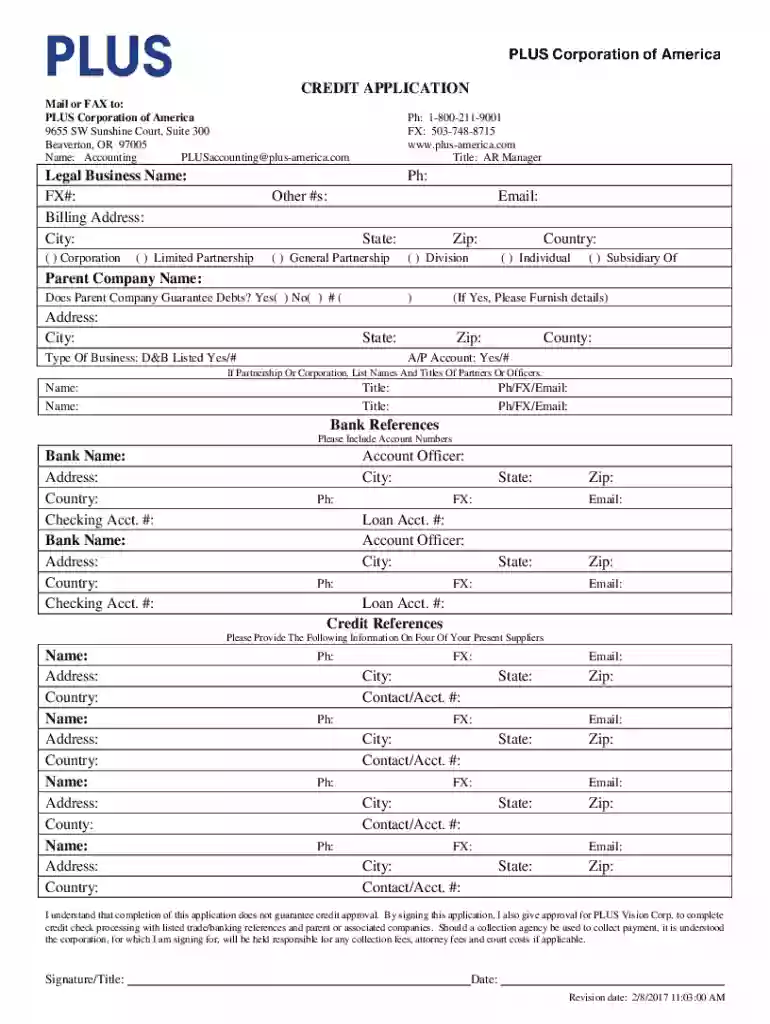
Type text, add images, blackout confidential details, add comments, highlights and more.

Draw your signature, type it, upload its image, or use your mobile device as a signature pad.

Send it via email, link, or fax. You can also download it, export it or print it out.
A credit application form is an essential document used by businesses to assess the creditworthiness of potential customers who wish to obtain goods or services on credit. Typically, this form collects detailed information about the applicant’s financial history, personal details, and employment status. Its primary function is to provide lenders and service providers with critical data to make informed lending decisions. In a business context, this form helps manage risk by evaluating the potential of non-repayment from borrowers or clients.
The credit application form can typically be obtained directly from the business or financial institution offering credit. It may be available:
A well-structured credit application form can be beneficial for both parties involved:
When using a credit application form, it is crucial to comply with relevant privacy laws and regulations, especially regarding the handling and protection of personal data:


At DocHub, your data security is our priority. We follow HIPAA, SOC2, GDPR, and other standards, so you can work on your documents with confidence.

Credit Application Form. Please complete and return to: accounting@novatech-usa.com. Nova-Tech International Inc. 800 Rockmead Dr Ste 102. Kingwood, TX 77339Read more
This appendix contains five model credit application forms, each designated for use in a particular type of consumer credit transaction.Read more
Mar 12, 2025 Download the ECOA model and sample forms. Editable versions of certain forms are provided on the Bureaus ECOA GitHub page.Read more


