Definition and Meaning of a Middle School Transcript
A middle school transcript is a comprehensive record of a student's academic performance during their middle school years. It includes detailed information about courses taken, grades received, and overall academic progress. While not as critical as high school transcripts, middle school transcripts still serve significant purposes in academic tracking and transitions to higher education levels.
- Includes academic subjects, elective courses, and extracurricular activities.
- Records grades, attendance, and optionally, standardized test scores.
- Often required for high school applications, early college programs, and transfers between schools.
The primary function is to provide a snapshot of a student's academic journey, serving as an essential tool for educators and students alike.
How to Use the Middle School Transcript
Middle school transcripts are used by various stakeholders for evaluating and planning student academic pathways. Here's how they are typically used:
- High School Placement: High schools may use transcripts to determine appropriate course placement, especially for honors or advanced classes.
- Transfer Schools: When moving to a different school district, a transcript ensures that appropriate classes and level placements are continued.
- Parental Review: Parents can use the transcript to track their child's progress and identify areas needing additional attention.
Middle school transcripts act as pivotal documents for planning academic futures, highlighting areas of strength and opportunities for improvement.
How to Obtain a Middle School Transcript
Obtaining a middle school transcript requires adhering to specific protocols, often dictated by the issuing school or district. Here’s a general procedure:
- Contact the School: Start by reaching out to the school's registrar or administrative office.
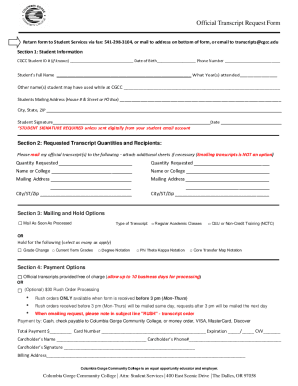
- Submit a Request Form: Some schools may require a formal request, either online or paper-based.
- Provide Identification: Proof of identity, such as a parent’s driver’s license or student ID, may be required.
- Processing Time: Expect a processing period; schools typically provide transcripts within one to two weeks.
- Pick-up/Delivery Options: Specify if you would like the transcript mailed, emailed, or if you prefer to pick it up in person.
Ensure to check the specific requirements of your school district, as processes can differ slightly.
Steps to Complete a Middle School Transcript Request
Requesting a middle school transcript requires several steps to ensure efficiency and accuracy:
- Identify Student Information: Provide complete details like full name, date of birth, and student ID, if applicable.
- Determine Purpose: Clarify why the transcript is needed, such as transfer, application, or personal review.
- Choose Format and Delivery: Decide whether a digital or paper copy is preferred and how it should be delivered.
- Confirm Fees: Some schools may charge a nominal fee for transcript issuance. Check payment methods, if applicable.
These steps help streamline the process, ensuring timely and correct issuance of the transcript.
Key Elements of a Middle School Transcript
A middle school transcript typically includes several critical elements that provide a comprehensive view of a student's academic record:
- Course List: Displays all academic courses undertaken, including core subjects and electives.
- Grades: Provides details on grades or marks received for each course.
- Attendance Record: Often includes days present and absent, highlighting attendance consistency.
- Extracurricular Activities: May list clubs, sports, and special interests participated in.
- Standardized Test Scores: If applicable, standardized test results may also be included to provide additional context to academic performance.
Each component contributes to a holistic picture of a student's middle education experience.
Who Typically Uses the Middle School Transcript
Middle school transcripts are utilized by various individuals and institutions, including:
- High School Administrators: For assessing admissions, placements, and academic readiness.
- Parents and Guardians: For monitoring academic progress and involvement in their child's education.
- Educational Counselors: To guide decisions on course selections and identify potential academic interventions.
- Private and Charter Schools: For evaluating incoming candidates who are transitioning from public schools.
Understanding who uses these transcripts can guide how they are interpreted and applied in different settings.


Legal Use of the Middle School Transcript
The use of middle school transcripts is governed by various legal considerations, ensuring privacy and appropriate application:
- FERPA Compliance: The Family Educational Rights and Privacy Act protects the privacy of student education records, including transcripts. Schools need parental consent to disclose these records.
- Data Security: Schools must ensure that transcripts are securely stored and shared, maintaining data integrity.
- Authorized Access: Only individuals with legitimate educational interest, such as educators and admissions personnel, are permitted access.
Legal adherence ensures that the handling and use of transcripts are conducted responsibly and ethically.
State-Specific Rules for Middle School Transcripts
While the core structure of middle school transcripts remains consistent, state-specific rules can affect their format and information inclusivity:
- Curriculum Standards: States may dictate which core subjects must be included, influencing transcript content.
- Grading Scales: Variation in grading systems (e.g., letter grades versus percentages) depends on state educational policies.
- Inclusion of Standardized Tests: Some states may require the inclusion of specific state-wide assessment scores.
Understanding state regulations can shape how transcripts are formatted and the type of details they convey.