






Definition and Meaning of the Arkansas Seller's Property Disclosure Statement
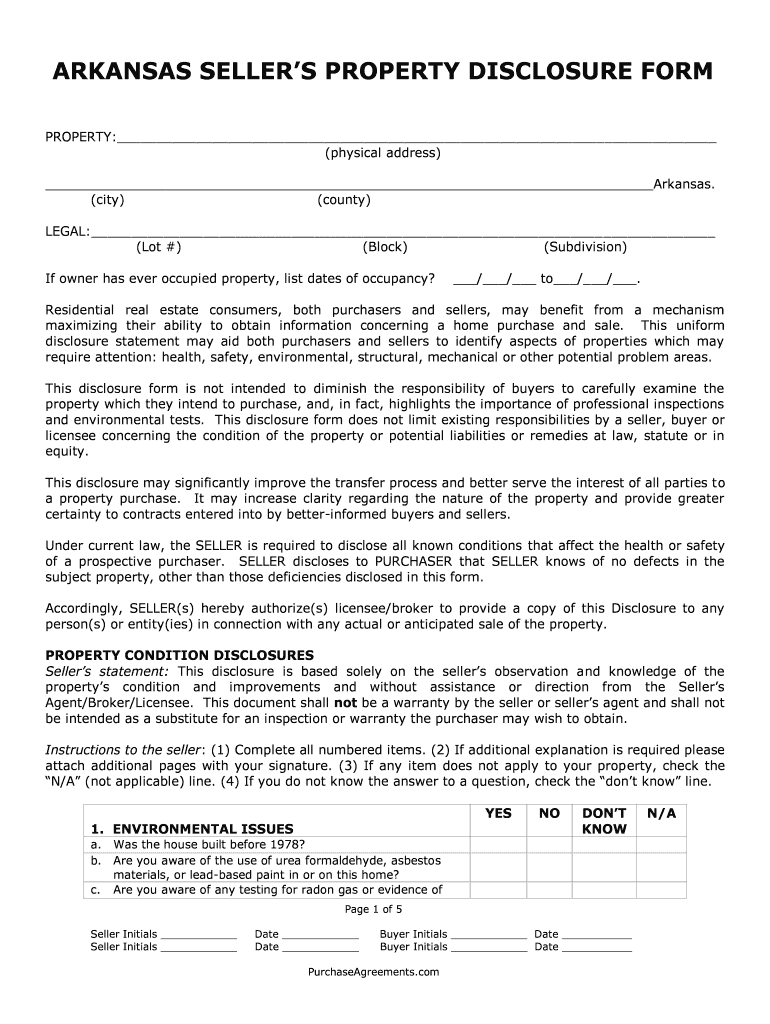
The Arkansas Seller's Property Disclosure Statement is an essential document in real estate transactions within the state. It is designed to provide potential buyers with detailed information regarding the condition of the property on sale. The statement encompasses various aspects of the property's physical state, thus allowing buyers to make informed decisions before finalizing the purchase. This form, mandated by Arkansas state law, ensures that the seller discloses known issues or defects related to the property upfront.
Key Elements within the Disclosure Statement
- Structural Components: Details regarding the foundation, roof, and walls, including any past repairs or existing damages.
- Environmental Factors: Presence of lead-based paint, asbestos, or other hazardous materials.
- Systems Information: The condition of HVAC, plumbing, and electrical systems.
- Water Damage: Incidences of flooding, leaks, or water damage in the past.
- Appliance Conditions: Status of included appliances such as ovens, dishwashers, or water heaters.
How to Use the Arkansas Seller's Property Disclosure Statement
Utilization of the Arkansas Seller's Property Disclosure Statement involves a systematic approach, ensuring comprehensive completion and accurate representation of the property's condition.
-
Obtain the Form: The document can be accessed through real estate agents or an online portal that provides legal form templates within the state.
-
Review the Sections: Sellers must understand each section of the form, ensuring all relevant information is accurately captured.
-
Complete the Disclosure: Sellers should be thorough and honest in detailing known issues to avoid future legal disputes.
-
Consult a Professional: For complex issues or uncertainties, consulting a real estate attorney can provide clarity and legal assurance.
-
Submit to Buyer: Once completed, the form must be delivered to the potential buyer, allowing them to review and address any concerns.
Steps to Complete the Arkansas Seller's Property Disclosure Statement
Completing the disclosure statement involves specific stages, each requiring precise attention to detail.
-
Gather Property Information: Compile documents related to past repairs, maintenance, and inspections.
-
Address Each Section: Fill out each part of the form, focusing on accuracy and completeness.
-
Highlight Major Defects: Clearly indicate any significant defects that could affect the property's desirability or value.
-
Provide Additional Documentation: Attach relevant reports or receipts that support the disclosed information.
-
Sign and Date the Form: Ensure that the document is signed and dated, confirming the accuracy of the information provided.
Legal Use of the Arkansas Seller's Property Disclosure Statement
The Arkansas Seller's Property Disclosure Statement serves not only as a formal disclosure of property conditions but also as a protective measure for both parties in a transaction.
- Buyer Protection: Buyers gain insights into potential issues, reducing the risk of unexpected repairs after purchase.
- Seller Liability Limitation: By disclosing known defects upfront, sellers mitigate the risk of future legal claims related to undisclosed issues.
- Contractual Obligations: It becomes part of the official purchase agreement, therefore, holding legal significance in the transaction.
Potential Legal Implications
Failure to disclose known issues can lead to legal ramifications, including lawsuits and financial penalties. Therefore, precision and transparency are crucial.
Important Terms Related to the Arkansas Seller's Property Disclosure Statement
Understanding the terminology associated with the Arkansas Seller's Property Disclosure Statement is vital for both buyers and sellers.
- "Material Defect": A significant issue that affects the value or functionality of the property.
- "Latent Defect": Hidden defects not immediately observable during a standard inspection.
- "As-Is": Indicates that the buyer accepts the property in its current state, with no demand for repairs from the seller.
State-Specific Rules for the Arkansas Seller's Property Disclosure Statement
Arkansas enforces specific rules governing the use and requirements of the Seller's Property Disclosure Statement that sellers must adhere to avoid complications.
- Mandatory Disclosure: Sellers must legally disclose all known property imperfections.
- Buyer Acknowledgment: The buyer must acknowledge receipt and review of the disclosure statement before the sale.
- Timing Requirements: The disclosure must be provided before closing, allowing adequate review time for the buyer.
Examples of Using the Arkansas Seller's Property Disclosure Statement
Several scenarios illustrate the utility and importance of the disclosure statement in real-world property transactions.
- Example 1: A homeowner reveals a history of minor roof leaks, offering recent repair invoices as evidence. This transparency prevents future legal disputes.
- Example 2: The seller of an older home discloses outdated electrical wiring issues, prompting buyers to factor potential rewiring costs into their offer.
- Example 3: A discloser notes past termite damage that has since been treated. This alerts buyers to any future preventative measures they should consider.
Who Issues the Arkansas Seller's Property Disclosure Statement
Local real estate boards and associations typically provide standardized versions of the Arkansas Seller's Property Disclosure Statement for use in property transactions. These forms adhere to relevant state laws and real estate practices, ensuring statewide conformity and legal compliance.
Role of Real Estate Agents
Real estate agents play a crucial role in guiding sellers through the completion process, ensuring all legal obligations are met and that the form is filled out accurately to avoid future disputes.