Definition and Meaning of the Adult ADHD Self-Report Scale: Symptom Checklist
The Adult ADHD Self-Report Scale: Symptom Checklist is a tool used to self-assess the presence and severity of symptoms related to adult Attention Deficit Hyperactivity Disorder (ADHD). This scale is grounded in criteria from the Diagnostic and Statistical Manual of Mental Disorders (DSM) and serves as a preliminary screening tool to identify those who may benefit from further professional evaluation. The checklist is not a diagnostic tool by itself but rather a practical means to gauge symptom severity and frequency.
Purpose and Structure
- Self-Administration: Designed for adults to complete on their own, offering privacy and immediate feedback.
- Symptom Focus: Consists of questions targeting core ADHD symptoms like inattentiveness, hyperactivity, and impulsivity.
- Scoring System: Responses are typically scored to categorize symptom presence as mild, moderate, or severe, aiding in decision-making for seeking professional evaluations.
How to Use the Adult ADHD Self-Report Scale: Symptom Checklist
Understanding the Process
- Initial Review: Before filling out the checklist, individuals should acquaint themselves with each question and the response scale.
- Honest Reflection: Accurate self-assessment is vital; respondents should consider their behavior over the past six months.
- Environment Consideration: Complete the checklist in a calm setting to ensure focus and accurate reflection.
Response Scale
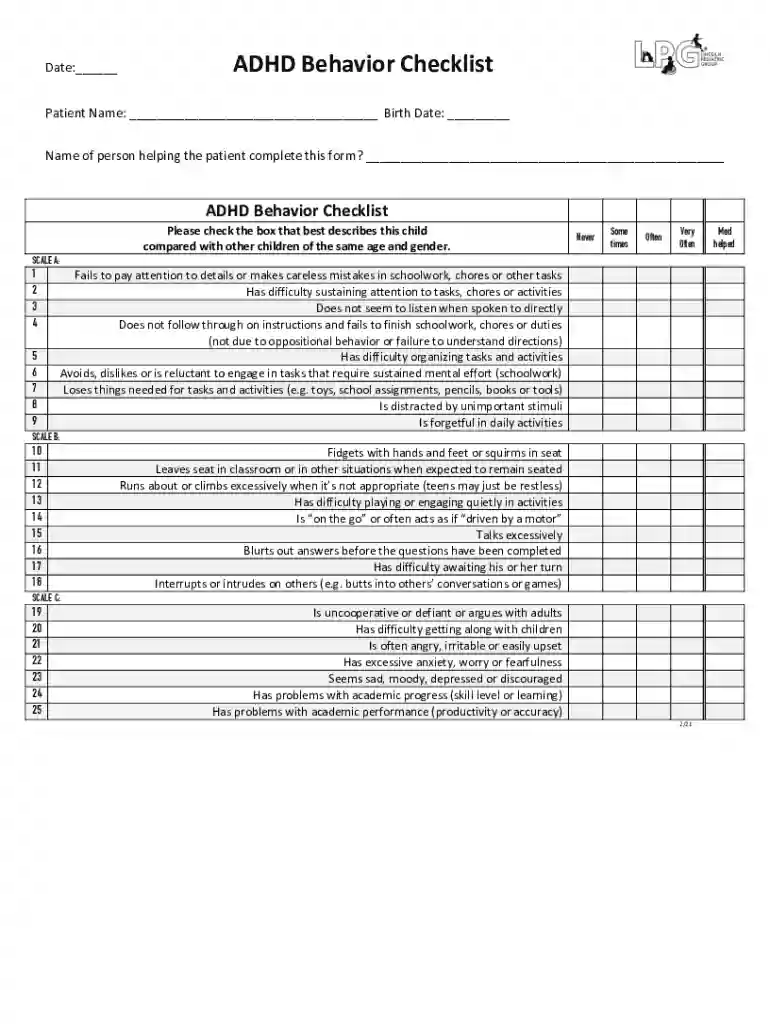
- Typically ranges from "Never" to "Very Often," allowing individuals to rate how frequently they experience each symptom.
Steps to Complete the Adult ADHD Self-Report Scale: Symptom Checklist
- Read Instructions Carefully: Start by reviewing any provided guidelines to ensure correct completion.
- Answer Each Question: Move systematically through the questionnaire, marking responses that best reflect recent experiences.
- Review Responses: Once completed, revisit answers to ensure they accurately capture the frequency and impact of symptoms.
Tips for Effective Completion
- Allocate Sufficient Time: Set aside enough uninterrupted time to complete the checklist for accuracy.
- Seek Feedback if Unsure: Consider input from someone familiar with your daily behavior, especially if self-assessment proves challenging.
Key Elements of the Adult ADHD Self-Report Scale: Symptom Checklist
Core Components
- Inattention Indicators: Questions focusing on forgetfulness, task management difficulties, and distractibility.
- Hyperactivity Metrics: Examine excessive talking, restlessness, and difficulty remaining seated.
- Impulsivity Items: Address challenges with patience, interruptive behavior, and decision-making without forethought.
Interpretation of Results
- Results are usually reviewed in a clinical setting to offer insight into potential ADHD symptoms and guide further evaluation and treatment discussions.
Examples of Using the Adult ADHD Self-Report Scale: Symptom Checklist
Case Studies
- Scenario One: An adult experiencing chronic difficulty with task completion uses the checklist, finding a pattern of inattention and impulsivity that warrants further testing.
- Scenario Two: A professional seeking therapy for anxiety completes the scale, revealing underlying ADHD symptoms contributing to their condition.
Important Terms Related to the Adult ADHD Self-Report Scale: Symptom Checklist
- DSM Criteria: Standards for diagnosing ADHD, underpinning the checklist questions.
- Symptom Frequency: How often a symptom is present, critical in determining its impact.
- Behavioral Impact: The effect of symptoms on daily functioning and quality of life.
Clarifying Common Misconceptions
- The checklist is not a substitute for a professional diagnosis but a step towards seeking professional help if significant symptoms are identified.
Legal Use of the Adult ADHD Self-Report Scale: Symptom Checklist
Compliance and Ethical Considerations
- Privacy Assurance: Responses should be kept confidential, adhering to privacy laws such as HIPAA in the U.S.
- Appropriate Use: Intended for initial assessment only; not a standalone diagnostic tool.
Integration with Professional Practices
- Often used in conjunction with other diagnostic tools, providing a comprehensive evaluation when combined with clinical interviews and observations.
Digital vs. Paper Version of the Adult ADHD Self-Report Scale: Symptom Checklist
Advantages and Disadvantages
- Digital Versions: Offer convenience, quick scoring, and data storage. They can be easily accessed via devices, enhancing accessibility for various populations.
- Paper Versions: Provide a tactile approach, useful in contexts where digital access is restricted or preference for manual completion exists.
Choosing the Right Format
- The choice largely depends on user comfort and access to technology, ensuring the method facilitates accurate and stress-free responses.