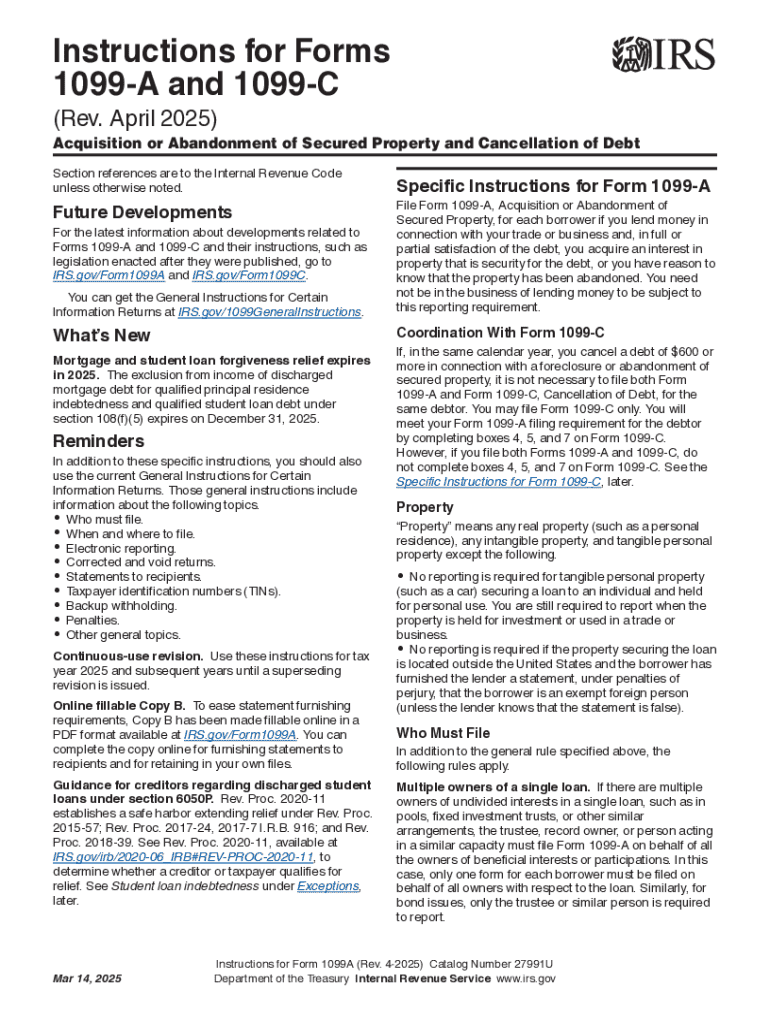







Definition & Purpose of Forms 1099-A and 1099-C
Forms 1099-A and 1099-C play crucial roles in the documentation of transactions involving debts and property acquisition or abandonment. Form 1099-A is used by lenders to report the acquisition or abandonment of secured property, a situation often arising in foreclosure scenarios. Conversely, Form 1099-C is employed to report the cancellation of debt, including debt forgiveness for homeowners or consumers. These forms help ensure that individuals and entities report accurate income and potential taxable events to the Internal Revenue Service (IRS).
Key Functions
- Form 1099-A: Reports information about lender acquisition or abandonment of property.
- Form 1099-C: Reports debt cancellation, informing taxpayers about potential taxable income on forgiven debt.
Importance for Taxpayers
Understanding and accurately using these forms can influence tax liability. Debts forgiven reported on Form 1099-C may be considered taxable income unless exceptions apply, such as insolvency or bankruptcy.
How to Use the Instructions for Forms 1099-A and 1099-C
Using the instructions for Forms 1099-A and 1099-C involves a detailed understanding of the conditions under which each form is required and the information necessary to complete them accurately.
Procedures
- Identify Applicable Form: Determine if the situation calls for Form 1099-A or 1099-C. Lenders typically use Form 1099-A when property is foreclosed, while Form 1099-C is used for debt cancellation.
- Collect Necessary Data: Gather data on the transaction, including dates, amounts, and the nature of the debt or property involved.
- Follow IRS Guidelines: Refer to IRS instructions for specific guidance on how to report data, especially regarding exceptions to income reporting such as insolvency.
Practical Example
- If a homeowner's property is foreclosed, the lender would issue Form 1099-A to report the foreclosure event, including the fair market value of the property and the outstanding debt amount.
Steps to Complete Forms 1099-A and 1099-C
Completing Forms 1099-A and 1099-C requires careful attention to detail to ensure all information is reported properly.
Step-by-Step Process
- Acquire the Form: Obtain the correct form from the IRS website or an authorized tax software.
- Enter Personal Information: Fill in names, addresses, and taxpayer identification numbers for both the borrower and lender.
- Provide Transaction Details: Include specifics such as the date of cancellation (Form 1099-C) or fair market value of the property (Form 1099-A).
- Report Amounts: Accurately detail the principal balance or the amount of debt cancelled.
- Check for Exceptions: Review if any exceptions or specific conditions apply to avoid unnecessary tax liability.
Points of Caution
Errors in data entry or misidentification of applicable transactions can result in complications or additional tax assessments.
Important Terms Related to Forms 1099-A and 1099-C
Familiarity with key terms related to Forms 1099-A and 1099-C enhances comprehension and accuracy in reporting.
Crucial Definitions
- Acquisition: Refers to taking ownership, typically by the lender, of a property used as security for a loan upon foreclosure.
- Cancellation of Debt (COD): The release of the obligation for a borrower to repay the principal balance of a debt.
- Insolvency: A financial state where liabilities exceed assets, potentially exempting individuals from certain tax obligations related to cancelled debts.
Example Application
If a taxpayer cannot repay a loan and the debt is cancelled, knowing the definition of insolvency can help determine tax implications for reported income.
IRS Guidelines for Forms 1099-A and 1099-C
IRS guidelines provide crucial information on correctly preparing and filing Forms 1099-A and 1099-C.
Guidance Highlights
- Timing & Submission: Filers must submit these forms by the specified IRS deadline to avoid penalties.
- Accuracy Requirements: Incorrect or incomplete information can lead to fines and processing delays.
- Exceptions & Exemptions: Guidance is offered on applicable exemptions from reporting forgiven debt as income, such as bankruptcy proceedings.
Common Mistakes
Not verifying details about the transaction, such as misreporting amounts or failing to consider relevant exceptions, can lead to penalties or incorrect tax liability assessments.
Filing Deadlines and Important Dates
Timing is essential to ensure compliance when dealing with Forms 1099-A and 1099-C.
Critical Deadlines
- Form Issuance: Taxpayers should receive copies by January 31st of the year following the transaction.
- IRS Submission: Employers and creditors usually must send the completed form to the IRS by February 28th or March 31st if filing electronically.
Impact of Missing Deadlines
Failure to meet these deadlines results in penalties for both issuers and recipients, including late fees and additional interest charges on missed taxable events.
Penalties for Non-Compliance
Non-compliance with filing requirements for Forms 1099-A and 1099-C can have significant consequences.
Types of Penalties
- Late Filing: Penalties accrue if forms are not filed by stipulated deadlines.
- Incorrect Information: Providing false or inaccurate information also leads to penalties.
- Intentional Disregard: Severe penalties apply for wilful neglect of filing obligations.
Examples of Penalty Scenarios
A lender failing to issue Form 1099-C by the deadline, causing a taxpayer to omit income on their return, leads to penalties assessed on both parties for non-compliance.
Digital vs. Paper Versions of Forms 1099-A and 1099-C
Choosing between digital and paper options for completing these forms can affect efficiency and accuracy.
Advantages of Digital Filing
- Immediate Submission: Electronic filing allows for quicker turnaround and confirmation.
- Error Reduction Tools: Digital platforms often include error-checking functionalities to decrease the likelihood of mistakes.
When to Use Paper Filing
Taxpayers with limited access to technology or those requiring physical documentation for record-keeping may opt for traditional paper forms.
Considering these aspects ensures compliant and accurate reporting when dealing with Forms 1099-A and 1099-C, thus avoiding unnecessary complications or unexpected tax consequences.