




01. Edit your form online
Type text, add images, blackout confidential details, add comments, highlights and more.

Type text, add images, blackout confidential details, add comments, highlights and more.

Draw your signature, type it, upload its image, or use your mobile device as a signature pad.

Send it via email, link, or fax. You can also download it, export it or print it out.
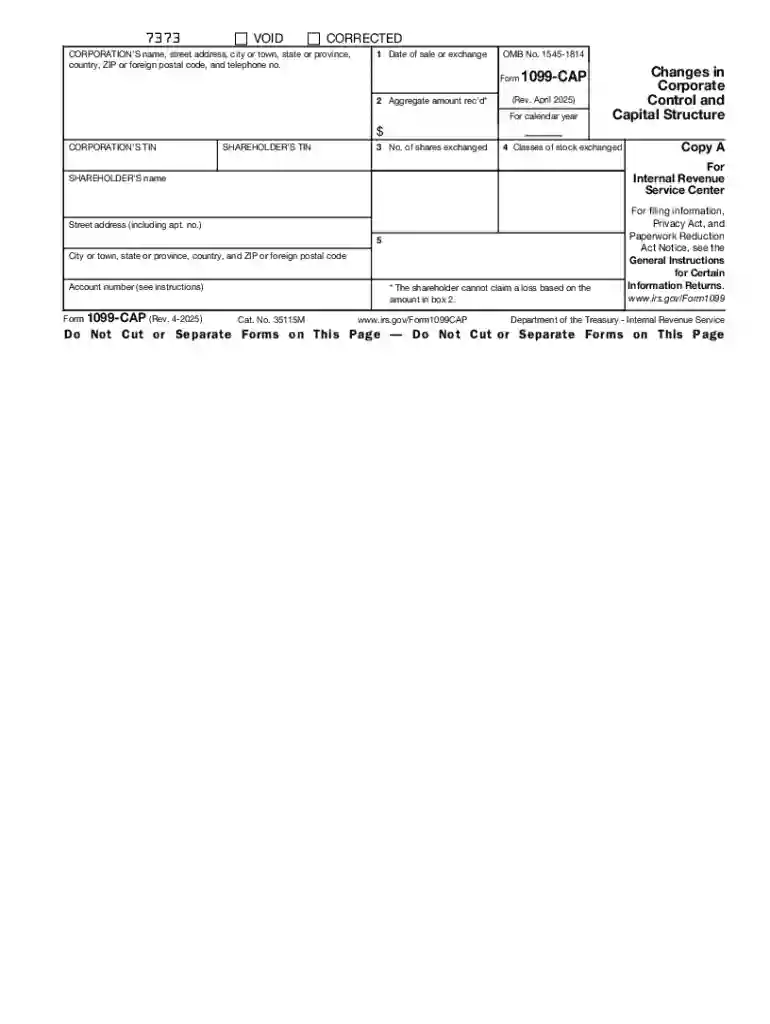
Form 1099-CAP, also known as the Changes in Corporate Control and Capital Structure form, is issued by corporations to report significant alterations in their control or capital structure, such as mergers, stock exchanges for cash, or other forms of property. This form is instrumental for providing shareholders with essential information regarding the financial and structural transition of a corporation, ensuring transparency in how such changes might impact their investments.
Corporations are required to distribute this form to affected shareholders to fulfill IRS compliance, detailing the specifics of transactions that affect shareholders' ownership or investment value. This measure prevents potential discrepancies or misunderstandings about the financial standing and control of a corporation after structural changes.
Shareholders typically receive Form 1099-CAP directly from the corporation undergoing corporate control or capital structure changes. In most cases, shareholders don't need to solicit this form actively. However, it's advisable to maintain regular communication with the company in which you hold stock to ensure all corporate actions are properly documented and reported.
If a shareholder does not receive Form 1099-CAP when expected, they can contact the corporation's investor relations department or visit the corporation's official website for guidance. Investors should also consult the IRS website to access official templates or updates regarding this form.
Review Information: Start by verifying that the form contains correct and comprehensive data regarding your shares and any changes due to corporate actions.
Detail Changes: Carefully examine sections detailing the type and amount of any cash, stock, or property you received as a result of the change.
Ensure Accuracy: Cross-reference with your personal records to ensure all information is consistent, particularly concerning the number of shares and the monetary value received.
Contact Corporation if Errors Exist: Notify the issuer if discrepancies are identified, requesting corrections before filing your taxes.
Submit with Your Tax Return: Incorporate Form 1099-CAP information into your tax returns, reporting any taxable income from corporate changes as required.
Understanding Form 1099-CAP is critical for shareholders because it directly impacts how investments are assessed and declared during tax filings. Accurate documentation of corporate changes ensures compliance with tax regulations and helps avoid potential penalties.
Moreover, being informed about the corporate restructuring processes and observing how these might influence your investment helps in making educated decisions about retaining or divesting stocks. For corporations, issuing this form is not only a regulatory requirement but also a practice of good governance that fosters shareholder confidence.
Typically, shareholders of a corporation that undergoes significant organizational transformations utilize Form 1099-CAP. This includes investors, brokers, financial advisors, and tax professionals engaged in understanding and managing the implications of such corporate changes.
The form is also used by tax professionals who assist clients in reporting these transactions on their annual tax returns. By doing so, they ensure clients comply with IRS regulations and accurately report any financial gains or changes resulting from corporate actions.
These elements are fundamental to ensuring clarity and accuracy in reporting and to facilitate seamless integration into shareholders' personal tax documentation.
The IRS mandates that corporations report specific changes that impact their control or capital structure using Form 1099-CAP. Guidelines dictate that:
Staying vigilant regarding these deadlines is crucial to maintaining compliance and preventing any IRS-imposed penalties related to late documentation or incorrect tax filing due to omitted corporate action reports.
At DocHub, your data security is our priority. We follow HIPAA, SOC2, GDPR, and other standards, so you can work on your documents with confidence.


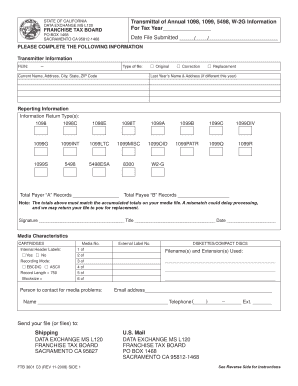

Jul 24, 2025 This form is furnished to shareholders who receive cash, stock, or other property from an acquisition of control or a substantial change in capital structure.Read more
Forms 1096 and 1099-CAP must be filed on or before February 28 (March 31 if filed electronically) of the year following the calendar year in which theRead more
For your protection, this form may show only the last four digits of your TIN (social security number (SSN), individual taxpayer identification number (ITIN),Read more


