






Definition & Meaning
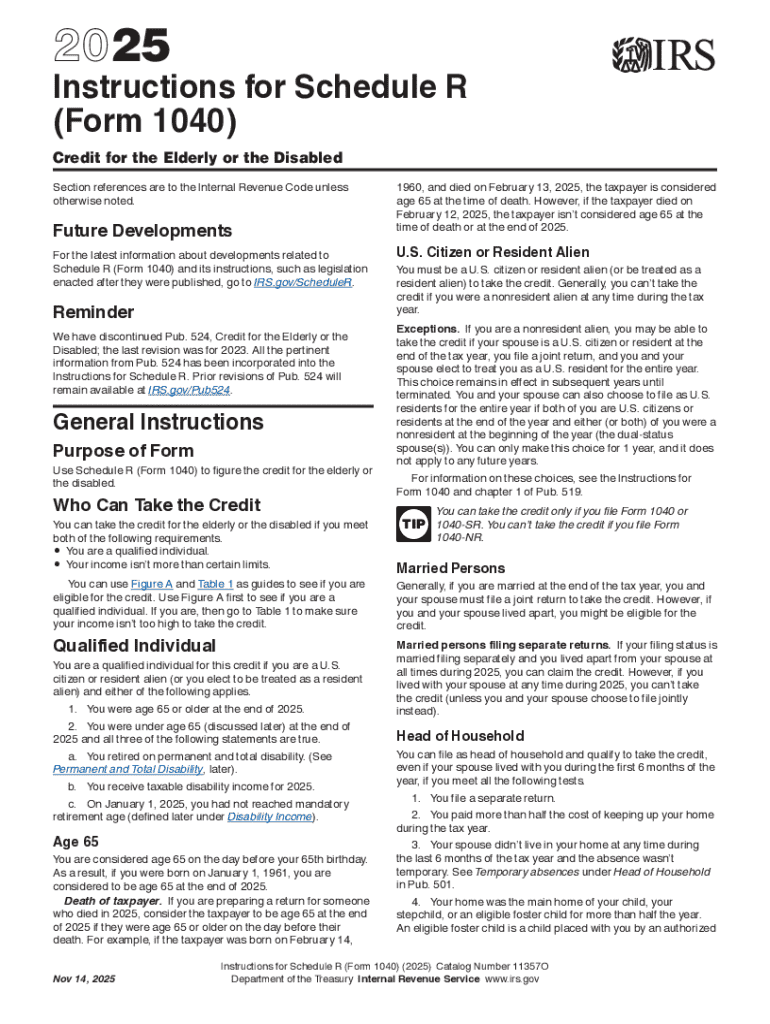
Schedule R, formally known as the "Credit for the Elderly or the Disabled," is a form used to claim a specific tax credit for individuals who are elderly or have a permanent disability. This tax credit is part of the annual U.S. federal income tax return process and is designed to provide financial relief to qualifying taxpayers. The goal of this credit is to reduce the overall tax burden for senior citizens and disabled individuals, ensuring they receive some financial support through the tax system.
Key Elements
- Eligibility: To qualify, an individual must be 65 years or older or fall into specific disability categories outlined by the IRS.
- Income Limits: There are income thresholds that must be met, which differ for individual and joint filers.
- Permanent Disability: Certification from a physician is usually necessary for confirmation.
How to Use the Schedule R Tax Credit for Elderly or Disabled
Understanding how to appropriately use Schedule R is crucial for maximizing tax benefits. The form must be included with your IRS Form 1040.
- Review Eligibility: Begin by confirming whether you meet the age or disability criteria.
- Calculate Income: Ensure your income is below the IRS's specified thresholds for the credit.
- Form Completion: Properly fill out Schedule R by calculating the credit based on your filing status and income.
- Attach to Tax Return: Submit the filled Schedule R form along with your other tax documents.
Steps to Complete the Schedule R Tax Credit for Elderly or Disabled
Filling out Schedule R involves several steps to ensure it is completed accurately. Here's a breakdown:
- Determine Eligibility: Verify if you meet either the age requirement of 65 and above or qualify through a permanent disability, as determined by a physician's statement.
- Calculate Base Income: Total your gross income, nontaxable social security, pensions, and retirements to ensure it falls under the threshold.
- Complete Part I: Provide personal information such as name, social security number, and the filing status used in Form 1040.
- Fill Part II (for the Elderly): Enter the base amount if you are claiming due to age.
- Complete Part III (for the Disabled): Provide justified net income figures based on disability.
- Review and Attach: Ensure the form is error-free and attach it to your Form 1040 upon submission.
Eligibility Criteria
Understanding whether you qualify for the Schedule R tax credit is key to claiming it:
- Age Requirements: Must be at least 65 by the end of the tax year.
- Disability Requirements: Must be retired due to a permanent and total disability and have received disability income.
- Income Limitations: AGI and nontaxable income should not exceed IRS limits specific to filing status.


Examples
- Single Filer: Must have AGI and non-taxable income less than $17,500.
- Married Filing Jointly: Total combined AGI and nontaxable income should not exceed $25,000.
IRS Guidelines
The IRS provides specific rules and guidelines on how to claim this credit. Following these guidelines ensures compliance and maximizes the potential credit:
- Form Instructions: The IRS provides detailed instructions on how to complete Schedule R, which can aid in minimizing errors.
- Filing Status Considerations: Marital status at the end of the year determines filing and eligibility for joint credits.
- Dependency Status: Rules on who qualifies as a dependent and impacts on eligibility.
Required Documents
To complete the Schedule R form successfully, certain documents are necessary:
- Social Security Documents: Necessary to verify nontaxable social security amounts.
- Disability Verification: Physician's statement if claiming the disability.
- Income Statements: W-2s, 1099s to calculate total income.
- Previous Tax Returns: Prior returns may be useful for consistency and verification.
Form Submission Methods (Online / Mail / In-Person)
The IRS provides multiple submission methods for filing Schedule R along with Form 1040:
- Online: E-filing is popular and efficient, generally recommended for quicker processing.
- Mail: Traditional submission; ensure it is mailed to the appropriate IRS address.
- In-Person: Available at certain IRS branches but less common.
Digital vs. Paper Version
- E-Filing Benefits: Fast processing, immediate confirmation, error checks.
- Paper Filing: Necessary for those without digital access; requires careful manual checks.
Filing Deadlines / Important Dates
Taxpayers should be mindful of important deadlines to avoid penalties:
- Regular Filing Deadline: Typically April 15, unless it falls on a weekend or holiday.
- Extensions: Filing for an extension moves the deadline to October 15, but payment deadlines remain unchanged.
Filing by these dates ensures compliance and helps avoid late fees or interest charges.