






Definition & Meaning
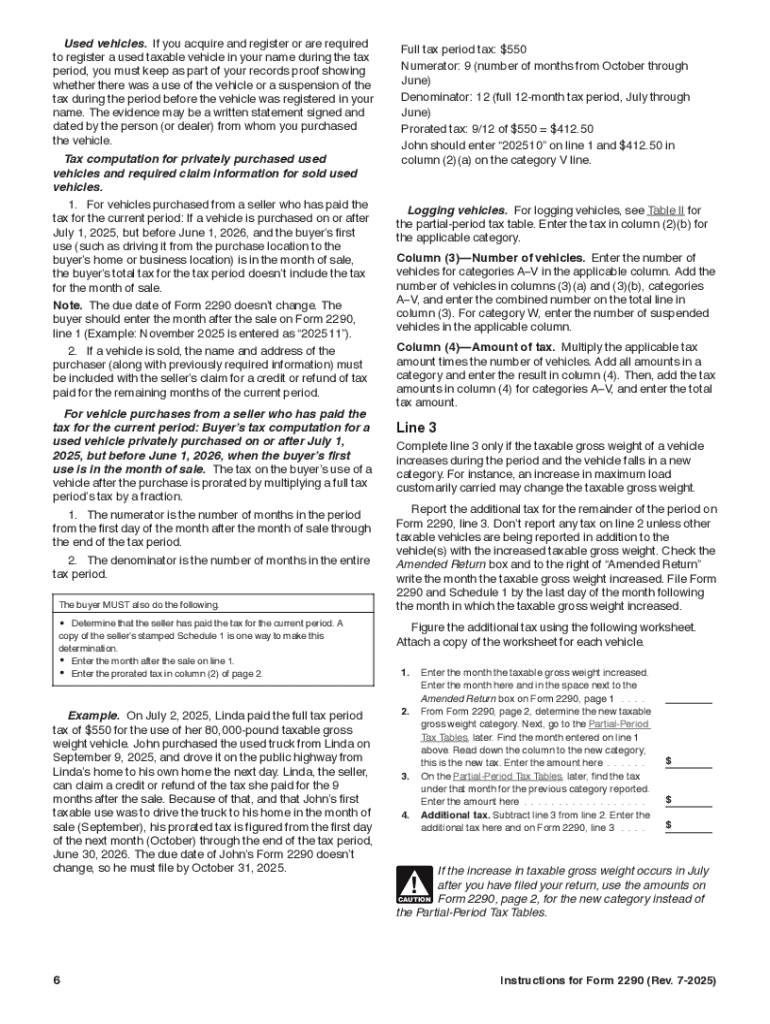
The Form 2290, also known as the Heavy Highway Vehicle Use Tax (HVUT) form, is a U.S. Internal Revenue Service (IRS) document. It is used by owners of heavy highway motor vehicles with a taxable gross weight of 55,000 pounds or more to calculate and pay the federal excise tax. The tax is imposed on such vehicles for operating on public highways during the tax period. This form ensures funding for highway maintenance and transportation infrastructure.
Steps to Complete the Form 2290
Completing Form 2290 involves several detailed steps:
- Identify Vehicle Information: List all vehicles with a taxable gross weight of 55,000 pounds or more. This includes details like the VIN and weight category.
- Calculate the Tax: Use the tax table provided by the IRS to determine the tax amount based on the vehicle's gross weight and the number of miles driven.
- Complete Part I: Fill out the vehicle details, including the taxable gross weight and first use month.
- Complete Part II: Enter the schedule of taxable vehicles, detailing each vehicle’s VIN and weight category.
- Sign and Date the Form: Ensure the form is dated and includes the signature of the authorized person.
Filing Deadlines / Important Dates
For Form 2290, timely filing is crucial:
- Annual Filing: The form should be filed by August 31st for vehicles first used in July.
- For New Vehicles: File by the end of the month following the vehicle's first use month. For instance, if a vehicle is first used in October, the form is due by November 30th.
- Renewal: Prepare to file annually at the start of the fiscal year on July 1st.
How to Obtain the Form 2290
Form 2290 can be obtained through multiple channels:
- IRS Website: Downloadable directly from the official IRS website.
- Authorized e-File Providers: Use platforms approved for e-filing.
- Physical IRS Offices: Visit an IRS office to obtain a paper copy if online access is unavailable.
IRS Guidelines
The IRS mandates several guidelines for Form 2290:
- E-Filing Requirement: Mandatory for fleets of 25 or more vehicles.
- Recordkeeping: Maintain records of filed forms and payment receipts for at least three years.
- Proof of Payment: Use IRS Schedule 1 as proof for vehicle registration at the DMV.
Penalties for Non-Compliance
Non-compliance with Form 2290 requirements can lead to penalties:
- Late Filing: Typically incurs a 4.5% penalty on total tax due each month up to five months.
- Late Payment: Results in an additional penalty of 0.5% per month.
- Interest on Unpaid Taxes: Accrues at the federal short-term rate plus 3%.
Form Submission Methods
There are several submission methods for Form 2290:
- Online: E-file through IRS-authorized providers for faster processing and receipt of stamped Schedule 1.
- Mail: Submit via mail to the IRS address specific to Form 2290 processing.
- In-Person: Drop off at IRS local offices, though this may require an appointment and is often slower.
Digital vs. Paper Version
Understanding the differences between digital and paper versions of Form 2290 can facilitate better compliance:
- Digital: Faster processing, confirmation, and receipt issuance; reflects an environmentally friendly practice. E-filing is often more secure with immediate IRS acknowledgment.
- Paper: Requires physical mailing or submission, potentially longer processing time due to mail transit and manual data entry. Ideal for those without reliable internet access.
Who Typically Uses the Form 2290
Form 2290 is primarily used by:
- Trucking Companies: Operating heavy vehicles that transport goods across state lines.
- Owner-Operators: Individual truck owners who manage their own operations.
- Logging Vehicle Operators: Specialized vehicles used in the logging industry with assigned weight limits.
This form targets businesses and individuals who must comply with federal regulations on highway infrastructure funding.