
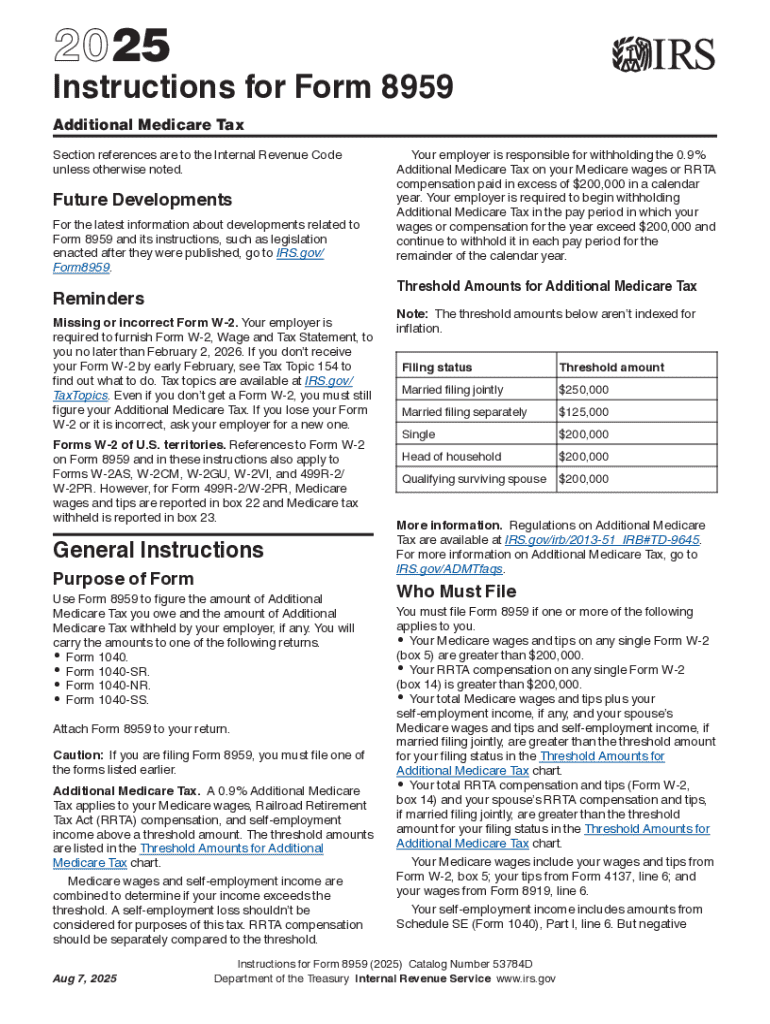







Definition and Purpose of IRS Form 8959
IRS Form 8959, known as the Additional Medicare Tax form, is designed to help individuals calculate and report the Additional Medicare Tax they may owe. This tax is applicable to individuals whose wages and other forms of compensation exceed certain thresholds set by the IRS. The purpose of the form is to ensure accurate calculation and payment of the tax liability, preventing both underpayment and overpayment of taxes related to Medicare.
Key Features of the Tax
- Purpose: To report Additional Medicare Tax beyond standard employer withholding.
- Applicability: Affects high-income earners exceeding threshold amounts.
- Complexity: Requires taxpayers to review income from multiple sources.
Steps to Complete IRS Form 8959
Completing IRS Form 8959 involves multiple steps, each crucial for accurate filing. The form's complexity underscores the need for careful documentation and precise calculations.
- Collect Personal Information: Begin by filling out your basic identification details, including Social Security Number and filing status.
- Calculate Wages: Gather details for wages from all Form W-2s.
- Determine Threshold Limits: Verify if your wages exceed singe or joint filing thresholds.
- Calculate Additional Tax: Use the current year's IRS thresholds to calculate the 0.9% tax rate.
- Input Commutative Figures: Input data in provided sections, ensuring all figures are totaled correctly.
- Crosscheck with Wages & Compensation: Compare calculated tax amounts with total wages and compensation reported.
Practical Examples
- Single Filer: An individual receives wages above the IRS threshold, necessitating correct tax calculation.
- Joint Filers: Couples need to consolidate wages to assess Additional Medicare Tax requirements.
Important IRS Guidelines
The IRS provides crucial guidance on Additional Medicare Tax purposes. Following guidelines ensures compliance and reduces errors during form filing.
- Income Verification: Accurate reporting of combined wages ensures compliance.
- IRS Publications: Use IRS publications to understand thresholds and exceptions.
- Quarterly Estimated Taxes: For high earners, monitoring and paying quarterly taxes can avoid end-of-year tax burdens.
Required Documents for Filing
To successfully file IRS Form 8959, certain documents are necessary as they provide the required income and tax details.
- W-2 Forms: Essential for reporting wages and withheld taxes.
- 1099 Forms: Filed to document additional income types.
- Previous Tax Returns: Referenced for consistency and accurate reporting.
Additional Considerations
- Forms for Self-Employed: Include Schedule SE for additional self-employment income considerations.
- Employer Confirmation: Cross-check employer-reported wages for discrepancies.
Filing Deadlines and Important Dates
The deadline for submitting Form 8959 coincides with individual tax returns, typically by April 15. However, understanding key dates aids in timely submission.
- Tax Year Deadline: Generally falls on April 15 annually.
- Extension Filings: If extended, observe new deadlines as failure results in penalties.
- Quarterly Payment Dates: Recommended for taxpayers with significant incomes.
Penalties for Non-Compliance
Compliance with IRS regulations while filing Form 8959 avoids penalties. Understanding potential repercussions enhances adherence.
- Late Filing: Could incur interest and penalty charges.
- Underpayment: Results in unpaid balance penalties, costly over time.
- Inaccurate Information: Risks fines due to audits or disputes needing corrections.
Form Submission Methods
IRS Form 8959 offers multiple submission methods. Selecting an appropriate option facilitates timely and organized tax filings.
- Online Filing: Quick and efficient with e-filing services.
- Mail Submission: Traditional route allows paper submission.
- Professional Services: Engaging tax professionals reduces filing errors.
Online vs Mail Submission
- E-Filing Benefits: Enhanced speed and immediate confirmation.
- Paper Drawbacks: Longer processing and potential for physical loss or delays.
Eligibility Criteria
Eligibility for Additional Medicare Tax involves surpassing predefined IRS income thresholds. Identifying correct qualification details avoids unnecessary filing.
- Filing Status: Applies differently for Single, Married, or Head of Household.
- Threshold Levels: Single filers >= $200,000; Married filing jointly >= $250,000.
- Income Scope: Encompasses wages, self-employment income, and compensation.


Variations and Examples
- Student Earners: Rarely impacted unless unusual income levels achieved.
- Retirees: Generally unaffected unless receiving significant residual income sources.
By meticulously following these comprehensive guidelines, taxpayers ensure accuracy in preparing IRS Form 8959, maintaining compliance while effectively managing their additional tax obligations.




