






Definition & Meaning
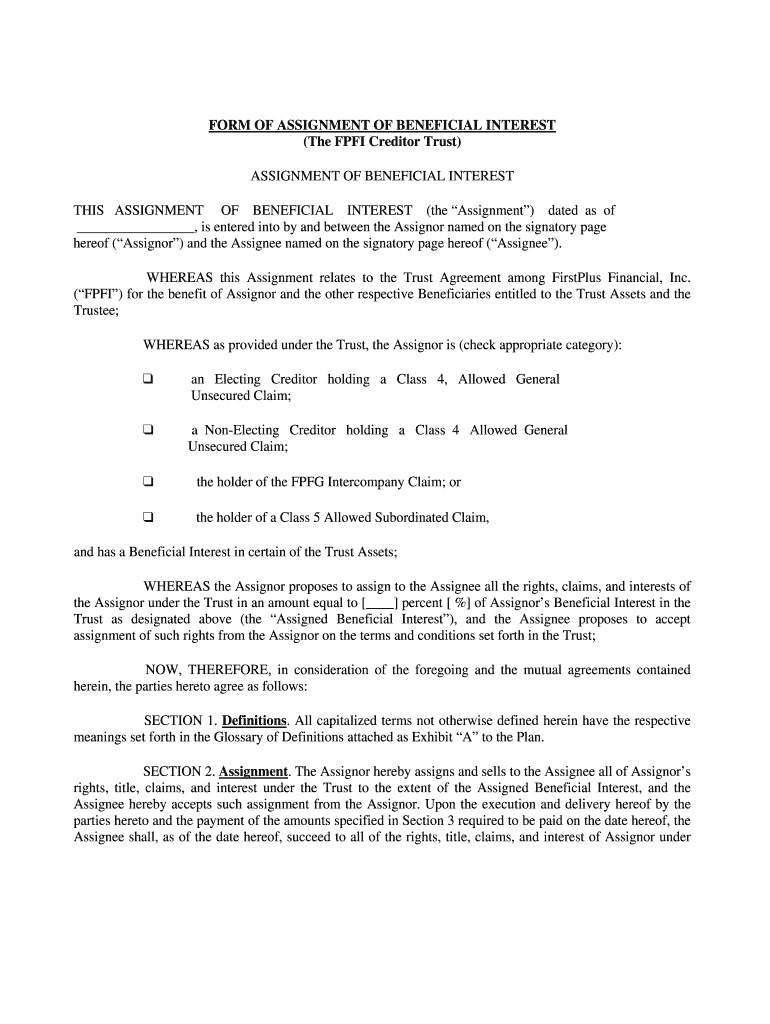
The Form of Assignment of Beneficial Interest (The FPFI) is a legal document used to transfer the beneficial interest in a trust or similar entity from one party to another. This form ensures that the new party gains all the benefits and responsibilities associated with the interest. Beneficial interest refers to the right to benefit from assets held in a trust, even though the legal title is held by another party. This transfer is crucial for estate planning, charitable giving, and business transactions.
How to Use the Form
To use the Form of Assignment of Beneficial Interest (The FPFI), one must first obtain the document from a reliable source, such as a legal services platform or an attorney. The person transferring the interest, known as the assignor, must complete the form by filling in their information along with that of the assignee, the party receiving the benefit. Both parties must thoroughly review the terms to ensure mutual understanding and compliance before signing.
Steps to Complete the Form
-
Gather Information: Collect all necessary information about the assignor and assignee, including contact details and identification numbers.
-
Fill Out the Form: Enter the names of both parties, details of the beneficial interest, and the effective date of the assignment.
-
Review and Confirm: Both parties must review the terms and verify the accuracy of the information provided.
-
Sign the Form: Both the assignor and assignee must sign the form. Depending on legal requirements, a notary public may also need to notarize the document.
-
Distribute Copies: Distribute copies of the signed form to all relevant parties, including legal advisors and financial institutions.
Key Elements of the Form
- Parties Involved: Identifies the assignor and assignee.
- Description of Interest: Details the beneficial interest being assigned, including any specific conditions or limitations.
- Effective Date: Indicates the date on which the assignment becomes effective.
- Signatures: Requires signatures from both assignor and assignee.
- Notarization: May require notarization for legal validation.
Legal Use
The legal use of the Form of Assignment of Beneficial Interest (The FPFI) is to ensure a clear and enforceable transfer of beneficial rights from one party to another. This form is particularly significant in estate planning, as it can be used to transfer interests in family trusts or business entities. Both parties should consult with legal advisors to ensure that the transfer adheres to applicable laws and meets their intended goals.
State-Specific Rules
While the form serves a consistent purpose across jurisdictions, specific state rules may affect how it is filled out or enforced. For instance, certain states may have particular notarization requirements or additional disclosures that must be included. Checking the local regulations prior to completing the form can help avoid legal issues and ensure compliance.
Important Terms
- Assignor: The person or entity transferring the beneficial interest.
- Assignee: The recipient of the beneficial interest.
- Beneficial Interest: The right to benefit from assets held in a trust, even if the legal title is not in the holder’s name.
- Trust: A legal arrangement that allows a third party, or trustee, to hold assets on behalf of a beneficiary.
Digital vs. Paper Version
Both digital and paper versions of the Form of Assignment of Beneficial Interest (The FPFI) are valid, but each has its own advantages. The digital version offers accessibility and ease of use, especially when leveraging document management platforms like DocHub, whereas the paper version provides a traditional, tangible record. It's crucial to ensure whichever format is chosen meets legal requirements for validity and signing.
Business Types that Benefit
Businesses such as LLCs, corporations, and partnerships often use this form to reassign beneficial interests during mergers, acquisitions, or restructuring. It allows these entities to seamlessly transfer interests without impacting the operational side of the business, ensuring continuity and stability.
Penalties for Non-Compliance
Failing to properly complete or submit the Form of Assignment of Beneficial Interest can result in legal disputes and potential financial penalties. Both parties might face complications in enforcing the transfer, leading to issues such as tax misreporting or disputed ownership of the beneficial interest. Ensuring accurate and lawful completion of the form helps in avoiding these potential pitfalls.
This detailed content provides comprehensive insights and practical guidance on using the Form of Assignment of Beneficial Interest, focusing on essential aspects, legal considerations, and practical use cases.