






Definition & Meaning
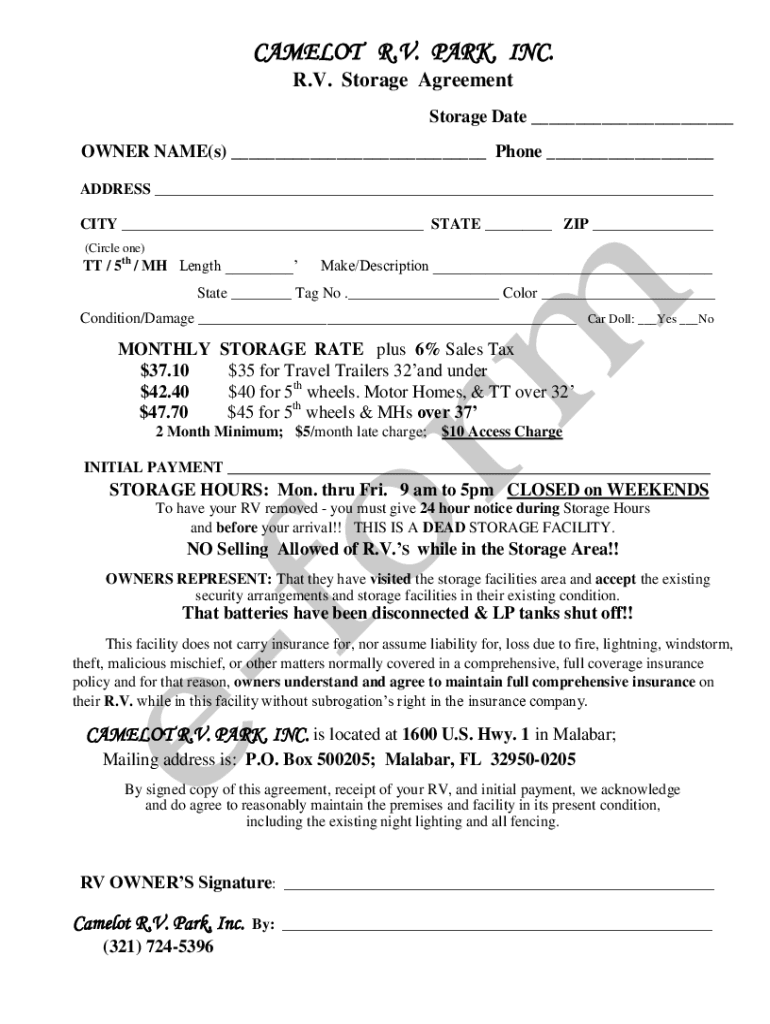
The RV Storage Agreement is a formal contract used to establish terms between an RV owner and a storage facility regarding the storage of the recreational vehicle. This document details the responsibilities and obligations of both parties and ensures clarity on aspects such as security, duration, and payment. Typically, the agreement outlines the specifics around access, liability, and any additional services provided by the storage facility. It’s an essential document for ensuring mutual understanding and legal protection when storing an RV.
How to Use the RV Storage Agreement
Using the RV Storage Agreement involves several practical steps. First, it is crucial to thoroughly read the entire document before signing. During this review, verify all terms and conditions, ensuring they align with both parties' expectations. Key elements to focus on include the agreement's duration, fees, security measures, and accessibility. Once both parties are satisfied with the terms, signatures are required to formalize the agreement. Retain a copy of the signed document for future reference, as it will serve as a critical reference in case of disputes or misunderstandings.
Steps to Complete the RV Storage Agreement
-
Gather Required Information: Collect details about the RV owner, contact numbers, addresses, and RV specifications like make, model, and length.
-
Review Agreement Terms: Carefully read through the terms, including storage fees, duration, and any additional services offered.
-
Specify Storage Details: Indicate the type of RV being stored (e.g., travel trailer, fifth wheel, motorhome) and its specific storage requirements.
-
Discuss and Amend Terms: If necessary, negotiate specific terms with the facility manager to address unique storage needs or concerns.
-
Provide Payment Details: Ensure the method and schedule of payment are clearly agreed upon and specified in the document.
-
Sign the Agreement: Both parties should sign to acknowledge understanding and acceptance of the terms.
-
Keep a Copy: It's essential for both the storage facility and the RV owner to maintain a copy of the signed agreement.
Key Elements of the RV Storage Agreement
A comprehensive RV Storage Agreement typically includes several crucial components:
-
Identifying Information: Details of the RV owner and the storage facility, including full names, addresses, and contact information.
-
RV Description: Specifics of the recreational vehicle such as make, model, registration number, and any distinguishing features.
-
Terms of Storage: Includes the duration of the storage contract, payment terms, and renewal options.
-
Liability and Insurance: Clarifies the responsibilities of each party in case of damage, theft, or loss, and the requirement of insurance coverage by the RV owner.
-
Access and Security: Outlines the access rights of the RV owner and the security measures in place at the storage facility.
-
Termination Clause: Details the conditions under which the agreement can be terminated by either party.
Important Terms Related to RV Storage Agreement
Understanding the terminology used in an RV Storage Agreement is essential. Some key terms often found include:
-
Bailment: A legal relationship where the RV owner temporarily transfers possession of the RV to the storage facility.
-
Indemnity: A clause that protects one party from legal responsibility for certain damages or losses.
-
Lien: A right granted to the storage facility to retain the RV in case of unpaid fees.
-
Demurrage: Fees payable for the extended storage of the RV beyond the agreed period.
State-Specific Rules for the RV Storage Agreement
State laws can influence the specifics of an RV Storage Agreement. Regulations regarding storage facility operations, lien enforcement procedures, and tenant rights may vary. For instance, some states might require specific disclosures about the facility's security measures, while others may have different procedures in place for resolving disputes. It is crucial for both parties to familiarize themselves with local laws to ensure compliance and protect their rights as per geographical stipulations.
Legal Use of the RV Storage Agreement
The RV Storage Agreement serves as a legally binding document representing the storage contract terms. It offers legal recourse should disputes arise over conditions like payment disagreements, damage claims, or violations of agreed terms. It is advisable for both parties, especially the storage facility, to ensure that the agreement meets all legal requirements by incorporating standard contract clauses that comply with jurisdictional mandates.
Examples of Using the RV Storage Agreement
Imagine an RV owner who intends to store their motorhome during the offseason. They approach a specialized storage facility offering climate-controlled conditions and advanced security. The facility presents an RV Storage Agreement that outlines the seasonal rates, insurance requirements, and access hours. By signing this document, both the RV owner and the storage facility uphold a clear and mutually acknowledged understanding of their rights and duties throughout the storage arrangement.