






Definition and Meaning
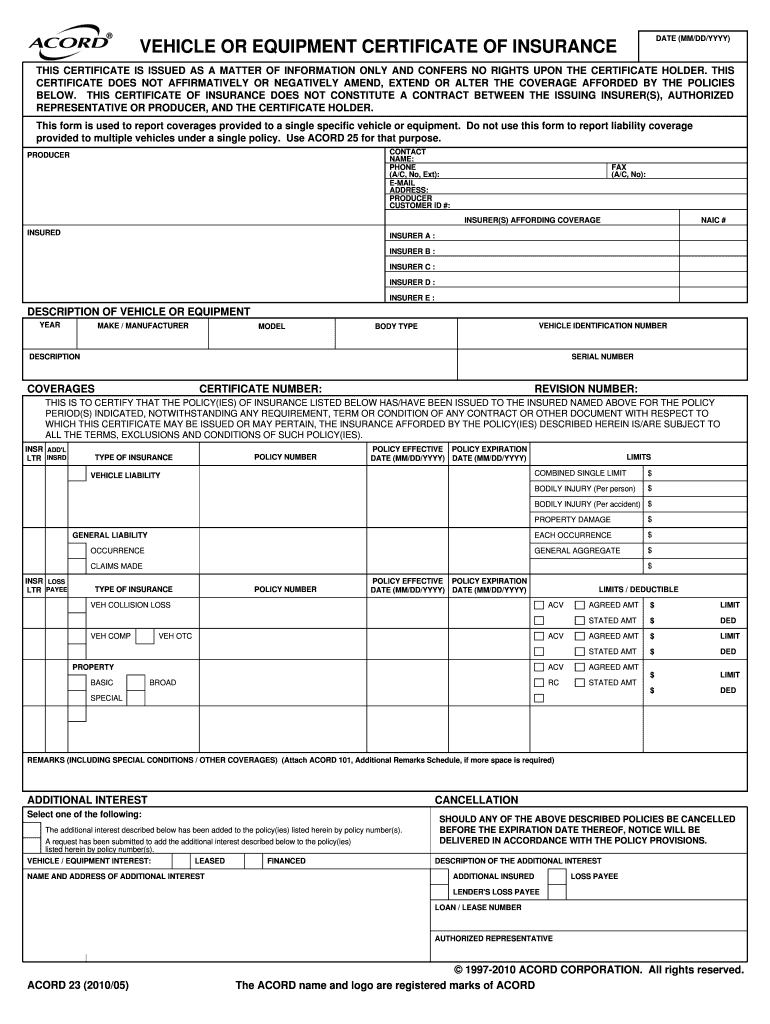
The "Vehicle or Equipment Certificate of Insurance" is a crucial document that verifies the existence of insurance coverage for a vehicle or equipment. It serves as proof of insurance, confirming that the specified asset is insured under the policy terms. While it does not confer any rights or modify the policy, it provides important information to both the insured and third parties, such as financial institutions or leasing companies, assuring them of coverage.
How to Use the Vehicle or Equipment Certificate of Insurance
Using this certificate effectively involves understanding its role in transactions and operations. Primarily, the certificate is presented to prove insurance coverage during vehicle or equipment leasing, financing, or other agreements requiring proof of insurance. It acts as evidence during audits, inspections, or legal proceedings where insurance validation is necessary. The document should be accessible and shared with relevant parties needing confirmation of coverage.
How to Obtain the Vehicle or Equipment Certificate of Insurance
To obtain a Vehicle or Equipment Certificate of Insurance, contact your insurance provider directly. Most providers offer multiple ways to request the certificate, including online requests, phone calls, or visiting a local office. When requesting, you'll need details like the policy number and information about the vehicle or equipment covered. Ensure your policy is up-to-date and all premiums are paid to avoid delays.
Key Elements of the Vehicle or Equipment Certificate of Insurance
This certificate comprises several critical elements:
- Insured's Information: Identifying details of the policyholder.
- Insurer's Details: Name and contact information of the insurance company issuing the policy.
- Policy Number: Unique identifier for tracking and reference.
- Coverage Dates: The effective start and expiration dates of the coverage.
- Description of Covered Item: Specifics regarding the vehicle or equipment insured.
- Types of Coverage: Summary of the policy details, including coverage limits and types such as liability or collision.
Understanding these elements helps ensure the certificate meets the requirements for any transaction or legal need.
Steps to Complete the Vehicle or Equipment Certificate of Insurance
Completing this certificate involves:
- Contacting Insurer: Initiate a request with your insurer providing all necessary details.
- Verifying Details: Ensure all information, such as policy number and insured item description, is accurate.
- Requesting Additional Insured/Endorsements: If needed, request additional insured parties or endorsements to be included.
- Final Confirmation: Review the filled certificate for accuracy before distribution.
These steps ensure that your certificate correctly reflects the coverage and meets any specific requirements.
Legal Use of the Vehicle or Equipment Certificate of Insurance
Legally, the certificate serves as a symbolic representation of coverage, often required by third parties in contracts or agreements. It upholds legal standards by ensuring proof of liability, safeguarding financial transactions, and complying with industry regulations. While it indicates coverage, the certificate itself does not modify or replace the insurance policy.
State-Specific Rules for the Vehicle or Equipment Certificate of Insurance
Different states may have varying regulations regarding insurance requirements for vehicles or equipment. These rules can influence the coverage types or amounts necessary. For example, some states may require specific minimum liabilities or endorsements. It's essential to understand local regulations to ensure compliance when using the certificate in different jurisdictions.
Examples of Using the Vehicle or Equipment Certificate of Insurance
Real-world scenarios of using this certificate include:
- Leasing Equipment: A company leasing heavy machinery may require the lessee to provide this certificate to confirm coverage.
- Vehicle Financing: In financing a vehicle purchase, lenders often require this document to verify the asset has sufficient insurance.
- Government Contracts: Agencies may demand proof of insurance through this certificate for companies bidding on contracts involving vehicles or equipment.
These examples show the certificate's role in protecting financial interests and fulfilling legal obligations.