






Definition and Purpose of IRS Form 8854
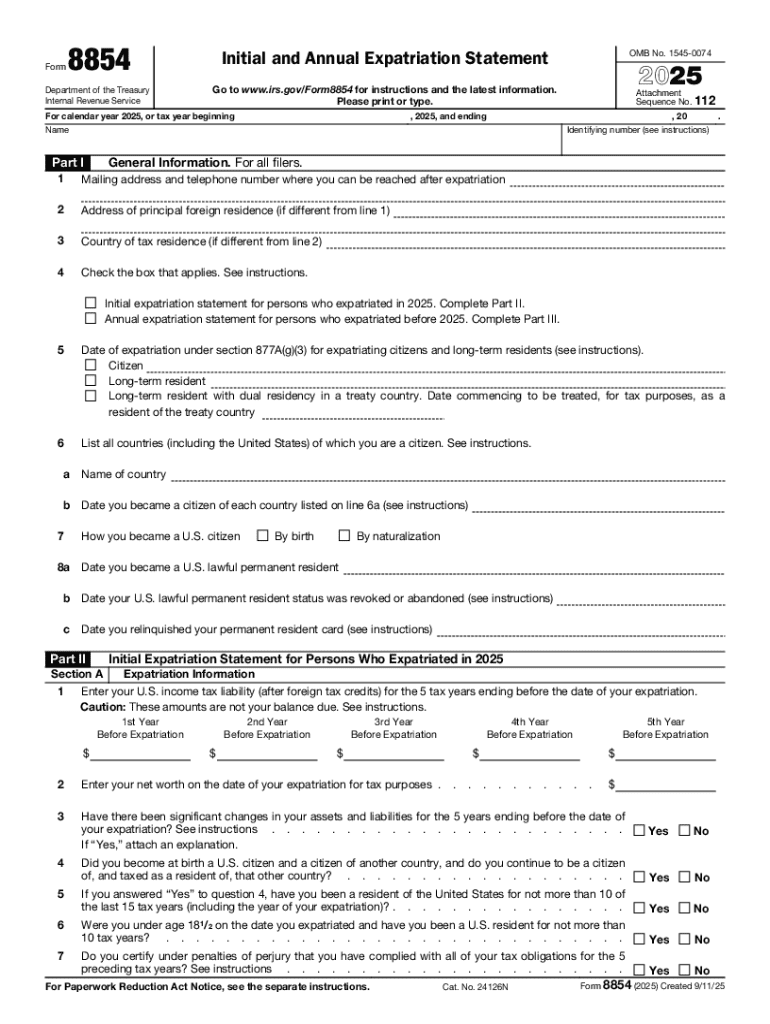
IRS Form 8854, also known as the Initial and Annual Expatriation Statement, is a crucial document used by individuals who are required to report their expatriation for tax purposes. This form ensures that such individuals comply with the U.S. tax obligations related to expatriation decisions. In this context, expatriation refers to giving up either U.S. citizenship or long-term residency. The form facilitates the evaluation of a taxpayer’s status and any tax responsibilities upon leaving the United States’ tax jurisdiction.
Key aspects of Form 8854 include:
- Establishing whether the expatriation is covered by specific tax provisions.
- Assessing any potential exit tax liability, especially for those classified as “covered expatriates.”
Completing IRS Form 8854: Step-by-Step Guide
Completing IRS Form 8854 involves several detailed steps, requiring careful attention to ensure accuracy and compliance. Here’s a structured process to help navigate the form:
-
Personal Information: Begin by accurately filling in all personal details, including your name, Social Security number, and previous tax year residency status.
-
Expatriation Details: Indicate the date and nature of your expatriation, specifying if you are relinquishing U.S. citizenship or terminating long-term residency.
-
Balance Sheet and Income Statement: Prepare a detailed financial statement section, listing all assets and income sources. This includes a balance sheet summarizing the value of your worldwide assets.
-
Net Worth Test: Calculate your net worth to determine if it exceeds $2 million, which is a threshold for “covered expatriates.”
-
Tax Liability Assessment: If applicable, compute the potential exit tax liability by considering unrealized gains on worldwide assets.
-
Signing Requirements: Ensure that the form is signed and dated to validate the information before submission.
Filing Deadlines and Important Dates
Timely filing of Form 8854 is essential to maintain compliance and avoid penalties. The form must be filed annually for individuals meeting the criteria outlined for expatriates. Here are key deadlines to keep in mind:
-
Annual Filing: The form is generally due by the tax filing deadline for that year, usually April 15.
-
Extensions: If you file for a tax return extension, this also applies to Form 8854, allowing more time for accurate completion.
Penalties for Non-Compliance
Failure to file IRS Form 8854 or submitting inaccurate information can lead to significant penalties. It’s crucial for expatriates to conform to the filing requirements as the Internal Revenue Service (IRS) treats non-compliance seriously.
Penalties include:
- Monetary Fines: A penalty of up to $10,000 for failing to file or for incomplete filings.
- Tax Implications: Potential assessment of the expatriation tax on inaccurate net worth or income reporting.
Who Uses IRS Form 8854
IRS Form 8854 is specifically used by U.S. expatriates, or those relinquishing long-term resident status. A broad spectrum of individuals may need this form, such as:
-
Former U.S. Citizens: Individuals who officially renounce their U.S. citizenship.
-
Long-term Residents: Green Card holders opting to terminate their residency after meeting certain longevity criteria within the U.S.
The form is designed to address expatriation's tax consequences, primarily focusing on those with significant income or net worth.
Eligibility Criteria for Using Form 8854
To determine whether you are required to complete IRS Form 8854, consider the following eligibility criteria:
-
Expats with Net Worth Over $2 Million: Individuals classified as “covered expatriates” due to their financial status.
-
Specific Tax Liabilities: Those with average annual net income tax liabilities exceeding thresholds set by the IRS over a five-year period prior to expatriation.


Required Documentation for IRS Form 8854
Gathering the correct documentation is vital for accurately completing Form 8854. Required documents might include:
-
Financial Statements: Summaries of all assets, liabilities, and investments.
-
Proof of Citizenship or Residency Changes: Documentation supporting the renunciation of citizenship or termination of permanent residency status.
Form Submission Methods
There are several methods available for submitting IRS Form 8854, ensuring accessibility for all expatriates in different circumstances:
-
Mail Submission: Traditional postal mail remains a common method for those preferring hardcopy submissions. Ensure correct addressing to the IRS processing center.
-
Online Submission: Digital methods, via the IRS’ official online tools, provide convenience and faster processing. However, this may require specific software support and authorization for e-filing.
It’s important to choose the submission method that aligns best with your preferences while complying with legal and technical requirements. This careful approach ensures your expatriation is handled smoothly and without unnecessary complications.