






Definition and Meaning
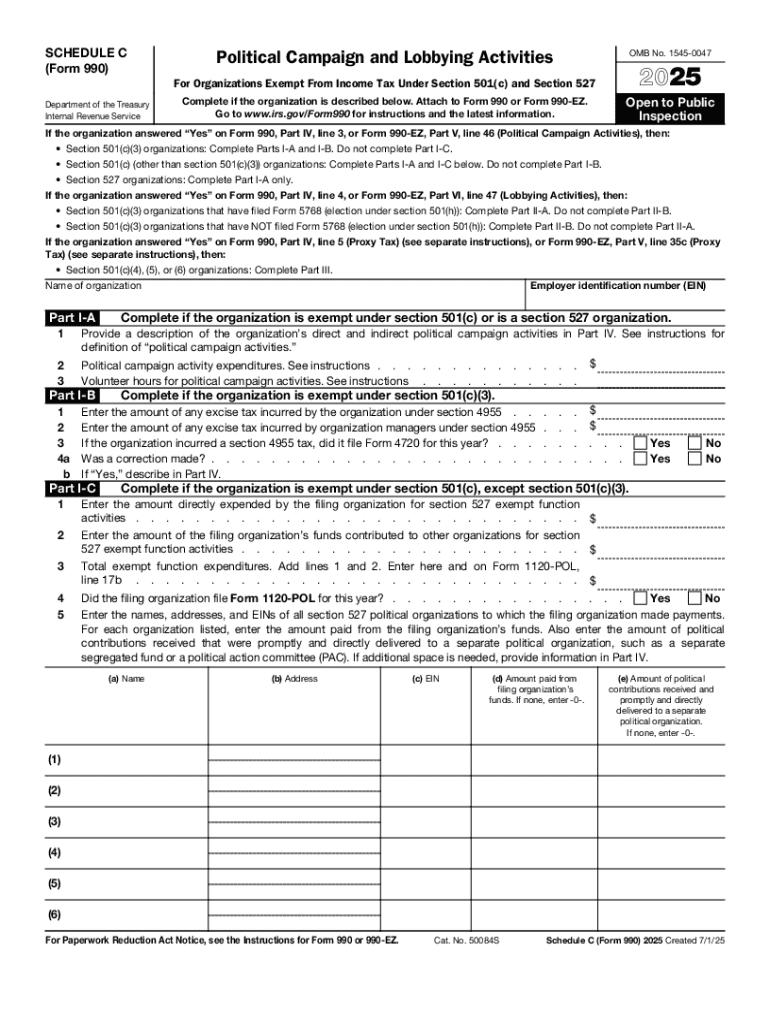
IRS Form 990 Schedule C Instructions provide guidance for organizations exempt from income tax under Section 501(c) of the Internal Revenue Code. Schedule C specifically addresses political campaign and lobbying activities. These instructions ensure that tax-exempt organizations properly report their involvement in these activities, maintaining compliance with federal tax laws.
Core Purpose
- To guide tax-exempt organizations on how to disclose political and lobbying expenditures.
- To ensure accurate and complete reporting for organizations involved in advocacy activities.
- To facilitate transparency and accountability for the financial activities of nonprofit entities.
Importance of Compliance
Noncompliance or incorrect reporting can lead to penalties or revocation of tax-exempt status, highlighting the critical nature of understanding and following the IRS Form 990 Schedule C Instructions.
Key Elements of IRS Form 990 Schedule C Instructions
Reporting Requirements
Form 990 Schedule C breaks down reporting into several parts, each targeting different types of political and lobbying activities. Organizations need to be aware of what each section requires to ensure all activities are properly disclosed.
- Part I-A: Reports payments and contributions made by exempt organizations to influence legislation.
- Part I-B: Applicable to organizations engaging in a significant amount of lobbying activities.
- Part II-A/B: Covers political campaign activities, requiring detailed disclosure on expenses.
Critical Details
Each section has specific thresholds and definitions that determine the level of detail and reporting required. Understanding these nuances ensures the form is completed accurately.
Steps to Complete the IRS Form 990 Schedule C Instructions
- Identify Reporting Needs: Determine if your organization participates in lobbying or political campaign activities as defined by the IRS.
- Collect Documentation: Gather records of all financial transactions related to political or lobbying activities.
- Organize Financial Data: Break down expenses and contributions according to the instructions for each relevant section.
- Complete Required Sections: Fill out the necessary parts of the Schedule C form, ensuring all actions and amounts are accurately reported.
- Review and Verify: Double-check all entries for accuracy and compliance with IRS instructions before submission.
Who Typically Uses the IRS Form 990 Schedule C Instructions


Eligible Organizations
- 501(c)(3) Charitable Organizations: Required to report certain political and lobbying activities with specific limitations.
- 501(c)(4), (5), and (6) Organizations: These groups have broader scope in political and lobbying activities but still must report expenditures.
- Political Action Committees (PACs): Required to document their spending and contributions extensively.
Each organization type has unique requirements and limits for engagement in political or lobbying activities, necessitating thorough understanding of the relevant instructions.
Penalties for Non-Compliance
Failing to comply with IRS Form 990 Schedule C requirements can result in penalties, including:
- Monetary Fines: The IRS may impose fines for failure to file or incorrect reporting.
- Loss of Tax-Exempt Status: Significant noncompliance could lead to revocation of the organization's tax-exempt status, severely impacting operations.
- Public Disclosure Risks: Incorrect reporting can lead to undesired public scrutiny and potential legal challenges.
Software Compatibility and Submission Methods
Organizations can utilize various software solutions to facilitate the completion and submission of Form 990 Schedule C, ensuring compliance and accuracy.
Digital Solutions
- TurboTax and QuickBooks: These platforms support tax form preparation, including Schedule C for organizations.
- IRS e-File System: Permits online submission of the completed form, streamlining the filing process.
Document Management Tools
Using a platform like DocHub can ease the process of managing and editing documents required for completing IRS Form 990 Schedule C, facilitating collaboration among stakeholders.
Filing Deadlines and Important Dates
Form 990, including Schedule C, must generally be filed by the 15th day of the fifth month after the end of the organization's accounting period. Timely filing is crucial to avoid penalties.
Key Deadlines
- Standard Deadline: For calendar-year organizations, the deadline is typically May 15th.
- Extended Deadline: Extensions may be requested, pushing the deadline to November 15th, but they must be applied for before the original due date.
IRS Guidelines and Legal Use
Compliance Guidelines
The IRS provides detailed instructions that outline specific reporting requirements for different types of activities. Legal use of Form 990 Schedule C ensures:
- Adherence to IRS Standards: Activities must be reported within the prescribed guidelines.
- Transparency: The instructions promote transparency in disclosing financial transactions related to political and lobbying efforts.
By providing comprehensive and precise responses to these areas, tax-exempt organizations can ensure they meet all requirements related to political and lobbying activities on IRS Form 990 Schedule C.