




01. Edit your form online
Type text, add images, blackout confidential details, add comments, highlights and more.

Type text, add images, blackout confidential details, add comments, highlights and more.

Draw your signature, type it, upload its image, or use your mobile device as a signature pad.

Send it via email, link, or fax. You can also download it, export it or print it out.
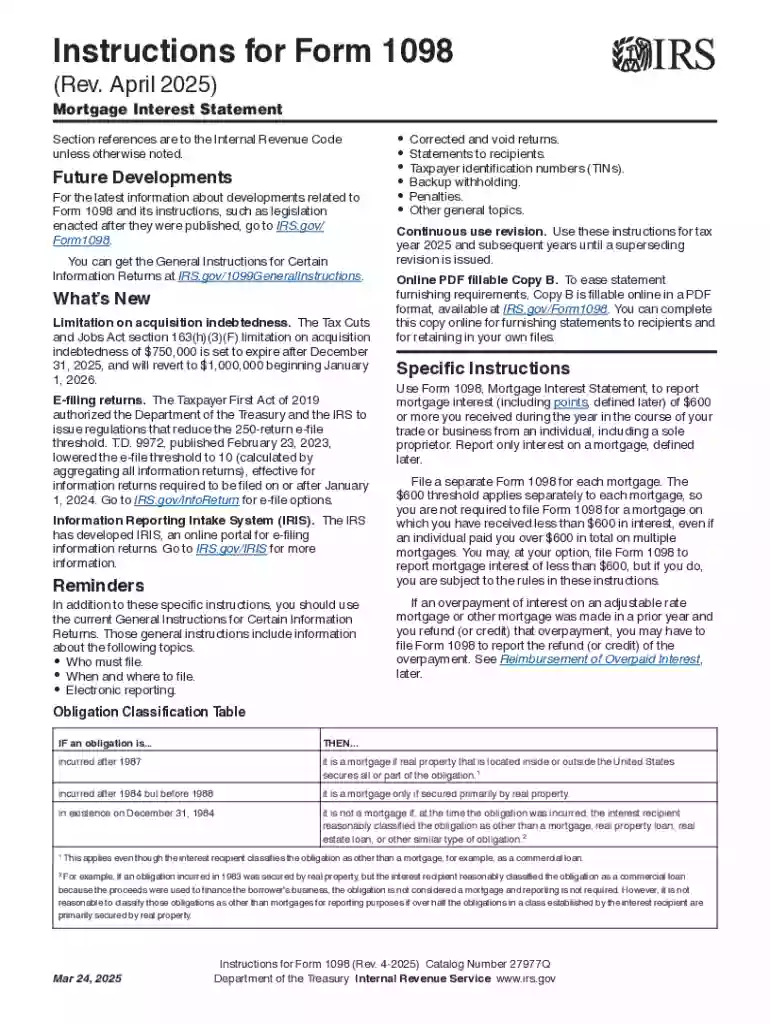
Form 1098, officially titled the Mortgage Interest Statement, is a tax document used in the United States. It is provided by entities such as lenders or financial institutions to individuals who pay mortgage interest. The form reports the amount of interest paid on a mortgage during the tax year, which is typically deductible for the payer on their federal income tax return. By reporting this information, both the taxpayer and the IRS can verify the deductible interest, ensuring that taxpayers accurately claim their mortgage interest deduction.
Gather Necessary Information: Ensure all pertinent details, such as the borrower's and lender's names, addresses, and taxpayer identification numbers, are available.
Entering Mortgage Information: Fill in the details about the mortgage, including account number and the amount of interest paid.
Property Description: Provide a description of the property associated with the mortgage, ensuring it aligns with IRS requirements for the deduction.
Additional Payments Reporting: If there are other payments, such as points or refund of overpaid interest, ensure these are appropriately documented.
Cross-Verification: Check all entries against your records or statements to minimize errors before submission.
Financial institutions or lenders typically issue Form 1098 to mortgage holders by the end of January each year. If you have a mortgage, your lender should automatically send the document to you. However, if you have not received your form, you can request a copy directly from the lender or access it through their online portal if available. In some cases, financial software or online tax services that integrate with institution records can also provide direct access to Form 1098.
Each box corresponds to specific parts of the tax code and serves a distinct purpose in the mortgage interest deduction process. It is crucial to ensure that all entered data is accurate to facilitate proper tax reporting and deduction claims.
The IRS provides specific guidelines for using Form 1098, particularly concerning reporting requirements and deductibility criteria. Generally, interest reported on Form 1098 is deductible if the mortgage qualifies under IRS stipulations regarding secured debt and the use of funds. Taxpayers should refer to IRS Publication 936 for detailed guidance on home mortgage interest deduction to ensure compliance and accurate tax filings.
When preparing to file your taxes with Form 1098, gather documents such as mortgage statements showing interest payments, bank statements for confirmation, and previous years' tax returns for reference. Additional documentation like the purchase agreement or any loan modification records could be vital, especially if discrepancies or audits arise.
Failure to accurately complete Form 1098 or submit it on time could lead to penalties both for the issuer and the mortgage interest payer. For institutions, incorrect or late filing can result in financial penalties. Taxpayers could face penalties from the IRS if inaccuracies affect their claimed deductions, which might also trigger audits or require repayment of refunds.
Many taxpayers utilize tax software, such as TurboTax or QuickBooks, which are compatible with Form 1098 for seamless data entry and integration. These applications often provide guided steps for entering information from the form, reducing errors, and ensuring compliance with IRS rules. When using these software platforms, ensure they are updated to the current tax year's regulations for accurate processing.
At DocHub, your data security is our priority. We follow HIPAA, SOC2, GDPR, and other standards, so you can work on your documents with confidence.




Jun 6, 2025 Use Form 1098 (Info Copy Only) to report mortgage interest of $600 or more received by you during the year in the course of your trade orRead more
Jan 31, 2018 Deduct the home mortgage interest and points reported to you on Form 1098 on Schedule A. (Form 1040), line 10. If you paid more deducti- bleRead more


